Snap Elections Coming Up in Spain are Sending Politics Spinning – Manika Karnick


Billboard with Prime Minister Sanchez urges Spaniards to vote for the Socialist Party in the snap elections this April. Photo from CNBC.

B

On Sunday, April 28th, Spain will have its third general election in four years. The prime minister of Spain, Pedro Sanchez, announced the upcoming event after their Cabinet finished a meeting. Sanchez is a representative of the Socialist Party, and his statement followed closely on the heels of Congress defeating his party’s proposed national budget.

The Socialist Party Holds the Lead in the Polls

Currently, Sanchez’s left-wing Socialist Party comes in at the top of the polls. They hold the majority political seats right now, but, with only 31.1% of the votes, the Socialist Party may slip from its spot of controlling power after the future election.

Other Parties Pose Threats, Too.

The People’s Party, a center-right group, snagged the second spot in the opinion polls in early April, with a 20.1% approval rating. The central liberal Citizen’s Party held 14.4% of the projects votes, and the far-left Unidos Podemos party managed to capture 11.4% percent. Perhaps the most striking shift happening, however, is the emergence of the far-right political party known as Vox.


Leaders of the Vox party give speeches and rally their supporters. Photo from: The Guardian.

Leaders of the Vox party give speeches and rally their supporters. Photo from: The Guardian.

Far-Right Political Party Vox Begins to Gain Momentum.

Americans will find eerie similarities between the Vox political party’s agenda and core values and its own presidential administration. In fact, Vox’s international, public representative, Ivan Espinosa de los Monteros welcomes the connections people are making between him and his party and Donald Trump and the Republican presidential administration. His own words state that he and his party plan to “drain the swamp, build that wall, and make Spain great again.”

Ivan Espinosa de los Monteros wants to dramatically cut down on civil servants’ occupations and force many of them to go back to looking and applying for jobs, which he believes is what the rest of the real world has to do. He views their work as less of a contribution to society and more as a burden on the rest of the people, saying that they are “living off other people’s taxes.” Such taxes are something the Vox party would also want to drastically reduce or even partially eliminate.

Other deeply conservative parts of the Vox party’s agenda include heavily restricting and banning most abortions and removing a domestic violence law because it promotes the rise of what Ivan Espinosa de los Monteros calls “feminist supremacy.” In addition, he wants Spain to be much harsher on immigration guidelines and enforcement. These, too, echo many of the Trump administration policies.


Vox Party supporters attend a rally in northern Spain on April 14. Photo from CNBC.

Vox Party supporters attend a rally in northern Spain on April 14. Photo from CNBC.

Change Is on the Near Horizon.

Spain is set to undergo some political shifts in the spring election this year. Whether the Socialist Party keeps its majority remains in question, and, if they do not, some of the right-wing parties may partner to exert more control over the resulting Congressional seats. If Vox wins a fair amount of the seats, businesses may end up seeing tax rates drop significantly, which could be argued both a beneficial or negative move overall for their national economy. It will indeed be interesting to see the results of the elections as we travel to the capital next month.

Erin Meyers’ Culture Map could Apply to Campaign Effects

Rallies for the campaigns are now nearing their culmination, and if you were to attend one, you would probably hear some speeches given with a principles-first art of persuasion. This would line up with Spain falling quite far left on the principles side of the persuading scale. Time will tell just how that persuasion influences Spaniards to vote on April 28.

Anna Stepp- Political Uncertainty is Causing 4-in-10 Spaniards to Have No Idea Who They Will Vote

Elections Andalucia
All the possible political party candidates in the upcoming Spanish election
Source: Andalucía


Imagine having seven political candidates to choose from instead of two as we do in the U.S. presidential election. It may sound nice to have more options, but it is not that simple. According to a recent survey, four-in-ten voters are still unsure who they will vote for on the April 28th election. Political agendas and the upcoming Easter weekend are making decisions difficult. In this post, I will introduce the main political candidates and how the outcome will affect Spain. 

Political agendas are trying to divide voters in the upcoming election

The current prime minister, Pedro Sanchez, has announced that he will allow a five-way debate instead of the usually four-candidate debate. This will include the controversial, right-wing Vox party. Socialist Sanchez has made this decision to support his political agenda of dividing the right-wing votes. He hopes having three right-wing contenders in the debate will mobilize left-wing citizens to vote in fear of the socialist party losing. Unfortunately, this is causing many citizens to be confused since so many candidates are trying to promote their platforms. The photo below shows the large divide the election is projected to have with so many party options. I believe this ambiguity shows how fractured Spain’s government is.

Likely political outcomes in the upcoming Spanish election
Source: Sociological Research Center of Spain

The incumbent socialist party is the projected election winner

The current socialist prime minister, Pedro Sanchez is projected winner with around 30% of the votes as shown in the above image. However, it is unlikely this win will give Sanchez, shown below, the majority seats. The socialist party is focused on rebuilding relationships with the separatist parties in Catalonia as well as initiating a social-spending budget to help Spanish citizens reach equality. 

Current Prime Minister and projected election winner, Pedro Sanchez
Source: RTE

Even with a left-wing victory, the right-wing Vox party will reach significant milestones

The Vox party is a platform founded six years ago by unhappy members of the People’s Party. Expelling illegal immigrants and repealing gender equality laws are just a couple of the actions this severely right-winged party wants to take. They surprised the public by gaining twelve seats in last year’s election and this year they may receive as much as 12% of the votes. The rise in popularity of the Vox party shows that some citizens are hoping for a radical change in their leadership. 

The election could negatively impact Spanish business

The discourse in the upcoming election could negatively affect businesses. Erin Meyer’s, The Culture Maprefers to Spain’s affective-based trust which means Spaniards trust based on emotion closeness. Citizens are not able to make a personal connection with the wide range of candidates which is leaving them wary of the government. Uncertainty in elections can lead to uncertainty in the economy which doesn’t allow businesses to prosper. As a culture that avoids the unknown, this may cause Spaniards to avoid investing during this political climate. Either way, this impacts my initial impressions of Spain. As a future business professional, I would be wary of partnering with Spaniards since their political structure is so weak. The election will be over when we visit, so we should look out for possible protests that may arise. Overall, Spain’s divided votes show that Spaniards have different ideas of how their country should run and are actively seeking a change.


Brianna Ammerman – A Swing towards Socialism in Spanish Elections

April 28th will be an important day for Spanish politics. This is because the 13th Cortes Generales will be selected on Spain’s general election day. A snap general election was announced in March after Pedro Sánchez failed to secure enough support for his socialist budget plan from members in Congress. This will be the third general election held in Spain in the past four years.

Incumbent Pedro Sánchez Predicted as Early Favorite

Image of Pedro Sánchez announcing his decision to hold snap elections. Source: Samuel Sanchez, El País

PSOE, Spain’s Socialist Party has been predicted to win between 123 and 138 of the 350 seats in the Spanish Congress according to the latest opinion poll by CIS, a Spanish public research institute. The Popular Party (PP), a traditionally conservative group, follows with a predicted 66-76 seats, followed by Ciudadanos (42-51 seats), and the far-right group Vox taking between 29 and 37 seats. In order to win Congress, 176 seats would need to be filled by the winning party. In the 2019 election, the only guaranteed absolute majority would occur if PSOE were to strike a deal with Ciudadanos. However, Ciudadanos has already ruled out any sort of deal with the Socialist Party, leaving the election wide open.

A diagram displaying predicted percentage of votes in 2019 compared to the results of the 2016 election. Source: El País (information from CIS)

Many Spanish Voters, Especially Women, Remain Undecided

According to a recent survey by CIS, four in ten voters remain undecided on who they will vote for. The main reason for such a high number of unsure voters is that many people are overwhelmed by the amount of information from various parties. CIS also found that 60% of undecided voters are women and that women are less likely to vote for new parties like Podemos, Ciudadanos, or Vox and more likely to vote for well-established parties like PSOE and PP. For this reason, many parties have focused their political campaigning on women. The PP, for example, has been suggesting a national pact to address issues on the salary gap. However, it appears that the Socialist Party have an advantage as one in every three women over 65 years indicated they would vote for Sánchez in the next election. The next step is for this party to attract the younger female voting base as one out of four women under age 35 remain undecided.

The Spanish Government Reflects a Hierarchical Culture

Spain falls closer to the hierarchical end on Erin Meyer’s culture scale. Source: Erin Meyer, The Culture Map

Hofstede’s Cultural Dimensions and Erin Meyer’s The Culture Map both highlight Spain as a society with a very hierarchical structure. Meyer notes that this is prevalent in countries heavily influenced by Catholicism, like Spain. The structure of the national Spanish government reflects this as the Prime Minister made the decision to hold snap elections for the Cortes Generales. Like the United States, the Spanish government makes decisions through a top-down structure (evident in similar ‘deciding’ scores).

Brady Rudrud- I Bet You Have Never Seen Strawberries and Rape Linked Together

Strawberry fields, prostitution, voided contracts, and rape grouped together is something I never thought would happen in a million years. In southern Spain, sadly, these 4 all come together to form a VERY sad and disturbing story.


Strawberry pickers in southern Spain. -Abdelhak Senna/AFP

The strawberry industry is one of the main exports keeping Spain afloat during their economic crisis. To help harvest these strawberries some 20,000 Moroccan women will be brought in to get these so coveted berries to the European supermarkets like Germany, France and the UK. To the Spaniards these strawberries are so important “red gold” is their new name. Maybe not to everyone, but to me, referencing a berry to gold is moronic even if it is the last berry on Earth. Especially with the devastating reality of the strawberry business ruining women’s lives.

The Truth Behind Strawberries

Samira Ahmad, a mother from Morocco, left her homeland to what she thought was going to be best for her family going forward. She had the highest of aspirations as she thought that Spain, being the “rich” country that it is, could no way be worse than what she was going through. Little did she know that what was waiting for her on the other side was an extremely high power distance society with a hierarchical approach. Meaning that the higher ups in business, politics, and most importantly in this case, the courts, could not care less about the welfare of the people who get the nation’s biggest export ready for shipment.


One of the Moroccan women alleging they have been sexually assaulted and exploited while working in Spain. Photograph: Ofelia de Pablo and Javier Zurita/The Guardian

Fast forward a year and Samira Ahmad lives in hiding with nine other women who have all been a part of sexual assault and human trafficking and has no hope of salvation as the courts have essentially just disregarded the case. The fact the judicial system in Spain cannot step up and stop this is astonishing. Ahmad states that her biggest mistake was not going to Spain, but actually going to the authorities in Spain about the mistreatment of herself and others. With realities like “working in permanently crouched positions with a single break of 30 minutes a day” and being “pressured into having sex in exchange for food and water, no one should ever feel like going to the authorities was the mistake.

Moving Forward Towards Possible Hope

Just this year the Spanish government announced that it will increase controls and inspections of farms. Last week the government granted the women temporary work visas, which allows them to find work and support themselves. I hope they are able to do so in a way that allows to be able to go back to Morocco and their families as quickly as possible. Because Ahmad says to the women coming now, “Please don’t come. If bad things happen nobody will help you. Go home to your families”.


Carter Erdman: Spain’s Largest Minimum Wage Hike in 40 Years Upsets the Public

Community of Madrid employment office for unemployed workers (The Local)

I was quite surprised to discover a New York Times article explaining how Spain is having the largest minimum wage increase in over 40 years. I found this to be surprising as the article explained how 95 percent of businesses in Spain are small to medium sized. Spain’s significant increase in the minimum wage comes with its own controversy as employers and politicians debate the overall positive and negative effects of the change. 

Spain is Boosting the Economy at the Expense of its Workers

Spain’s Prime Minister, Pedro Sánchez, used an executive order to raise the minimum wage by 22 percent in January of 2019. Mr. Sánchez is hoping to decrease the 14 percent of the population who cannot afford basic necessities. Mr. Sánchez also hopes that the minimum wage increase will boost the economy through the increased flow of spending by the low-paid workers. I believe this executive order has its own controversy as Spain’s largest bank is estimating that over 160,000 jobs could be lost this year alone from the minimum wage increase. 

Business owner Lucio Montero only employs eight workers (The New York Times)

The photo of Lucio Montero highlights the negative effects and controversy with the increase in the minimum wage. Lucio Montero is a business owner who only employs eight workers and will have to think twice before hiring more. I am curious to take a closer look into the smaller businesses I come across on my first trip to Spain and understand how the minimum wage increase creates issues for the smaller firms. 

The Culture Map Reveals the Controversy of the Minimum Wage Increase

Erin Meyer talks about a story in The Culture Map where a Spanish executive working for an American firm is surprised when one of their team members is laid off and states, “They seemed to feel, since he was underperforming, we could just push him off the boat and pretend we never cared about him” (Meyer 173). I believe this quote shows why the general public is reacting negatively to the minimum wage increase. The Culture Map explains how Spain is more relationship-based on the trusting scale meaning people value relationships before work responsibilities. I find it interesting that a culture that values relationships is being forced to help some workers at the expense of others in direct opposition to the collectivist country. 

The Public’s Opposition to the Minimum Wage Increase Continues to Grow 

The significant minimum wage increase in January of 2019 will continue to create issues as the year progresses. I am interested to watch this event and see how the general public reacts knowing Spain is more relationship-based and has a shared trust among employees who are now without jobs. 

Arrest for Assistance in ill wife’s Suicide has Revitalized Spain’s Euthanasia Debate (Erik Carrasquillo)

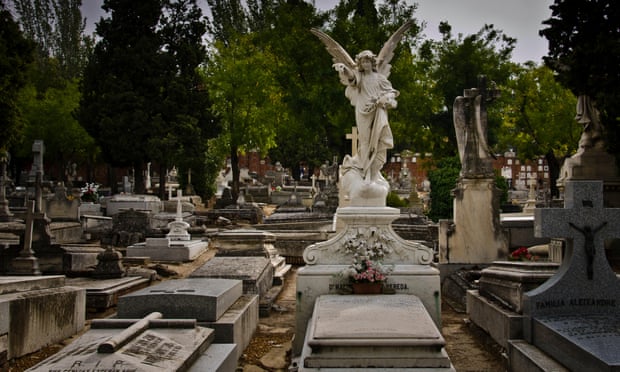
Almudena cemetery in Madrid. This photograph is the feature photograph of the article. Photograph by: Alamy

Recently, a man named Ángel Fernández was arrested for helping his terminally ill wife end her own life. It’s not every day you hear a story like that. As a result of this becoming public, Spain has renewed their euthanasia debate.

The Backstory and Reason for why a Man was Arrested for Assisted Suicide

On April 2, 2019, 70-year-old Ángel Fernández asked his wife, 61-year-old María José Carrasco if she would like to die today. 30 years prior, Carrasco was diagnosed with multiple sclerosis. As the years passed, Fernández was asked by his wife numerous times if he’d like to help her die. On the day of his wife’s death, Fernández filmed him asking his wife if she’d still wants to die, and she replied saying that she could not wait any longer and that he was the only one who could help her. He was hoping that Spain could pass its euthanasia law before he finally helped her die. However, Spain’s conservative People’s Party (PP) opposed the law that was formed last June, and, as a result, it has not yet passed. Therefore, Fernández’s decision to assist his wife in committing suicide got him arrested. Luckily, he was released after only a day, pending further inquiries.

Spain’s Euthanasia Debate Has Been Renewed

On Thursday, April 4, 2019, a day after Fernández’s arrest, Spain’s prime minister Pedro Sánchez basically blamed the PP and the center-right Citizen’s Party for this arrest. According to Sánchez, they recently prevented the passing of the euthanasia law, and the PP prevented it no less than 19 times in total. He also said that, if he is reelected at the end of this month, he will continue to press on in passing this law. After that, the Citizens Party responded. Their secretary, José Manuel Villegas, said that his party is for this law, but would prefer if a law they proposed for palliative care was passed first.


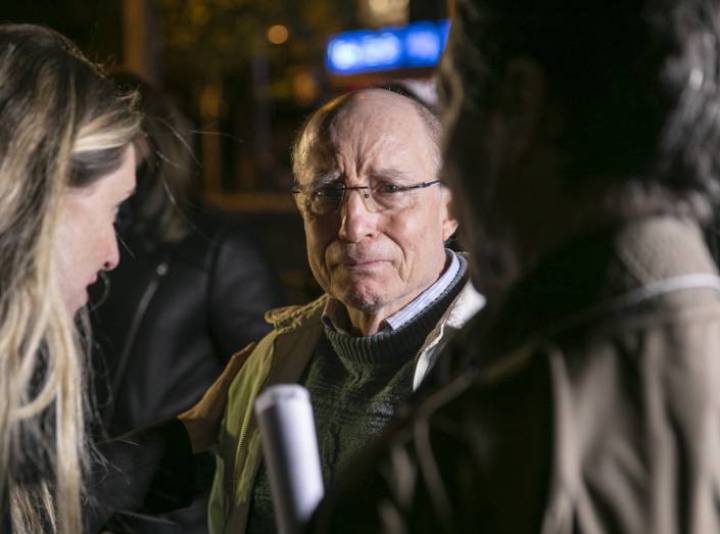
Ángel Fernández speaks to reporters after being released on Thursday, April 4, 2019. Taken by Carlos Rosillo.

Another group proceeded to chip in on this debate. The Spanish Bishops’ Conference entered the debate when their secretary, Luis Argüello, said, “I don’t think that people should go to prison, but I do believe in the radical defense of life” and “death shouldn’t be a way of solving problems”, which shows that this group is anti-euthanasia. Spain’s Right to Die with Dignity group went to describe the current situation in Spain on euthanasia. They said, “More than 80% of the population are in favor of decriminalizing euthanasia and assisted suicide. Yet article 143 of the penal code still punishes them with prison sentences”. This goes to show how much impact the 19 preventions by the PP and Citizen’s Party have, as only a small minority agree with that decision.

This Shows How Spain is a Confrontational Society

Overall, this story provides us with an interesting view of Spain’s confrontational society, as described in the Culture Map, and of the groups that impact the Spanish government and, in turn, impact the Spanish people.

Taylor Leeson- The Million Dollar Industry in Spain that You Haven’t Heard About: Cocaine

Photo of drugs seized off Yacht in Spain by: Juan Carlos Toro

I was scrolling through Spanish news articles when suddenly, one flashed in front of me that was much different than the rest. The article was about the Galician smugglers of Spain and their new rise to prominence as Spain became the second largest cocaine market in all of Europe. The statistic was shocking. I couldn’t believe my first trip to Europe was going to take place in a country where two percent of the population consumed cocaine. However, my concerns were lifted after I did some more research.

The Galician Smugglers Have a Long History with Spain

Hard drugs like cocaine are often smuggled from Columbia to Galicia, the northwestern region of Spain. Smuggling history in Galicia began before the 1950s but became integral to Spanish drug trafficking markets in the 1960s. Columbian cocaine was the main product being moved in Europe and Galicia was the perfect port to smuggle through. Galicia’s strategic location and relaxed border control allowed smugglers to prosper. Between the 1960s and 1990s, Galicia became a massive drug empire under the nose of the Spanish police with a network spanning from the Mediterranean to Africa. As we know from class, Spain has a colorful history with corruption and to no surprise, corruption was a major factor that allowed the smuggling empire to grow.

Bribing officials and border agents has allowed this smuggling empire to continue today despite persistent police efforts for the past thirty years.

We Need to See Spain’s Problems to Understand the Impacts on Its Culture

This topic is important for us to see as a class because we haven’t really looked at the ugly side of Spain. We’ve explored different cultural dimensions and talked about corruption briefly, but not something as serious as drug trafficking or its impact in Spain. The smugglers have made importing more difficult for regular businesses and lengthened the process due to increased scrutiny of imports and thorough searches.

Photo of police search revealing drugs by: Óscar Corral

The people have also been caught in the crossfire of drug-related gang violence.
Smugglers caused corruption to grow and take roots in the Spanish government which has hurt ordinary people. The corruption has made it more difficult for people to trust leaders and officials.

This is the side of Spain that we need to see to understand that Spain is a country with problems, just like the United states.

Spain Has Problems Just Like the United States

Researching the smuggling clans of Galicia reminded me that even though we have different cultural dimensions, Spain is just like the United States when it comes to having problems. The United States has one of the largest narcotic smuggling industries in the world, but it has never worried me before. Spain should be no different.

Spain is fairly safe for travelers and the smugglers will be of no concern as we travel. That said, I’ll keep an eye out for smugglers when I get there.