Noble Fahnbulleh – Spanish Police Recover Julian Assange Surveillance Footage

A WikiLeaks news conference where surveillance video of Julian Assange is played. Photograph: Henry Nicholls/Reuters

Imagine being the founder of a whistle-blowing website and the website covering an investigation that involves the main suspect being you. Julian Assange is the founder of WikiLeaks, a website intended to collect and share confidential information on an international scale. WikiLeaks has said it has uncovered a surveillance operation against Julian Assange at the Ecuadorian embassy and that images, documents, and videos have been gathered and offered for sale.

Material that Originated from Ecuadorian Embassy was Reportedly Offered for Sale

Spanish police were said to have started a sting operation against unnamed individuals in Madrid who offered the material for sale in what lawyers and colleagues of Assange said on Wednesday, April 10 was an attempt at extortion. WikiLeaks was told some of the material came from video cameras with a capacity to record audio which had been installed in the Ecuadorian embassy last year.

WikiLeaks said material including video, audio, copies of private legal documents and a medical report had turned up in Spain, where a group was said to have threatened to start publishing unless they were paid three million euros.

Protection of Julian Assange

Ecuador bankrolled a multimillion dollar surveillance operation to protect and support Assange at the embassy, employing an international security company from Cadiz, Spain and undercover agents to monitor his visitors, embassy staff, and even the British police. The matter is now in the hands of an investigating Spanish judge, according to WikiLeaks.

Screenshot of Julian Assange, with a skateboard, and his collaborator Stella Morris in the Ecuadorian embassy in London. EL PAIS

WikiLeaks said the surveillance had constituted a total invasion of privacy, which included recordings of Assange’s meetings with lawyers and doctor. Copies of photos, videos, and documents recovered from the alleged extortionists were projected on to a screen at the WikiLeaks press conference. There was no immediate comment from Ecuadorian authorities or Spanish police.

Spanish police still have not released the names of the alleged extortionists, but I am really interested in knowing how people in Madrid were able to obtain all this information on Assange while he was in the Ecuadorian embassy in London being protected and supported by millions of dollars every year. The security company is from Cadiz, Spain so I am curious to know if it was an inside job.
Connor Reardon – Strikes at Madrid Airport Cause Major Problems for Easter Travelers

huelga aerea semana santa 2019

The Madrid-Barajas Adolfo Suárez Airport (MAD) is starting to spiral into chaos amidst the union strikes that are taking place over the next two weeks. Travelers flying out of MAD for the Easter weekend will certainly be met with headaches, long lines and even some cancellations. Currently, Air Nostrum pilots are on strike forcing the airline to cancel some of its flights. Along with these pilots, security workers employed by
Ilunion have also gone on strike this week creating long bottlenecks in checkpoints. In addition to these strikes, the ground handling staff is set to go on strike early next week as travelers return from their Easter Holiday. On the surface, this looks like chaos, especially by those traveling for Easter, but let’s break it down and take a closer look at the issues at hand.

Pilots want job security amidst increasing competition

Air Nostrum pilots have planned to be on strike from April 16-17 and April 22-24. The strike is due to the parent company, the Iberia group, moving routes from Air Nostrum to other airlines within its control. Pilots of Air Nostrum feel threatened by this trend as it, “jeopardizes the future of the company and the working conditions” as stated by Selpa, the union representing the pilots. Because of this strike, Air Nostrum has canceled 148 flights which will affect about 10,000 passengers in just the first half of the strike. Air Nostrum will announce additional cancellations as the second half of the strike approaches.

Security personal join in on strike to create bigger headaches for already dazed travelers

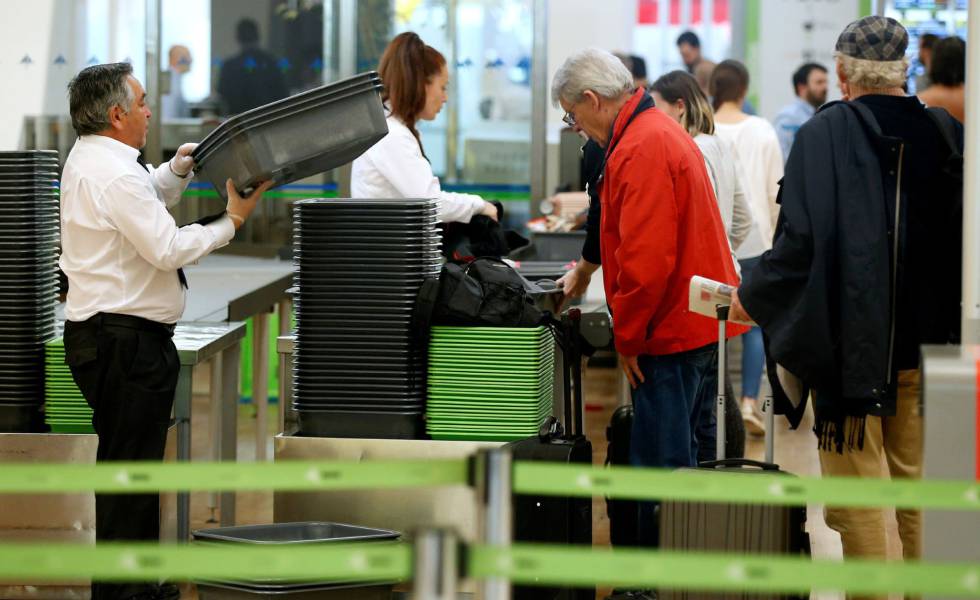
In addition to cancelled or delayed flights for those flying with Air Nostrum, all travelers at the Adolfo Suárez Madrid-Barajas airport will experience delays at security checkpoints. Ilunion, a private security contractor, went on strike on Friday, April 12 demanding better pay. This strike has caused major delays over the weekend and created seeming endless lines were full of anxious passengers hoping to catch their flight on time.

Image of security lines at MAD on April 11, 2019

Spanish culture shows how confrontation can foster strikes

In terms of confrontational cultures, Spain lands quite high on Erin Meyers scale for disagreeing. This is rather unsurprising as workers who are disagree with their employers have no issue going on strike to make their point clear. Confrontational cultures see debate as a healthy part of relationships, hence the use of strikes to allow for debate. Another example of this is France, a highly confrontational society, who had the highest number of days not worked due to strikes.

I have begun to think that Spain is quite dysfunctional, but rather, what may seem like chaos, may be natural to those in Spain. From politics and strikes, the Spanish people always seem to be arguing about something, and that isn’t necessarily a bad thing. If debating is seen as a healthy way to share ideas, than what may seem like dysfunction to us in the United States, may actually be beneficial to those in Spain.

The “Trial of the Century” Continues in Madrid – Emma Niemela

The trial of Catalan separatist leaders in Madrid. Photo from PBS.org

When I learned 12 Catalan leaders were on trial, my first question was “why?”. I looked into the history of the Catalan independence movement, and found that Catalan separatist movements have been happening since the 1600s. Catalonia was declared a nation in 2006, but was downgraded to an autonomous community in 2010. The Catalan parliament reacted with a poll in 2014, which revealed 80% of Catalan voters favor independence.

The Catalan government voted for independence in 2017 after a failed referendum.

The President of Catalonia, Carles Puigdemont, declared a binding independence referendum on October 1, 2017. However, the Spanish police confiscated ballot boxes, and no official count was possible. After the failed referendum, the Catalan parliament illegally voted for independence on October 27.

Police restrain voters to prevent the illegal independence referendum. Photo from USA Today

The Prime Minister used Article 155 to gain control over Catalonia.

Upon taking over, the central government put former members of Catalan parliament, who voted for independence, along with other key separatist leaders on trial for rebellion and sedition.

The trial of 12 Catalan separatist leaders is currently in its tenth week.

This week 60 police officers involved in stopping the referendum are testifying in court. The officers accuse Catalan law enforcement of not acting to stop the vote, after the Central Spanish government declared it unconstitutional. In other news, Oriol Junqueras and Jordi Sànchez, are running in the general election from prison. They will not be allowed to leave even though they are leading in the elections. Petitions are in circulation to allow electoral debates and campaign rallies inside the prison.

Unrest has had limited impact on business in Catalonia.

Though economic expectations for Catalonia dropped, business has continued. Multiple major companies have invested in Catalonia in 2018, including Microsoft, Allianz, Amazon, and Lidl. Economic impact from the unrest has had the largest impact on the tourism industry, with unpleasant viral images and separatist news stories discouraging tourists from visiting.

Collectivism may have motivated the trial of separatist leaders.

It is likely that other regions would follow the example of Catalonia if independence is achieved. Placing those who supported the bid for independence on trial was likely meant to discourage others from following Catalonia, and show that rebellion will not be tolerated. This speaks to the Spain’s collective nature, as the central government is attempting to maintain unity.

Jonathan Carman- The Chaos and Intrigue in the 2019 Spanish General Election

See the source image
Break-down of the various political parties competing against each other the 2019 General Election

Imagine five political parties grappling for control in a country, especially in comparison to our political situation here in the United States where two political parties competing is already overwhelming.  This is the intense situation that Spain faces prior to its general election on April 28.   The political parties competing against each other include the Socialist Party (PSOE), Popular Party (PP), Podemos, Ciudadanos, and Vox.  The PSOE and the PP are both left-wing political parties while Podemos, Ciudadanos, and Vox are right-wing parties.  One of the most interesting aspects of this election is that no individual political party will obtain a majority in the election. Consequently, parties with similar platforms (left-wing or right wing) will have to likely form an alliance to try to appeal to voters about the critical issues in Spain: Catalonian independence, taxes, and illegal immigration.

Catalonians protesting against the Spanish Monarchy

Catalonian Independence: Will it Actually Happen?

Catalonia, the northeastern region of Spain, has a passionate, patriotic culture complete with unique norms, ideas, language, and values compared to the rest of Spain.  For that reason, there was a 2017 referendum in Catalonia where the people voted to make a “unilateral independence declaration” to secede from Spain to form its own country.  However, Spain will not allow its independence.  In fact, three political parties (PP, Ciudadanos, and Vox) pledge that they will ensure that Madrid maintains direct control of the region.  Podemos states that while it will not allow Catalonian independence, it will work with the Catalonians to create “a new fit” for the region within Spain.  The violent confrontations between locals and the Spanish police in Catalonia are also disruptive to the local businesses in the area.

Taxes: Possible Changes for Spanish Corporations

The tax situation in Spain, especially for corporations, will change dramatically depending on which party wins the election.  If the PSOE wins, corporations and wealthy individuals will pay an unspecified higher amount in taxes.  If PP wins, corporations will pay overall less in taxes.  The PP proposes bringing the corporate tax rate down below 20%.  The other parties (Ciudadanos, Podemos, and Vox) will lower taxes in general for individuals but will not do so for corporations.  As a result, Spanish corporations will likely struggle in the future if corporate taxes increase because they will place an extra cost on their operations.

Migrants crowded on a boat that is riding to the southern border of Spain

Immigration: 130% Increase in Illegal Migrants Entering Spain

Like here in the United States, illegal immigration is a major problem for Spain.  Since last year, nearly 60,000 people (a 130% increase) have illegally entered the country due to the increased economic prosperity there.  The Popular Party supports the reinforcement of security measures at the southern border where most of the illegal migrants enter Spain.  PSOE and Podemos advocates for “maximum respect for human rights” while organizing orderly migration.  Vox takes an extreme stance on immigration by threating to deport illegal immigrants who cross the border.  Ultimately, this illegal migration will affect corporations by taking away jobs from the Spanish people.

Brady Sneller – In a Country Full of Churches, Transportation Strikes Threaten Travel During Holy Week.

The idea of having a flight delayed is something that often makes travelers cringe. The frustration of having your vacation plans derailed makes traveling a much less exciting experience. This is happening on a large scale in Spanish airports due to union strikes. These strikes include both airport ground workers and pilots. Along with the air unions, there are also planned strikes by the ground transportation unions as well. The strikes will occur during Holy Week, which is a period of high tourism for Spain.

Airline Will Cancel One Quarter of its Flights During Strike

Air Nostrum, one of the major Spanish airlines, in anticipation of the pilot strikes has cancelled 148 flights. All of these flights were supposed to lift off during the three-day period, April 15 through April 17. After a four day return to work, the pilots will go back on strike from April 22 to April 24. The cancellations are 23.6 percent of the total flights scheduled for the three-day period. Spain’s Public Works Ministry has set minimum service requirement for Air Nostrum. This minimum service requirement includes all flights to Melila, the Canary Islands and Belearic Islands. Public service obligation flights between the three major Spanish airports must also go as scheduled. A majority of the flights that have been cancelled have been between to cities where alternate travel is five hours or less. The minimum service requirement for those flights is only 29 to 31 percent. Air Nostrum, in an effort to satisfy customers through the strike has offered a full refund or a choice of a different flight before May 10 2019. More information on the Air Nostrum cancellations can be found on the El País website. (https://elpais.com/elpais/2019/04/15/inenglish/1555322765_365750.html)

Ground Transportation Unions Will Go on Strike with Air Unions

The air travel industry is not the only mode of transportation that will experience the effect of union strikes. Many workers in the rail and train driver’s union also plan on taking part in strikes during Holy Week. These will not be as extensive of strikes as the air unions but will still cause delays in traveling around Spain. 

Loss of Faith in Spain- Abdi Ismail

In Spain, Catholicism is the largest religion, but things are starting to change.

The Catholic Church has played a significant role in the history of Spain. However, for the younger generations who still identify as Catholic no longer even attend religious services. The decline of believers became more apparent after the reign of dictator Franco came to an end in 1975. Franco had a close relationship with the Church which gave them more influence over policies. After Spain become more democratic the country become more secular. The Church had no longer as much power it once did. A great example is the number of marriages that were religious ceremonies. In 1992 almost 80% of the Spanish were married in a church. Last year, less than 20% of marriages were in a church.

Today nearly one-third of the Spanish population is atheist. This figure is even more apparent in the youth of the nation. According to one study, nearly 50% of people between the ages of 18 to 24 are non-believers. While the older generation those aged 65+ are near 90% believers. The sharp contrast between those two generations shows how policies played a role to some degree.

What is causing this decline?

With this sharp decline in believers, one must wonder what is causing all this. One Spanish sociologist believes that the younger generation’s lack of belief is because of modernization and education. People today are more aware and can think more rationally. In general, young people are more open to change than those older. Even though this is a problem for the Spanish Church it seems to be a problem for Churches across the rest of Europe.

Is there hope?

Francesc Romeu, a Catholic priest in Barcelona still holds out hope for the young generation to return to the Church. Romeu believes that this is a generational thing. When young people age, they will return to the Church for solace.  

Christian Fiksdal- The Sun Does Set for the British Empire: How Brexit Impacts a Little-Known Island in Spain

Affe auf Kanone Gibraltar
A Barbary Macaque Monkey enjoying the sun over Gibraltar. These are the only wild monkeys on the European continent. Source: Barbara

Gibraltar is a tiny British territory near the mouth of the Mediterranean Sea. Until recently, the island was not much more than just a big rock and a cool tourist destination. Visiting the island could even be a weekend trip during our study abroad experience, and you’ll most likely run into the hundreds of wild monkeys exclusive to Europe. But now, with the legal chaos of Brexit that started in 2016 and the most recent extensions given by the European Union, the fight for control between Britain and Spain is back on the agenda.

Between a Rock and a Hard Place

The language used in the most recent documents favor Spain, as the footnotes regarding the land describe it as a British “colony”. This has apparently upset the British government, and now this tiny naval base could be at the forefront of a major diplomatic quarrel.

Gibraltar Map
Gibraltar within the context of the opening of the Mediterranean Sea. Source: Operation World

Previously, laws with the European Union described Gibraltar as a British overseas territory. However, its current language refers to it as a “colony of the British crown.” That reflected what Spain wanted, as they have been using the Brexit talks to revive its own sovereignty claims over the territory. The rest of the note also stated that Gibraltar was a continuing dispute, and a solution has yet to be reached. While there’s no immediate impact on Gibraltar or its 35,000 people, the British have responded by saying the language used is “completely unacceptable.

Spain’s The Art of War

The island itself is strategically important. Even though it’s a mere 2.6 square miles, Gibraltar is a naval choke point, with about half of the world’s seaborne trade passing through the strait of the Mediterranean. Using the Hofstede cultural models as a tool, we have insights as to why Spain thinks so importantly of this land. Specifically, a collectivist culture wants unity. In our case, since Gibraltar is geographically tied to Spain and historically was a part of the nation, it makes sense that Spain would continue to fight for its annexation. It was also a major port during the second World War, and contributed to the success of the allied forces in the Northern Africa campaigns.

The Sex Attack That Changed Spain: The Feminist Movement Written by Ellie Sundet

Spain is experiencing an uproar in women and men everywhere, following a very public trial over sexual violence allegations against a teen by five men. The verdict angered many, and resulted in a very public campaign that is changing the culture in Spain for women.

The Attack That Influenced It All

As told by PRI, on July 7, 2016, a young woman known as “la victima” or “the victim” alleges she was gang-raped by five men, later to refer to themselves as “la mandada” or “the wolf-pack” early in the morning after attending the famous, Running of the Bulls. After a night of many drinks and bullfighting, she had lost sight of her friends, and found herself walking in the streets of Madrid alone.

After a group of five men began speaking with her and offered to accompany her to her car, she graciously accepted, happy to not be walking alone. Soon after, she was led into a doorway where each of the five men took turns raping her followed by stealing her phone and leaving her. She quickly got dressed and left the scene, later to find out that the men had filmed the rape and posted it in a group message on the popular-used WhatsApp.

Image from BBC News, outside following the verdict of the wolf-pack trial.

The Trial and Verdict That Infuriated Women Everywhere

The trial in November 2017 sparked an uproar in Spain, as the case followed what has been termed “patriarchal justice” or a justice system in favor of men. Further, the trial was filled with questioning of the victim’s character and personal life, insinuating that she was rather outgoing and had positive posts on social media for someone who had undergone such a tragic event.

The verdict cleared the five men of rape, claiming there were inconsistencies in the story and the victim’s social media was interpreted to not have experienced trauma. The public was outraged and an uproar of protests followed outside of the Navarre provincial court.

The image from BBC news showcases a protestor holding a sign that reads, “We want to be free.”

Spain’s Feminism Movement Today

According to BBS News, following the verdict that sparked interest and passion in many, Spain’s version of the “#MeToo” campaign, “#cuéntalo” or “#tellit” launched, including many individuals, mainly women, sharing their experiences with sexual violence. This campaign has engaged the public in the heart-wrenching stories that most women can identify with in some way or another. It has also followed suit on the collectivist culture in Spain and banded women together, demanding justice and equality under the law for the totality of the population.

Jacob Kenyon – Catalan Independence Movement Continues to be a Divisive Topic in Spain

The push for independence in Spain’s Catalonia region has been a divisive topic ever since a referendum for it was voted on in late 2017. From the beginning the Spanish government called the referendum illegal, and even went so far as to use police to try to prevent a vote from happening. As a result of that vote, 12 Catalan activists and politicians are on trial for crimes related to the illegal referendum.

Catalan Independence Movement Draws Comparisons to UK’s Brexit From Spain’s Prime Minister

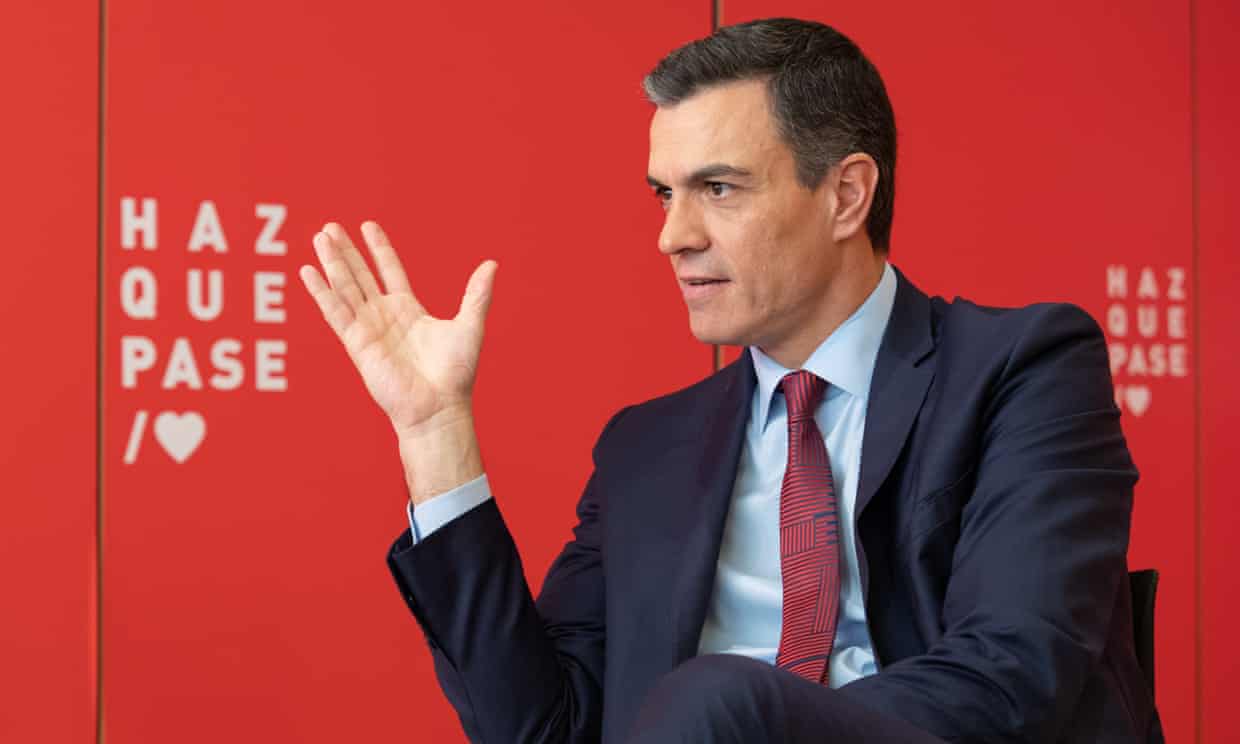
Spanish Prime Minister Pedro Sánchez discussing the Catalan separatist movement.

Spain’s Prime Minister Pedro Sánchez recently compared Brexit to Spain’s own Catalan separatist movement, stating…

“…engaging in campaigns or political projects based on lies eventually leads societies down a blind alley”.

Pedro Sánchez

One of the comparisons that Sánchez made states that both the UK and Catalonia believing that they are being take advantage of by the EU and Spain respectively. They feel that they give far more than they get in return and that they would be better off without the burden of the EU and Spain. He believes that neither Brexit nor Catalonia’s secession should have been presented as a binary issue, to either stay or leave, and instead both should have worked to address their respective concerns, and then leave if they were ignored or improvements weren’t made.

Activists March in Madrid

In mid March, supports of the Catalan secession took to the streets of Madrid to continue to fight for Catalonia’s independence, as well as to protest the trials of 12 separatist leaders. Many supporters of Catalan independence see the trials as nothing more than political theater; the Spanish government’s attempt at discouraging any further attempts at independence. Coach buses brought thousands of protesters from Catalonia and other parts of Spain to Madrid to take part in the event, which was organized by the Catalan National Assembly and Òmnium Cultural. The slogan for the event was “Self-determination is not a crime. Democracy is about deciding.” Although there was a great deal of security at the event, there were very few incidents, and it was a peaceful demonstration of Catalonia’s wish for independence.

Spanish Fireman Faces Jail-time for Rescuing Drowning Migrants

Earlier this month, a case from 2 years ago resurfaced in El Pais in which a Spanish fireman was accused and briefly arrested on smuggling charges for his connection in rescuing a group of African migrants at sea. In June 2017 Miguel Roldan was working on a migrant rescue ship in the Mediterranean Sea when he received a call raising alarm to a sinking migrant ship. When Roldan & his team intercept the drowning migrants, they are initially prevented from rescuing the migrants by Rome Search & Rescue Control Center. Eventually, they are granted permission to rescue the migrants that survived the lengthy negotiation process. Roldan is now facing trial for that rescue mission & the outcome could land him in jail for up to 20 years.

This issue spans much further than that rescue mission

Firefighter Miguel Roldan could face up to 20 years in prison for rescuing drowning migrants

Miguel Roldan’s rescue mission spans the broader issue of illegal migration to Spain & the country’s response to the influx. In 2018 alone about 57,250 (6000 underage) migrants crossed the Mediterranean and into Spain; the majority coming from North & Central Africa fleeing instability & poverty. Spain, thus far, has been a model to other EU countries on how to handle the influx of migrants. The country’s immigration policy, at least in writing, is rather open & committed to integration. Spain has largely been un-touched by the wave of anti-immigration sentiment that has hit other EU regions. This is primarily because the Spaniards have seen the influx of immigration as good for the economy, if migrants stay under the radar. In fact, the Spanish Socialist Worker’s Party have been very compassionate to the plights of these migrants citing it as their “human rights obligation.” Over time however, a wave of anti-migration rhetoric has started to surface across the country.

The changing tide of openness to migration               

The immigration policy, that could potentially land Miguel Roldan in jail, is one that denies departure permits to humanitarian rescue ships in efforts to curb migration. Humanitarians, like Roldan, who disobey the policy are charged with human trafficking & face potential jail time. Spain has gotten tougher in recent months due to a lack of an EU policy on immigration & neighboring countries (Italy, Malta, Greece) closing their boarders. Spain has also seen anti-immigration rhetoric coming from far-right political parties, such as Vox, who won elections in the south & have promised to crack down on immigration. The Spanish-Moroccan border is one of the most fortified borders in the world & has come under pressure for human-rights abuses in the past. There have been continuing efforts to repatriate migrants; within the first 2 weeks of January alone, 3,000 migrants were deported. All these policies, and more, fall in direct contrast to Spain’s historical (and written) openness to immigration & must be reassessed given the desperate plights of migrants.

Migrants jump border fence between Morocco and Spain

With lack of a clear policy on immigration & a growing wave of anti-immigration sentiment throughout Spain the future of immigration looks bleak. In the meantime, thousands of migrants are drowning in the Mediterranean while undertaking the treacherous journey to a better life. Those that can aid them should not be punished for doing so. Miguel Roldan says it best, “even just one minute spent in jail for saving lives would be too much.”