Tetuan Valley: The Spark that Ignited Spain’s Entrepreneurial Flame – Edward Neepaye

Tetuan Valley fosters a collaborative environment among founders & mentors

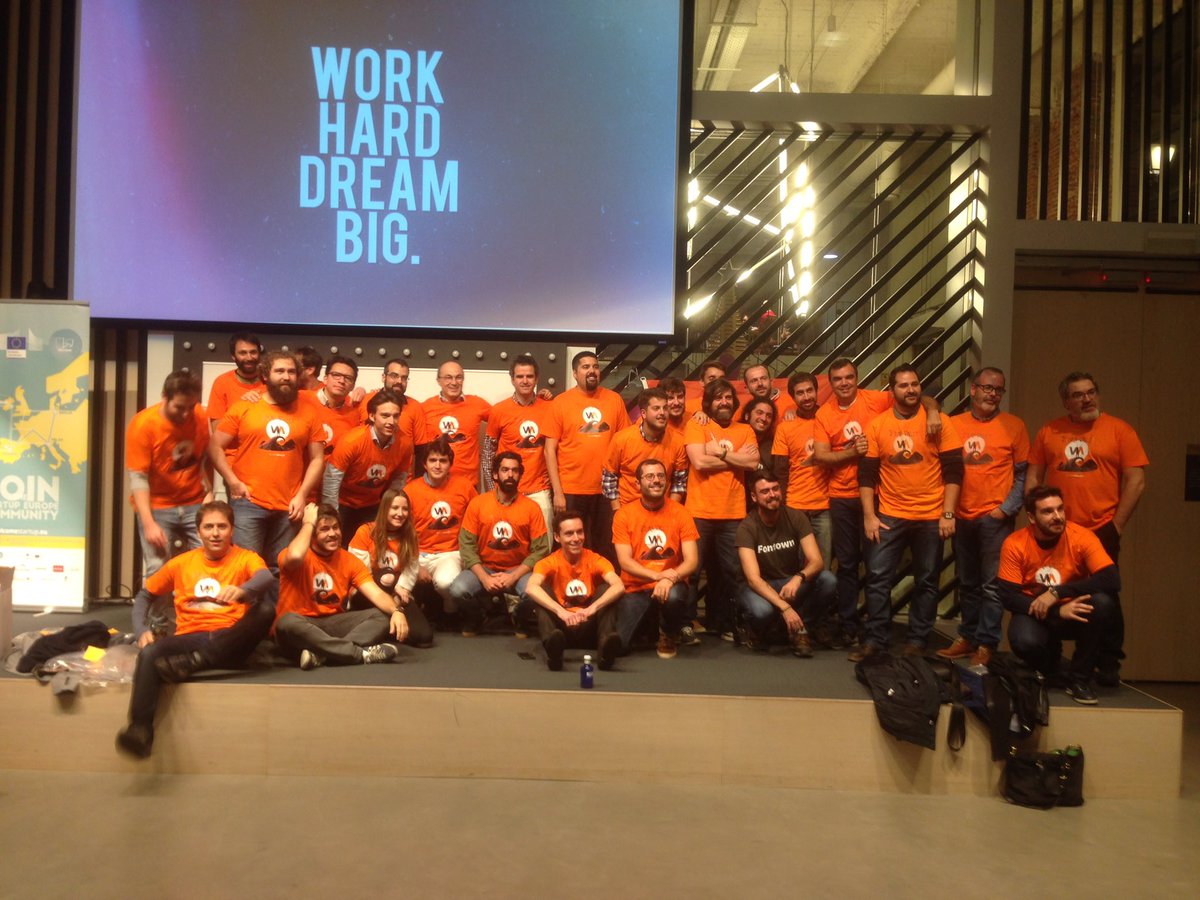
Tetuan Valley was started by 3 entrepreneurs in 2009 to fill the void of the lack of a tech entrepreneurship scene within Spain. They noticed that although they were surrounded by extremely talented individuals with brilliant start-up ideas, there wasn’t really an existing institution to foster their development. The idea was to connect these individuals within a single network & create an environment of collaboration.

Classroom sessions provide entrepreneurs with background knowledge of business practices

Accelerating business idea one session at a time

One thing I learned through my own research on entrepreneurship in Spain is that entrepreneurs often do not have enough to go off when it comes to starting a business. Most of this can be credited to the culture’s high uncertainty avoidance. Entrepreneurs may not know many people who are pursuing their same goals as the culture, historically, has not been very entrepreneurial. The Tetuan Valley startup school must’ve caught on to this as their 6-week pre-accelerator program was designed for this exact reason; to give entrepreneurs the tools/lessons they need to be successful. The start-up school recruits tech-based entrepreneurs at the very early stages of their project & from there gets them thinking about potential users, clients, and the like. The six-week session is broken up into different programs where entrepreneurs are coached on effective presentations, product development, legal/finances & investment. They then get the chance to practice their pitch, perfect their code, launch their prototype & demo their product.  

Hackathons have become an important event at Tetuan Valley

Individualized mentorship for start-up success

The school is very engaged within the business community & provide start-ups with mentors who can coach them individually on their business specific goals. For example, during the hackathon session of the program, the teams are paired with tech mentors who coach them through 48 intense hours of coding to help develop their prototype & user functionalities.

Furthermore, in recent years Tetuan Valley has piloted its Design Sprint School which utilizes an agile design methodology to design, prototype & test product ideas over the course of 3 weeks. The entrepreneurs are paired with mentors who are experts in agile design to compress the business timeline from months to a matter of weeks. The idea is to bypass waiting & debating whether to launch a potentially failed product & instead just create a prototype that you can collect data from & have a clear understanding of what your final product is.

Mentors are also individuals that come from a variety of industries from finance, legal, academic, as well as Tetuan Valley alumni. Finance & venture capital mentors can help the entrepreneurs plan out their financing needs & begin initial finance sourcing.

Its all about community at Tetuan Valley

Creating a community beyond local entrepreneurs

Tetuan Valley is proud of their large and growing alumni network (500+) and cite it as their strongest attribute. The community consists of 67 mentors, former incubators as well as collaborators at other European accelerators. Since its inception in 2009, the accelerator has graduated 290 startup teams and has expanded its presence to over 20 countries. Over the short period since its founding Tetuan Valley has been the much-needed spark within the Spanish startup landscape and have been successful at fostering a similar mindset throughout the globe.

Questions for site visit:

  1. What does TV do to help entrepreneurs access funding?
  2. How has the Spanish entrepreneurial landscape changed over the past 5 years or so?
  3. Is it more unique for entrepreneurs in Spain to start their business in an accelerator such as TV or is it more unique to launch on their own?
  4. Where do you see entrepreneurship in Spain over the next decade or so? Does it have the potential to catch up to European cities such as London, Berlin etc. in terms of startup volume?
  5. What was your biggest challenge initially? How did you overcome it? & what will be the biggest challenge for Tetuan valley moving forward?

The Sagrada Familia has endured catastrophes and controversies throughout its rich and long history – Jon Kuch

The front view of the Sagrada Familia, covered with cranes and scaffolding due to the ongoing construction.

This massive basilica in Barcelona will take 7 times longer to complete than the Great Pyramid of Giza did. After being first conceptualized in 1866, the Sagrada Familia has been under construction for 137 years and will become the tallest church in the world upon its estimated completion in 2026.

The origin of the Sagrada Familia traces back to the late 1800s

Early Neo-Gothic plans for the Sagrada Familia under architect Francisco de Paula del Villar y Lozano (Blog Sagrada Familia)

Josep Maria Bocabella i Verdaguer founded the Spiritual Association of the Devotees of Saint Joseph in 1866, who in 1874 started campaigning for the creation of a temple in honor of the Holy Family. After several years of private funding, the association purchased a 138,000 square foot plot of land to house the temple. The cornerstone was laid in 1882, which started off the construction under the project’s first architect Francisco de Paula del Villar y Lozano.

Antoni Gaudí takes control of both design and direction

Antoni Gaudí on the site of the Sagrada Familia towards the end of his lifetime

Due to differences of opinion between the first architect and the project’s developers, the association passed control over to Antoni Gaudí as the new head architect. Gaudí envisioned a new direction for the basilica and abandoned the original Neo-Gothic design for a much more innovative plan. Remaining as the head architect for 4 decades, Gaudí was able to see the crypt, apse, and first bell tower through to completion before his death in 1926.

The Sagrada Familia has overcome many obstacles and controversies

A 1936 fire that partially burnt the Sagrada Familia’s crypt and Gaudí’s workshop.

Between 1936 and 1939 during the Spanish Civil War, groups of revolutionary anarchists set fire to the basilica and destroyed many of the original plans and drawings for the Sagrada Familia. However, a scarce few documents and designs survived the fire and allowed for construction to continue to follow Gaudí’s original concepts. In addition to the catastrophic fires, the companies who oversee the basilica’s construction have also faced mass controversy over the ability to stay true to Gaudí’s design. The most notable of protesters are a group of Spanish artists, architects, and art gallery directors who argue that the finished Sagrada Familia will not resemble Gaudí’s artistic vision and that the more recent architects are taking too much creative freedom in their work.

Questions to ask at the Sagrada Familia Site Visit

  • How has the Sagrada Familia become integrated into Barcelona’s culture and history?
  • Is it very likely that the construction will be completed in 2026 or was it more arbitrarily decided as the centennial of Gaudí’s death?
  • Were the extent of Gaudí’s designs recovered, or were some lost in the fires that had to be re-imagined?
  • Has each architect interpreted Gaudí’s designs differently and uniquely, or have they all stayed relatively consistent?
  • Is the Sagrada Familia currently intended more as a very impressive tourist attraction or as a normally-functional church?

Environmental Commitment, Corporate Responsibility, and Customer Satisfaction: El Corte Inglés is Sweeping Spain by Storm – Elizabeth Sundet

El Corte Inglés in La Vaguada shopping center. Photo courtesy of CincoDîas.

For more than 75 years, El Corte Inglés has remained committed to serving customers quality, trendy products from the best designers. According to their company site, setting trends, promoting changes, and creating new concepts keeps customer loyalty high for shoppers at El Corte Inglés.

The original El Corte Inglés tailor shop purchased by Ramóna Areces Rodríguez in 1975. Image courtesy of El Cortés Ingles company website.

Company History Dating Back 75 Years

In 1935, Ramóna Areces Rodríguez purchased a tailor shop known as El Corte Inglés founded in 1890. Over the next 25 years the company grew as a department store under Rodríguez’s supervision. In 1962, the company’s expansion took off, expanding to major cities in Spain such as Barcelona, Seville, and Bilbao.

Throughout the next 50+ years, El Corte Inglés expanded to many different areas including a vision and hearing clinic, a computer company, and an insurance brokerage just to name a few. Through repeated success, El Corte Inglés continues to be a front runner for the most profitable department store in Spain.

The El Corte Inglés Waste Management Program as shown on the company website.

The Key Principles to Success: Environmental Commitment, Corporate Responsibility, and Customer Satisfaction Guaranteed

El Corte Inglés has three key principles that comprise the company’s mission. The first principle is commitment to the environment. El Corte Inglés promises to not only respect the Earth and its environment through its waste management program, energy efficiency, etc. but, also considers commitment to relationships with its surrounding environment such as stakeholders, employees, suppliers, etc. a key to success.

The next key principle is corporate responsibility. El Corte Inglés believes in generating trust with the public through maintaining a positive public image. Thus is why they are committed to always practicing ethical and responsible behavior.

The final principle is the one customers identify with the most, which is customer satisfaction guaranteed. El Corte Inglés prides itself in the quality commitment it has to its customers. This is why it is important that it has an action plan should customers find the quality of the product insufficient. Through a customer warranty program, the customer can always expect the best when shopping at El Corte Inglés.

Questions for the El Corte Inglés Site Visit

  1. Has El Corte Inglés considered overseas expansion to the United States, or any other country outside of Europe and Africa?
  2. How does El Corte Inglés plan to stay profitable through online retailing, as we are seeing a downward trend in brick and mortar retail?
  3. Do you foresee any other challenges outside of the shift to online shopping in the future for department stores, specifically in Spain?
  4. Does El Corte Inglés rely on suppliers for price points or does it decide their own pricing for name-brand items?
  5. How does shipping work for online orders, such as what is the standard delivery time, does it ship from warehouses or from stores, etc.?

Tetuan Valley brings together brilliant minds to create technology based solutions – Michael VandenBrook

Tetuan Valley announces the ten startups that will participate in the eighteenth startup school.

A billion dollars or nothing

Having a billion-dollar idea is a great start to a successful company, but that’s all it is, an idea. Turning that idea into a reality is a difficult process that must not be over looked. During the transformation process a startup company must overcome many hurdles such as funding, product development, market research, and more. Those hurdles can seem daunting, and Tetuan Valley understands. That is where Tetuan Valley comes into the picture.

Tetuan Valley brings together talent and support

Tetuan Valley is the first of its kind. It’s a pre-accelerator program designed to help train startups in making their dreams viable and believable. Founded in 2009, the Madrid-based Tetuan Valley became a reality with the teamwork of three entrepreneurs determined to help other talented entrepreneurs take their first steps. The vision was to create an institution where like-minded individuals would come together and no longer go through the startup journey alone.

What to expect once accepted into Tetuan Valley

After acceptance into the Tetuan Valley program, participants can expect an intensive six-week program filled with comprehensive content on what it takes to move forward in the startup process. During the six weeks, classes will be held to develop presentation skills, value propositions, marketing, and other essential skills that can be found here. Although you must be accepted to fully participate in the Tetuan Valley program, they open one of their sessions to the public on a weekly basis.

Tetuan Valley has a small team, but growing alumni network

According to the Tetuan Valley website Iñigo Peña, Camila Polensvaig, and Carlos Ruisánchez are the three employees that run Tetuan Valley; however, the organization would not be able to function without the exceptional support of Tetuan Valley alumni and organizational sponsors. Currently, Tetuan Valley has 70 top-notch mentors that assist in educating the Tetuan Valley participants.

The current team members of Tetuan Valley from left to right: Iñigo Peña, Camila Polensvaig, and Carlos Ruisánchez.

Tetuan Valley must continue to prove its value to startups and further develop its roots in the startup community

To continue to operate, Tetuan Valley must produce successful startups that can prove the value the program brings to its graduates. After all, no one will apply if they are not optimistic about post-graduation opportunities. Tetuan Valley must continue to expand its roots in the startup community through partnerships and collaboration. Doing this will increase brand awareness and networking resources that will be valuable to participants. By leveraging expertise and producing successful companies, Tetuan Valley will secure needed sponsorship to compete with other incubators such as Demium Startups and Wayra.

Questions I have for Tetuan Valley:

  1. How do participating teams handle proprietary information during the program?
  2. What seems to be the hardest concept for teams to adopt?
  3. What skill set do startup teams lack most often?
  4. Is there a reason that there are only two six week sessions being offered?
  5. How do you the pitch the value Tetuan Valley provides for its sponsors?

A brief walk through Tetuan Valley – Emma Niemela

Tetuan Valley is a non-profit start-up school located in Madrid, helping tech-based entrepreneurs get their ideas off the ground. The school was founded in 2009, so be sure to congratulate the founders on ten years when we visit!

Photo from: Medium

The six-week course offers entrepreneurial guidance

Entrepreneurs attend a six-week course on entrepreneurship and gain access to a wide network of mentors, employers, and peers. The six weeks consists of pitch practice, networking, speakers, and hackathons, ending with a “Demo Day” where the students make a pitch to an audience. In 2018, Tetuan Valley supported 365 students and 45 start-ups, according to this YouTube recap of the year.

Photo from: Tetuan Valley on Twitter

Tetuan Valley works with global partners

According to the company website, Tetuan Valley has a presence in 20 countries, with hubs in San Francisco, Stockholm, and Singapore. Partners include Google, especially the Google Campus in Madrid, and Nomadic Mentors, a program sending Silicon Valley tech experts around the world.

Play 2 Speak and Weekend2fly.com are examples of Tetuan Valley start-ups

Play 2 Speak is a start up from the October class. It is a virtual reality environment designed to help with language learning using virtual immersion. The platform is geared to individuals as well as class rooms, and gives users feedback on their pronunciation after sessions are complete.

Weekend2fly.com is another start-up from the October 2018 class. This start-up offers a platform for planning weekend travel. The website asks where you are flying from (the locations are all in Spain) and then gives you low-priced options within your selected month. For more information on recent Tetuan Valley powered start-ups, this Medium article has a list with hyperlinks.

Questions for the site visit:

  • Do you have plans to inspire young entrepreneurs before they go to University?
  • What are the biggest hurdles that still exist for Spanish entrepreneurs?
  • Has Tetuan Valley always been welcomed by the community?
  • Which start-up has become the most well-known?
  • What types of projects have you been working on with corporations?

Printing More Than Just Paper: Hewlett Packard is Growing in Europe- Christian Fiksdal

HP Barcelona
HP Barcelona Office. Source: 3Ders.org

Recognized as the founder of Silicon Valley, Hewlett Packard has big plans across the pond, most notably with their presence abroad in Spain. The Fortune 500 company has an extensive portfolio of printing, IT infrastructure, and software services, and its Barcelona office is home to world-class graphic-arts solutions.

New Talent for New Development

The HP Barcelona workforce consists of over 2,000 people. To no surprise, nearly 75% of the employees have Spanish nationality. The rest are mostly European, with 3% of the staff from the United States. Francois Martin, the head marketing director at HP Barcelona, describes the workforce as young and agile. The average age of an employee is 34 years young. With it being the “nerve centre” of printing activities, the office is a hub for research and development.

Hewlett Packard Provides a Diverse Set of Graphic-Arts Solutions

Through the company’s core technology, HP has two specialty printers. The wide-format Scitex series and the large-format DesignJets are widely used for anything printing-related. The products focus on a variety of things such as direct mail, label printing, high-resolution photography, CDs, and DVDs. HP’s worldwide market share was hovering 65% as of 2008. The Barcelona office also offers a Graphics Experience Center. It’s a showroom for prospective clients that can learn about HP’s technology and materials and view unique print jobs. Hopefully our visit will include that tour, as well.

Graphics Center Barcelona
The Graphics Experience Center. Source: HP Social Media

HP Delivers Value to Customers by Continuous Innovation

Printers aren’t immune to normal consumer demands. It’s a competitive market, and customers want low prices and high quality. HP’s print quality has improved by adding diverse colors, more than the standard magenta, cyan, yellow, and black. Furthermore, HP Barcelona is developing and using cutting-edge sensory technology to drastically improve quality and efficiency of its printers. The densitometers allow HP’s products to self-calibrate and automatically adjust ink inputs.

DesignJet
Exclusive HP DesignJet Printer. Source: HP

These new technologies keep the firm ahead of the curve and maintain its market share. Even as the world becomes more digitized, Hewlett Packard understands the market trends, and will continue to provide value to its shareholders and customer base for years to come.

Questions for the Site Visit

  • How will Brexit impact business for HP here in Barcelona?
  • How do you see the future of printing services?
  • Who would you say are your biggest competitors?
  • What motivates you to come to work every day? What does HP do differently?
  • Since the printing industry is dependent on paper, does HP Barcelona incorporate any environmental/green pledges into their business?

JohnRyan: Digital bank signage from Minneapolis to Madrid – Kaitlyn Schammel

JohnRyan was founded in 1983 and is headquartered in Minneapolis.

JohnRyan is a marketing and technology company that specializes in providing total store messaging and digital signage for retail banks. JohnRyan works on managing the largest bank signage network in the United States and Europe, supporting networks of 70-3,000 branches. Besides Madrid and Minneapolis, JohnRyan has offices in Silicon Valley, California and London, England. JohnRyan is a privately-held company that currently has around 200 employees worldwide.

JohnRyan has been an industry leader for over 35 years with its products and technology

A look at JohnRyan’s Quick Messenger platform for banks to customize digital signage.

JohnRyan’s products include Quick Messenger, Automated Content Execution, Network Topology, and Media Player capabilities to help its customers. Quick Messenger is JohnRyan’s main product to help banks customize the messaging displayed on digital signs. The Quick Messenger System allows tailoring of messages to project on select screens or areas within a bank. JohnRyan provides services in customer messaging, digital communications programming, content creation and promotion, network operations, and help with marketing.

JohnRyan’s huge partnership with Madrid-based BBVA

BBVA chose JohnRyan to revamp its digital signage in banks in Spain and Portugal in 2011.

In 2011, JohnRyan began working as Madrid-based BBVA’s digital signage partner. BBVA has over 3,000 bank retail branches in Spain and Portugal. JohnRyan worked to improve BBVA’s digital signage at the time and produced signs with localized-messages in five languages with information about news, entertainment, weather, and real estate throughout Spain and Portugal.

Adapting to how consumers are changing banking and using retail banks

JohnRyan works to make a visit to the bank more personal and enjoyable through communication with digital signage. This can also help communicate valuable messages that customers would otherwise not receive. JohnRyan also has done research that suggests that customers recall more messages in branches with digital technology. As more bank customers turn to online and mobile banking, including using online-only banks with no physical bank locations like Aspiration that are disrupting the retail banking model, it appears that JohnRyan may have to expand its services to serve these online platforms to continue to serve its customers.

Site visit questions to learn more about JohnRyan

  • Will JohnRyan expand its services to helping banks with social media or banking apps?
  • Does JohnRyan want to expand further in Europe and/or are there other regions of the world with opportunities for expansion?
  • How have banks’ tastes evolved over the years with digital messaging and how has JohnRyan adapted?
  • Have bank clients increased or decreased dramatically after the global recessions during the last 10 years?
  • How does JohnRyan measure the impact of its digital messaging?

Codorniu Combines Tradition and Innovation to be One of the Most Superior Wineries in the World- Anna Stepp

The Codorniu historical artistic monument used to make and store cava
Source: Codorniu Global

Codorniu has over 450 years of history making it older than America. This vineyard is world renowned for its meticulous winegrowing practices. It has been headquartered in Catalonia until recently deciding to move to Rioja. This family-owned business created its own industry by being the first to produce cava.

Innovation has been constant for the last 450 years at Codorniu

The business has been perfecting its wine since the beginning. In 1872, Josp Reventos used the traditional method of blending grapes to create Cava. Manuel Reventos launched Codorniu on a larger scale in 1885. Now the cava made at Codorniu is the leading cava in Spain and recently has been working on more sustainable winegrowing practices. 

Manuel Reventos who helped Codorniu succeed
Source: Enciclopedia Virtual

Codorniu is a family business spanning across the world

The Codorniu family started the business, but it didn’t grow until Anna Codorniu married Miquel Reventos. She inherited the vineyard estate and he was a vinedresser which created the perfect combination. An estimated 500 employeeswork for the Codorniu Reventos Group across all locations. It has 10 wineriesin Spain, California, and Argentina. These wineries span over 3,000 hectares of land.

Cava is a sparkling wine that was created by Codorniu

This land is known for producing exceptional cava. Sparkling wine is very important to Spaniards and is mostly produced in Catalonia. It is similar to champagne, but enjoyed for its cheaper price. Codorniu prides itself on producing good cava by using quality grapes and traditional production methods. 

The new collection of Codorniu cava
Source: Codorniu Global

Codorniu is moving headquarters out of Catalonia due to the instability in the region

Codorniu is one of the many wineries deciding to move out of the Catalan region. The independence movement has created instability in the area that is impacting companies. Codorniu representatives claim they are moving with “the objective of guaranteeing the interests of its workers and clients”which is being challenged by the current political uncertainty. The headquarters will be moving to La Rioja, but other facilities will stay in Catalonia.

The Carlyle group recently acquired a majority stake in Codorniu

In October 2018, The Carlyle Group acquired 68% of shares in the parent company of Codorniu. The Carlyle Group has expertise in global expansion which is Codorniu’s goal for the acquisition. Expansion is an obvious next step for the successful business.

The Carlyle Group provides global asset management for businesses
Source: Seeking Alpha

Questions to ask Codorniu representatives

  1. How do you make sure the strong family values of Codorniu stay prominent?
  2. Are there any new business ventures Codorniu plans on investing in?
  3. What cultural adaptations are made when handling business with California and Argentina partners? 
  4. How does Codorniu’s cava production differ from others?
  5. What sustainable winegrowing practices are being implemented?

JohnRyan: A Minneapolis Firm Shaping Business in Spain-Jay Christensen

JohnRyan Company Logo

When thinking about the international banking industry, Minneapolis is not a city that typically comes to mind. JohnRyan is working to change this image. JohnRyan is a provider of messaging and signage for retail banks in the United States and Europe. Originally founded in Minneapolis, MN in 1983, by John C. Ryan, it has since expanded to become a global company with offices in Minneapolis, Silicon Valley, London, and Madrid.

A market leader in digital signage and storage

JohnRyan is a full-service marketing and technology company. In terms of marketing, JohnRyan will plan,  launch, and run messaging services for retail banks. This includes in branch marketing materials and a branded look and tone for digital content aimed to improve branding and sales to help banks be more profitable. In terms of technology, JohnRyan provides digital signage to banks throughout the United States and Europe while providing remote maintenance and service. Specific products and services offered include their Digital Communications Programming, Media Software, Automated Content Execution, a service to provide a business network that meets banking regulations, and their main product: Quick Messenger CMS, a service to streamline messaging to specific areas or branches within a bank.

JohnRyan Quick Messenger CMS

Recent developments and challenges

One key challenge that JohnRyan may face moving forward is keeping up with technological development. Although many of their products and services are considered innovative now, as technology develops they will need to adapt or other companies with better technology could replace them. One recent development that could pose challenges is Brexit. As the United Kingdom leaves the European Union, banks will have to approach it more as a separate market from the rest of Europe including how they market to the United Kingdom. JohnRyan as a marketing agency for banks could be adversely affected by this moving forward.

Further Questions for JohnRyan in Spain

  1. What drove the choice to expand internationally?
  2. Do you see future changes in banking regulations changing your business model?
  3. Given the global nature of modern banking, do you see any future international expansion?
  4. How do you balance a data-driven marketing service with concerns about data privacy?
  5. Do you see future growth from an expanding footprint or growth within given service areas?


The Sagrada Familia, the One Hundred Year Church – Brady Sneller

Located in Barcelona, the Sagrada Familia stands as one of the tallest religious buildings in the world. Proclaimed a minor basilica by Pope Benedict XVI in 2010, the Sagrada Familia is a consecrated Roman Catholic Church that holds weekly mass, while it continues to be built. 

Front view of the Sagrada Familia

A Church that Broke Ground in the 1800s

Officially known as the Expiatory Temple of the Sagrada Familia, it is one of the longest running construction projects currently being worked on. The original plans date back as far as 1874 when Josep Maria Bocabella i Verdaguer, the founder of the Spiritual Association of the Devotees of Saint Joseph, began campaigning for a temple in the name of the Holy Family. Construction formally began in 1882, with the original architect being Francisco de Paula del Villar y Lozano. Beginning with the crypt, construction that has lasted 137 years is finally set to conclude in 2026.

Gaudi Takes Control of the Project

Antoni Gaudi

Francisco de Paula del Villar y Lozano would ultimately leave the project due to creative differences with the developers. Taking over as the lead architect, Antoni Gaudi would infuse his creativity from the ground level up. In the beginning of the Gaudi years, he had intended on following the original design of the basilica. However, after funding for the project increased, he began a much more extensive set of plans that replaced the original neo-Gothic style of architecture. Ultimately, Gaudi would not see the project completed, as he passed away in 1926. His body was buried in the crypt of the Sagrada Familia, the work that consumed his final days, where he still is today. 

Following Gaudi’s ideas, multiple architects have taken over the project. The Sagrada Familia has seen multiple setbacks ultimately leading to several delays in the construction. One of those setbacks was a fire that caused considerable damage in the crypts and the surrounding workshop. Gaudi’s original plans were lost to the fire and some scale models were found to be smashed as an act of vandalism. Despite multiple setbacks, construction has remained continuous, although slow, since Gaudi took over the project. 

Architecture Meets Religion to Build a Work of Art 

With the tallest spire reaching nearly 560 feet, La Sagrada Familia will become the tallest church in the world. Each of the 18 spires will represent figures in the Catholic Church. The tallest stands for Jesus Christ, another will represent he Virgin Mary, 4 are attributed to the evangelists, and the final 12 are for the apostles.

Other distinguishing features are the 3 main facades. The first and most notable is the Nativity Façade, which was designed by Gaudi himself. The Passion Façade and the Glory Façade were designed and built long after Gaudi’s death. On the Passion Façade there are multiple statues depicting the crucifixion, which has brought controversy among the observers of the basilica. Many believe that the statues are too abstract and contrast from Gaudi’s style in a distracting way.

The Nativity Façade
The Passion Façade

Questions

  • How many people attend mass every week?
  • What aspect of the basilica do the majority of visitors come to see?
  • With the exception of Gaudi, what architect has brought the greatest influence to the basilica?
  • Do the construction plans continue to change or is there a set idea of what the unfinished portions will look like?
  • How did the fire in the 1930’s change what we see today compared to what would have been if the fire did not occur?