Blog 5: The Spanish Dinner Experience is Much More than the Delicious Food- Anna Stepp

When looking back on going out to dinner in Minnesota, my experience was usually a quick meal while having my face in my phone the entire time. Spain had a completely different dinner experience. Meals were longer and more conversation which surprisingly made it so much more fun. I thought I would become impatient at these long dinners, but they unexpectedly became one of the highlights of my trip. This cultural difference left me with a better understanding of the importance of sharing a meal with friends.

The food itself made good conversation at dinner inevitable

The shared meals concept that stems from the tapas culture in Spain made conversation with friends easy. On the other hand, it isn’t very common to share plates in America so it is easy to become stuck in your own world. Everyone taking food from a plate of shared paella is an example of how Spanish food allows for stronger human connections. This dinner structure makes sense since Spain is a collectivist culture that values relationships over individualism. I really appreciated this cultural change because I think it helped me make some great friends on this trip.

A shared paella dish from a group dinner

Longer dinners allowed for a more relaxed and intimate environment

In America, we would most likely complain if dinner took two hours, but in Spain this is something that is encouraged. I found this concept to be much more enjoyable than expected. There isn’t a strict schedule that you have to follow making the experience much more relaxing. You never see locals looking down at their phones since they truly see dinner as a time to build connections. Servers also don’t check in on you very often which at first seemed very odd to me. I realized that Spanish servers see this as interrupting the customers from important conversations. Erin Meyer explained that Spaniards trust based on personal relationships with others so I understand why these dinners can be so special. I was very surprised that I gained such a large appreciation for this cultural norm.

Enjoying our conversations at the dinner table in Spain

It is important to me to use aspects of Spanish dinners in the U.S.

I believe I was able to make some of the friendships I did on this trip because of how much we were able to get to know each other at dinner. It helped me understand how little Americans value utilizing situations to build connections. I recall laughing around the dinner table and telling stories while in Spain which doesn’t always happen in America. I have learned that I should be more present and willing to really get to know others. Appreciating the longer dinner culture in Spain was unexpected, but I am very happy I was able to enjoy my time with everyone because of it.

Our group enjoying time together in Madrid

Blog 4: Cultural Differences Contributed to Negative Experiences at Site Visits – Anna Stepp

Some of the Spanish site visits did not live up to my expectations. As an American, I believe Erin Meyer’s Culture Map has helped me understand that this is largely due to cultural differences. It’s amazing that companies can work together around the world, but still use greatly different business practices.

Concept-first persuasion techniques lead to boring speeches

I found that some of the speakers were boring because they seemed to ramble on about topics instead of getting to the point. The speeches could easily be given in half the time if done by an American speaker. This can be explained by using Erin Meyer’s persuasion scale. Spain in much more concept-based whereas American’s explain things by giving the applications first. In our site visit to Sphera Global Healthcare, I felt the speech unnecessarily dragged on even though the company was conceptually very interesting. Spaniards appreciate having all the details before the speaker moves on to a conclusion. Americans are the opposite and prefer the conclusion first. I think this is why I enjoyed the Quadpack presentation so much. The main speaker was American and got right to the point. Realizing that this difference is cultural helped me be more understanding of the speaker’s intentions even if I didn’t agree with the approach.

Spain prefers concept-first persuasion unlike the U.S.
Source: Culture Map

Flexible Spanish timing became frustrating at times

Spaniards are more flexible than the U.S. with time and I observed this in some site visits. I noticed we were always typical Americans showing up to site visits early even though some visits started late. We waited past our start time at HP which to me seemed unprofessional, but it is much more normal there. Some site visits also went over time. I can appreciate Spaniards wanting to answer all questions no matter how long it takes, but I definitely became impatient. This is one of the most common cultural differences noticed when doing business in another country.

The U.S. uses much more linear time scheduling compared to Spain
Source: Culture Map

Context was sometimes needed but not given by Spanish speakers

Spain falls close to the global median on the communication scale, but it is still much more of a high-context society compared to America. Erin Meyers explained that “the United States is the lowest-context culture in the world” so I was definitely able to notice some differences in Spain. For example, the Recyclia speaker tended to assume we understood aspects of his business which made for a confusing presentation. His explanation of how the recycling program works was very disorganized and did not give all the details needed to understand. A company with so many different segments as shown on their website would’ve had more detailed information if we were in America. It is important to understand that neither of these perspectives on communication are wrong, they are just culturally different.

Spain uses high-context communication in comparison to the U.S.
Source: Culture Map

3 Mistakes I Made in Preparation For the Trip to Spain – Advice to Future Students, Andy Eichten Blog 5

All the mistakes I made in preparation for the trip were things that I was either warned about in pre-departure meetings or discussed in class.  Whether you are a procrastinator or are busy with assignments and finals at the end of the semester, these are pieces of advice that you should not ignore. 

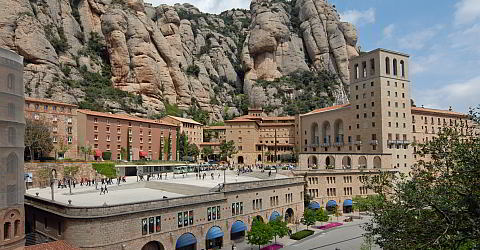
My highest viewpoint from Monserrat

1) Plan Weekend Activities

Although I was told several times to plan weekend activities since there is little time to do it during the trip, I found myself on my way to Spain with nothing planned at all.  With help from my classmates, I was able to figure out some day trips to Segovia and Monserrat, but not without stressing out about getting tickets and figuring out the transit the day of the trips.  Buying bus tickets to Segovia was possible the day before you want to go, but I should have looked more into where the bus picks you up as it is difficult to find.  This resulted in me almost missing the bus which would have been disappointing.  My mistake with a day trip to Monserrat was that I did not plan enough time see the sites I wanted to see there.  I left too late in the day and didn’t know that it was an hour train ride to the location.  Because of this lack of preparation, I did not have time to hike to the top of the mountain or go in the monastery which I wanted to see.

Monserrat Monastery

2) Consider Buying a Phone Plan

I decided to not purchase any kind of phone plan for the trip because I did not want to pay for a plan and thought that I could easily get by without one.  I planned on just using messenger to communicate with my friends and family when I had Wi-Fi in the hotel rooms.  Although for the most part I did not need my phone more than with Wi-Fi, there was one function that I really could have had: google maps.  Google Maps is very useful to have because it can help you get to the hotel or find the correct public transit to use.  During the trip I was basically useless with getting anywhere without service, so I always had to be with someone who had it.  If there is a relatively affordable service option available, I would get it for the trip. 

3) Think about Getting Euros Prior to the Day Before the Flight

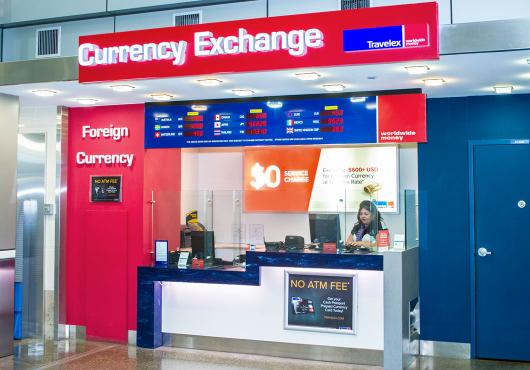
Travelex Currency Exchange at MSP airport (How I got my Euros)

People who bank with Wells Fargo can go to several locations where the bank will trade currencies on the spot.  However, not all banks provide this service.  I bank with US Bank and they partner with an outside service, Travelex, for all currency exchange.  With Travelex, you get a very bad exchange rate unless you make an online order in advance and pick it up at one of the locations.  This requires you to order 1-5 days in advance to make sure your order goes through. 

Blog 6: Language Barriers, Cultural Differences, And Many Other Challenges Turned Opportunities When Working or Learning Abroad – Elizabeth Sundet

When I first transferred into the Carlson School of Management, I was aware of the study abroad requirement. However, I didn’t quite understand what a difference this would make in my collegiate learning. Although I did the shortest option available, my time spent in the classroom prior to departure learning about cultural differences, and then the application of these teachings abroad set me on the path to success to work globally in my future career path.

An image of the Abertis logo, my favorite site visit because of the cultural context provided.

Being Culturally Curious Makes You Culturally Aware

Asking questions about cultural differences from locals who have worked with Americans before is a great opportunity to learn more about your culture in comparison to another. For example, when visiting Abertiz, I asked a few questions following the presentation with the speaker who had lived in both the United States and Spain. He said the most notable cultural difference he has noticed is the use of agendas in the United States. Personally, I love agendas and am an advocate for the importance of a timely and orderly meeting. However, I learned that other cultures may view this meeting style as rude and non-collaborative. By recognizing this cultural difference, and being curious to other cultural differences, I can adapt in the future to be more aware of every cultural style included in a meeting.

Empathy Makes for the Best Teammate

Some may disagree, but being empathetic is extremely important in the business setting. I believe always trying to understand differing points of views makes for the best teammate, as you are always thoroughly thinking everything through. This may be applied to cultural differences and dimensions, as if you are too stuck in thinking your culture is “the right way” you may miss entirely differing, and possibly better, points of view. For example, many would argue that hierarchical cultures are not ideal. However, we learned through various site visits that Spain functions greatly on a hierarchical culture. This allows for decisions to be streamlined quicker, as mentioned by Miguel Duran from John Ryan.

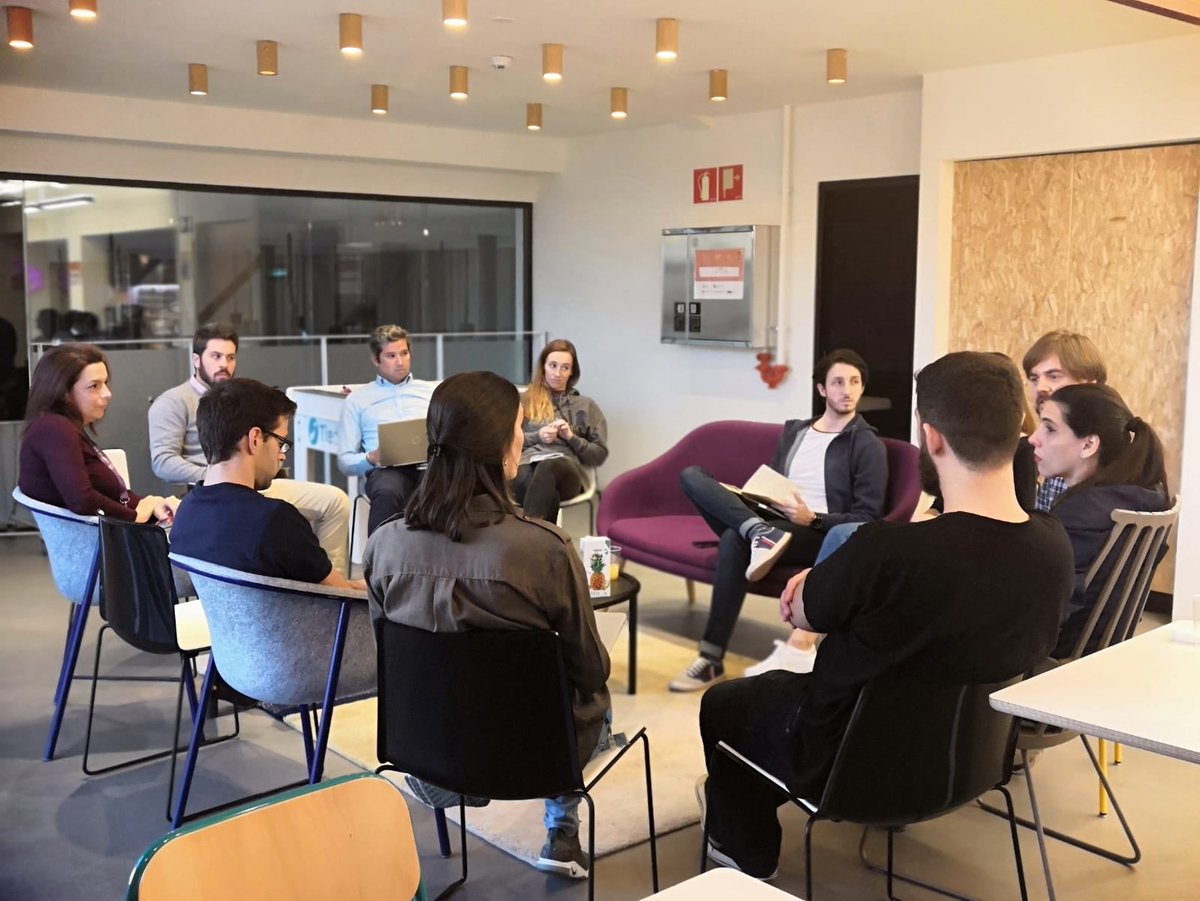
One of the Tetuan Valley classes completing the program from tetuanvalley.com.

Collaboration is Valued Cross-Culturally

While there are different levels of collaboration throughout the different cultural dimension scales, it is evident that collaboration across teams is valued globally. At our site visit to Tetuan Valley, I realized just how important collaboration is specifically in the Spanish culture. We learned about the value the startup school places on asking tough questions to one another to ensure a business is well prepared before hitting the market. Additionally, they stated that they choose applicants not based off their ideas, but more so the attitude they would bring to the culture, as that is how important collaboration and community is to them.

Carlson Students are Coming: A Day Trip to Girona – Brianna Ammerman (#5)

I am an active traveler and like to see as much of a country as I can. Imagine my delight when I learned how simple it was to take the high-speed trains to smaller cities for day trips. My research led me to find Girona, a city just northeast of Barcelona that hosted many Game of Thrones filming locations (my main reason for visiting). It took a trip here to see that the city is more than just a filming location and well worth a trip for future students.

Traveling to Girona from Barcelona Sants is simple.

From Hotel HCC Montblanc, we were able to use Barcelona’s metro system to get to the train station. Once at the station, signs clearly displayed arrival and departure times and the platform we should be at. After a 40-minute train ride through beautiful countryside scenery, we arrived in Girona. A 20-minute walk from the station will get you to the center of the old town where many places are located.

You can take the metro from Urquinaona to Hostafrancs. Source: Google Maps

Game of Thrones fans will recognize familiar scenery from season 6.

Taylor, Connor, Paola, and I enjoyed recreating some memorable scenes from Game of Thrones season 6. Source: Brianna’s iPhone

Girona has become a bit of a tourist attraction recently due to its role in Game of Thrones filming. Many shops in the old town sold memorabilia for the show and I even felt the need to purchase a shirt. Guided tours are available that take you to each filming location in the city, but we decided to find some of the main landmarks ourselves.

A map of all the filming locations in Girona. Source: Brianna’s iPhone

Spend some time at and around the Catedral de Girona.

A picture of the rosette windows that illuminate the cathedral. Source: Brianna’s iPhone

To take a break from the heat, we took an audio tour of the Girona cathedral. I was most impressed with the beautiful rosette stained glass windows and enjoyed that this cathedral was quieter than others I visited. After our tour, it was nice to do some walking on some paths behind the cathedral and along the wall that surrounds it.

The long wall on the back side of the cathedral. Source: Brianna’s iPhone

I would highly recommend a trip to Girona to take a break from the tourist crowds and density of the city. Easily accessible and with plenty to see and do, Girona was one of the highlights of my time in Spain.

Old Friends and New Perspectives: Cultural Dimensions in Spain – Brianna Ammerman (#4)

I thought I was prepared for the cultural differences I would find in Spain after taking college level Spanish classes and hosting several exchange students from Spain in the past. However, business practices and leisure activities displayed how different Spanish culture is from the United States.

Restaurants showed Spain’s flexible approach to time.

Photo of Cristina and I after dinner. I last saw her in the U.S. when I was 10 years old! Source: Brianna’s iPhone

I spent one of my first evenings in Madrid grabbing dinner and drinks with a former exchange student our family hosted, Cristina. Typically, I eat meals very quickly (less than 30 minutes) and by myself in the United States. Cristina and I spent over 4 hours at dinner discussing everything from her engagement to my brothers to our favorite places to shop. I asked several times if she had anywhere to be that evening, but Cristina insisted that we relax and talk as long as we wanted to. This was a very different experience for me and I attribute this to Spain’s flexible approach to time relative to the United States as mentioned in Erin Meyer’s book The Culture Map.

Diagram of the United States (orange) and Spain (red) on the scheduling scale. Source: The Culture Map

Power distance in Spain was greater than in the Netherlands.

Panel discussion with Heineken employees. Source: KPMG Campus Instagram

I attended a conference in the Netherlands last summer and was able to listen to a panel of employees from Heineken speak. When introducing themselves, the employees did not emphasize their titles or positions within the company but focused on past experiences and how they liked to spend their leisure time. This was very different than what I experienced in Spain. I recall a slide that Eva Blanco from HP Barcelona presented which showed a hierarchy of employees in her communications department and the title of each person on the team. Hofstede’s power distance cultural dimension supports the observations I made. The Netherlands scores low on this scale (38) relative to Spain (57) which shows Spain’s hierarchical tendencies in the workplace.

Hofstede’s cultural dimensions between the Netherlands (blue), Spain (purple), and the United States (green). Source: Hofstede Insights

Both the leisure time and business practices I observed and experienced demonstrated some of the differences in Spanish culture that I overlooked prior to my arrival. I learned that I may think I am prepared to take on an international adventure, but there will always be a bit of culture shock to overcome – and that is okay.

Blog 5: Research Restaurants Ahead of Time to Avoid Wasting Time Wandering Around – Holly Dickson

I did lots of research before I left for Spain. I knew what tourist sites I wanted to visit and what cities I wanted to take day trips to. I bought train tickets ahead of time and researched how much various excursions would cost. But the one thing I did not research was the kinds of food I wanted to eat and where I could eat them.

Researching Restaurants will be Worth Your Time

Patatas bravas are a specialty in Spain.

The one biggest piece of advice that I wish I had been given going into this trip is that you should research restaurants before you go. I thought I would arrive in Spain and it would be obvious what restaurants were good. I thought there would be a lot of options close to our hotel. But this is not always the case. I wasted a lot of my time walking around and looking for a decent place to eat that was at my desired price point. The best advice I can give to future students is to do even just a little bit of research about restaurants before you go. Decide how much money you are willing to spend on a meal and then look up the areas around your hotel and the CIEE buildings so that you have a few options you are comfortable with when you arrive.

Get to Know the Specialties of the Area

Tinto de verano at Morao in Madrid.

I also recommend doing some research on what foods you are interested in eating. I knew that I wanted to try tapas, but I had no idea just how many different types of tapas existed. I should have looked deeper into what the specialties of each city and restaurant were. This could have saved a lot of time and effort trying to communicate with a server that usually did not speak much English. After going to Spain and tasting some of the specialties, I highly recommend ordering patatas bravas and tinto de verano whenever possible. These are two menu items that never seem to disappoint.

Restaurants with Good Food and Better Views

Burrata salad and tinto de verano at El Pacifico in Barcelona.

With this information, I have some recommendations for places to eat in both Madrid and Barcelona. One of my favorite meals I ate in Spain was at a tapas restaurant in Madrid called Morao. It had an extensive offering of unique tapas that made me feel like I was really eating Spanish food. I highly recommend ordering patatas bravas as this was my favorite place for this particular dish. Another one of my favorite meals I ate was a at a restaurant on the beach in Barcelona called El Pacifico. Not only did it have amazing food, but also a beautiful view of the water and plenty of outdoor seating.

Blog 4: Experiencing Spanish Culture Through an American Lens – Holly Dickson

I am very thankful for the amount of information we were given about Spain’s culture before we left the country. There were things that I never would have thought about regarding their business culture without learning about it in class. It was an amazing experience to witness first hand many of these practices that we learned about them class.

Relationships Mean Everything in Spain

The trusting scale as described by Erin Meyer in her book The Culture Map.

One thing that I noticed many times was the importance of building relationships in Spanish culture, especially in the work place. During our tour of the Gothic Quarter in Barcelona, Tony the tour guide talked about how important it is to network. He said that it didn’t really matter what your skills are as long as you know the right people. This point illustrated Erin Meyer’s cultural dimension of trusting. Spain is very high on the trusting scale, which means that they must form a personal relationship with someone before they fully trust them in the work place

Experiencing Spain Time can be Frustrating

The scheduling scale as described by Erin Meyer in her book The Culture Map.

Another thing I noticed was Spain’s approach to time, which is very different from the way Americans view time. It was clear after the first few site visits that our speakers didn’t mind going beyond our scheduled time to answer all of our questions. It was easy to tell that they were excited that we were interested in what they had to say, so they didn’t mind spending extra time with us. This experience clearly showed what Erin Meyer meant when she placed Spain high on the scheduling scale. Spanish people see time as flexible and don’t mind making changes as they go. While I really enjoyed our speakers, there were times that I felt frustrated by this cultural difference. I see time how a typical American sees it, which is linear. We should make a schedule and stick to it. Experiencing time how the Spanish see it was a way for me to get out of my comfort zone and begin to understand Spain’s culture in a new way.

Direct Negative Feedback is Scary but Effective

The evaluating scale as described by Erin Meyer in her book The Culture Map.

One final cultural dimension that I noticed was Erin Meyer’s evaluating scale. According to this scale, Spanish people prefer giving more direct feedback than compared to Americans. This was evident during our site visit to Tetuan Valley. During our activity to map a start-up, Sergio was not afraid to tell us when we were wrong. He would look right at us and say, “this is bad information, do it again.” While it was not my natural way to receive feedback, it was effective and made our final product a lot better. I don’t know if I would ever be comfortable giving feedback in this style, but I see the positive side of this practice.

The Value of Family Over Work – A look at Hofstede’s Dimensions in Spain, Andy Eichten Blog 4

After learning about the cultural differences of Spain and the US in class, I was curious to see if I would notice differences during our trip. I was surprised at how obvious these differences were to spot.

A Spanish family enjoying a meal together

Hofstede Masculinity vs. Femininity Reflected in Site Visit Discussions

The first Hofstede dimension that I noticed on the trip to Spain was the Masculinity vs. Femininity dimension.  A masculine society shows a preference for achievement and is competitive whereas a feminine society focuses more on quality of life and is less competitive.  At our site visit with Global Healthcare, our speaker Maite Malet discussed how she had experience working both in the United States and Spain.  She mentioned how the Spanish work environment is much more relaxed and less stressful.  There is not a push to constantly improve efficiencies and meet deadlines in the same way that is pushed in the United States.  There are often longer lunch breaks where coworkers get a chance to relax while getting to know each other and discuss business objectives.  This differs from the United States where any action that is not relating to a company’s bottom line seems to be “wasting time” for the company.  Multiple speakers also talked about how in Spain work life is less important than in the United States.  There is a greater emphasis on family time and relationships which aligns with the quality of life characteristic in the femininity dimension.  Lastly, Quadpack speaker David Ackley discussed how US companies are more concerned about competitors in business.  US companies will often spend a lot of time researching what competitors are doing as they are always concerned about staying ahead.  Spain in the US are expected to differ in this dimension with 42 and 62 respectively, but I feel as though there is almost a larger difference than this.  Spain seems much more focused on relationships and quality of life while the US seems very competitive in business. 

A comparison of Spain and the United States using Hofstede’s dimensions
(Spain blue, US purple)

Site Visit Lectures Display Obvious Power Distance Differences

Power distance refers to how much the people in society accept that there are social inequalities.  Often there is a greater hierarchical order present in the workplace.  After experiencing lectures at our site visits in Spain, there are multiple examples of a greater power distance in Spain. At our first site visit at El Corte Ingles, the communications manager gave most of the presentation even though her English was not as proficient as her subordinate.  It would have been more helpful for us students to listen to a presentation with better English, but it seemed that the manager felt obligated to speak more.  Similarly, during our HP lecture, speaker Emili Serra ironically dominated the lecture while explaining how there is not much of a hierarchy in the workplace.  Although maybe it seemed to Ms. Serra that HP had less of a hierarchy in the workplace compared to companies that originated in Spain, it was clear that the positions of the workers in the workplace hierarchy affected their need to speak during lectures. 

HP 3D printing example from our visit

Overall, it was a great experience to witness difference cultural traits in another country. It is important that I learned that not every place is the same as where I am from.

Blog 4: Do Not be Surprised by the Scheduling or Collectivism in Spain! – Paola Mita

Screen Shot 2017-06-01 at 10.06.52 AM
Hofstede Dimensions. Source: Hofstede Insights

While learning about Spain back in the U.S, I was curious and excited to experience two specific dimensions: collectivism and scheduling. According to Meyer, Spain tends to be more flexible and adaptable than the U.S. How collective Spain’s culture is was impressing to me. As Hofstede stated, relationships; family status; group focus; and greetings are important in collective cultures.

MGMT 3033W Spring 2019 – Schedule. Source: Stephanie Anderson

Expect a Shift on Your Typical Schedule

It was not until the third or fourth day in Spain that I got used to the Spanish schedule. As you can see above, our days would not start until 10:30AM in Madrid, very different from the U.S considering that some stores and businesses operate 24 hours or open pretty early in the morning. It was odd to walk around early in the morning and not find open stores, or even people on the streets in Madrid.

On the other hand, the days in Barcelona were a little longer since we would start around 8:45AM. Although I noticed more stores open and people that early, it still seemed like there were not too many things to do at that time. Before our last day in Barcelona, I wanted to buy some snacks for my trip, and when I looked at Google maps and the stores nearby, most of them would open at 8:30 or 9AM.

These experiences in both Madrid and Barcelona, including the site visits and speakers, made me realize how flexible Spaniards are with their schedules. I could tell they enjoyed the personal connections and relationships, the quality time with their loved ones. This explains why they take about two hours off for lunch during the middle of the day and spend over two hours talking to each other during dinner, finishing it up around 10:30PM. It truly was a unique experience.

Tetuan Valley’s Startup Community. Source: Tetuan Valley Twitter

Collectivism in Spain Brings People Together

I noticed Spain’s collectivism during our site visit at Tetuan Valley. Going in, I had a little bit of background since I had done one of my blog posts about the company, and I was not surprised by the management team’s drive and passion for entrepreneurship.

When they answered the questions, they would always mention how important the entrepreneurial community is and how much they want to help young entrepreneurs. The program that the offer is free, and it is a six-week long intense start up program for people that are just getting started.

Not surprisingly, I really enjoyed both cultural dimensions while in Spain. Even though adapting to the schedule in Madrid was a little hard at first, it was an interesting experiencing. My favorite part of the trip was Spain culture’s high collectivism and how easily you could tell they really cared about their team and family.