Rethinking My Approach to Spanish Culture – Jacob Kenyon

Catalan Independence Stretches Further Than I Imagined

When I wrote my first blog on the Catalan independence movement, I didn’t realize the true scope of how large the movement was. I thought that it was a smaller group of people within Catalonia that were simply disenchanted with the Spanish government and wanted to be free of an entity that they feel didn’t have their best interests at heart.

What I saw in Barcelona however, was a sweeping movement from more people than I had ever originally expected. It was difficult to walk more than a few meters without seeing the yellow ribbon that represents the independence movement in a new location. It wasn’t until our walking tour of the Gothic quarter in Barcelona, where we encountered a protest calling for the release of political prisoners, that I realized just how much the people of Catalonia wanted independence. It wasn’t a small group of people like I had originally thought; but instead a very vocal majority.

Image of Protesters Hanging Yellow Ribbons Around Catalonia

Seeing firsthand the effort that the people of Catalonia have to to become autonomous has made me much more sympathetic to their cause. It has also made me rethink some of my opinions on other independence movements going on throughout the world and ones that have happened in the past, like Scotland and Hong Kong.

Surprised by Spanish Businesses

Based off of what we learned in the Culture Map and Hofstede’s dimensions, I originally thought that the business culture in Spain would be much more relaxed than it is here in the US. What I found once I was there though was that many of the companies we visited, especially the larger ones, operated very much like their American counterparts. The question of siestas was brought up at quite a few of our site visits and the answer was generally the same at each place. A long lunch was the closest thing to a siesta that any of the businesses had. There were certainly many differences between Spanish and American businesses as well, like how flexible time and scheduling were, but the differences were not as vast as I had expected.

Lasting Impressions

Throughout my time in Spain I was intrigued by many different aspects of Spanish culture. Everything felt much more personal than it did in the US, and I would be very interested in going back to Spain and other places around the world to learn even more about their cultures.

It was also interesting to see how well the company culture at HP’s Barcelona site aligned with the culture at their US offices. When you stepped into their facilities and talked with their employees, it felt like you could have been at any of their offices throughout the world. I was extremely impressed with HP’s ability to create a cohesive company culture worldwide.

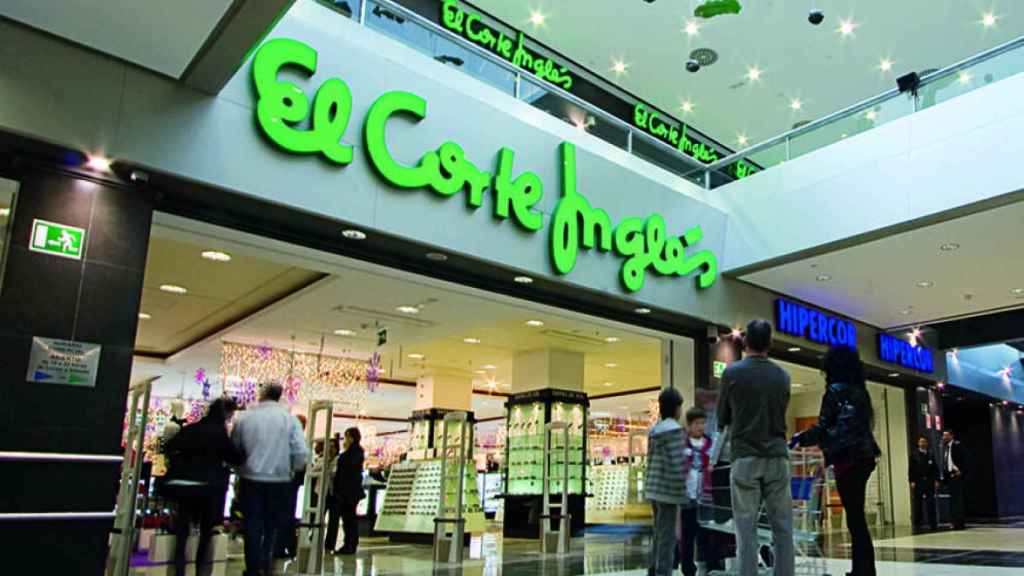
Image of HP’s Barcelona Offices

Uncomfortable Situations Show the Cultural Differences Between the U.S. and Spain – Jacob Kenyon

Power Structure at El Corte Ingles

Image of El Corte Ingles

When we made our visit to El Corte Ingles, one of the first things that I noticed during the site visit was that our main presenter’s English wasn’t as a good as her counterpart’s. Even though she did most of the talking throughout the presentation, she would often refer back to the other presenter to help her with a few English words that she didn’t know. Although the presentation went well overall and was still interesting to listen too, it would have been much easier to follow if the two presenters roles had been flipped.

In the U.S., a company probably would have had whoever spoke the best Spanish be the main speaker for the presentation, regardless of how high up they were in the company. The U.S. tends to have a lower power structure throughout most companies than Spanish companies have, so they wouldn’t have a problem with someone lower in the company taking that lead role as long as they can do it effectively.

Individualism vs Collectivism

One of the best examples I found of how the U.S. and Spain differ on Hofstede’s individualism dimension was when I went to Placa de Catalunya in Barcelona with a few other people. While we were there a woman came up to us and asked if she could ask for our opinions on some relationship trouble she was having. At first we thought that she might be working some pickpockets in the area, distracting people so they are then unaware of their belongings being stolen.

We thought this because in the U.S. no one would be that open and personal with a couple of strangers sitting in a plaza, so in our minds it had to be some sort of distraction. However, at the end of the conversation we all still had our belongings, and it really did seem like she was just looking for other people’s perspectives on a very personal matter.

Most people in the U.S. wouldn’t have been comfortable sharing such a personal situation with strangers (and it was certainly uncomfortable for us as the strangers), but as each country’s position on the individualism dimension would indicate, people in Spain are much more open and personal with other people than most people are in the U.S.

Making the Most Out of Your Time In Spain – Jacob Kenyon

Out of everything that I was able to see and do in Spain, my independent day trips on the weekends were by far my favorite parts, and I want to give some recommendations to future students on what they should see in each location if they decide to go there. The two trips that I went on in Spain, and which I highly recommend to other students, were to Sevilla and Segovia.

Best Places to Visit in Sevilla

Royal Alcazar of Sevilla

If you are a fan of Game of Thrones, then the Royal Alcazar of Sevilla should be at the very top of your to-do list in Spain. It was used to shoot all of the scenes that happened in the Water Gardens of Dorne in the show. It’s an incredibly unique and beautiful location and is well worth the trip. Admission for students is also only 4 euros for an incredible experience.

Plaza de España

Another great location in Sevilla is the Plaza de España, which is only a short walk away from the Royal Alcazar. It’s a beautiful plaza the is surrounded by a crescent shaped building and a small moat where you can take a gondola around in. There is also a fountain in the middle of the plaza that is perfect to take pictures by.

Best Places is Segovia

Alcazar of Segovia

The Alcazar of Segovia is a fairy tale castle. From its location on a steep cliff to its picturesque towers, every detail about it is something you would expect to see in a castle in a movie or TV show. It has a lot of great views from on top of its walls and a lot of unique history behind it as well.

Segovia’s Aqueduct

Segovia’s aqueduct might just be the most unique and interesting part of the city. It was constructed around the 1st or 2nd centuries by the Romans who occupied Spain at the time. It is the most iconic structure in the city, and it is also pretty incredible to walk next to something that was made almost 2000 years ago and is still in near perfect condition.

If you are planning on going to either Sevilla or Segovia, I highly recommend checking out these locations. They well worth the trips to see them, and will definitely be a great addition to your time in Spain.

Madrid and Barcelona Vastly Differ in Unexpected Ways – Brady Sneller, Blog 5

Value of Madrid vs Barcelona

Madrid and Barcelona, the two largest Spanish cities, are separated by only a 6-hour car ride, yet the look, feel, and people in each city could not be more different. Some of the differences can be attributed to the geographical features of each city, but other differences have more hidden roots. In contrast, Milwaukee and Minneapolis are separated by a similar distance but feel almost identical in comparison. Being a traveler visiting Spain, both Madrid and Barcelona offer many sights and understanding the differences is important to getting the most out of both experiences.

Knowing Spanish is More Important in Madrid than Barcelona

Most common language of each region of Spain

The first and perhaps the most noticeable difference between the two cities are the languages that are spoken. In Madrid, it is almost exclusively Spanish and so at many points it was challenging to find someone who spoke English at all. As someone who speaks little to no Spanish this was a major challenge of Madrid. I expected communicating in the higher tourism areas to be much easier than in ended up being. In Barcelona on the other hand, Spanish was far less prevalent. There was no real dominant spoken language in any parts of the city, some spoke Spanish, others spoke Catalan, and most spoke some level of English. Communication was far easier for me in Barcelona as the English we heard from the residents was far more developed. This was noticeable in most of our site visits, where I found it much easier to understand the speakers. Both HP and Quadpack mentioned that the ability to speak English was a factor in making hiring decisions. In contrast, the English spoken by the presenters from El Corte Ingels and Recyclia was much more difficult to understand.

Be Prepared for Tourists in Barcelona and Locals in Madrid

A second difference that was noticeable was the people of each city. In Barcelona there were many tourists anywhere we went. In Madrid the foreigners were much more localized to the high tourism areas. I noticed more tourists in Segovia and Toledo than I did in the Madrid city center. The amounts of tourists were an obvious difference between the people in each city but the local of each city had differences that were harder to notice right away. The resident of Madrid tended to be dressed more formally than those of Barcelona which gave the city a more upscale feel that I did not notice until we got to Barcelona. The neutral look of the locals from Barcelona also impacted the feel of the city. Our gothic quarter tour guide pointed out that the residents are not quick to trust anyone so if someone was smiling, they were either a tourist or trying to, take our wallet. For me this took away from the feel of the city, comparing it to Madrid where everyone seemed to have a bright expression on their face.

While they are the two biggest cities in Spain and are relatively close in proximity, Madrid and Barcelona are very different and offer tourists different opportunities. These differences can be an important factor to consider when deciding where to travel in Spain.

Reflecting on My Expectations – Emma Niemela (Blog 6)

After returning from Spain, I didn’t even know what to talk about, or how to explain my trip. So many people would ask me about my favorite thing I did, but I didn’t have an answer. This appears to be an easy question, and two weeks sounds like a short time, but in the first few days after my trip I had trouble remembering everything I did.

A few of the many pigeons we crossed paths with in Spain.

Culture is in the Details

The things that stuck out were the little details; walking through the narrow streets, constantly checking to make sure all of you belongings were still intact; attempting to speak Spanish, but then having no clue what is said in response; ducking because a pigeon decides to fly at your face; and finally, looking for the nearest metro stop, but checking to make sure you are actually riding in the right direction before you get on the train. I’ve realized that these little things make up the culture of Spain, and that travelling abroad is not all about what landmarks you can see, but about the way you experience life differently.

Struggling with Spanish built my empathy.

Challenges with the language barrier allowed me to feel empathy for people learning a second language in a way I had never understood before. I was stunned to learn that one of the companies we visited had a policy that changed the language spoken in the office for every day of the week. This opened my eyes to the diversity in Spain, as this would be unheard of in the United States.

A cathedral in Segovia where I learned about the history of religion in Spain.

Seeing the history helps me to frame the present.

Visiting all the historical sights also gave me a new understanding and appreciation for everything I have learned in history class and read about in my free time. Seeing the castles, palaces, and cathedrals helped me to understand the roots of hierarchy in Spanish society and realize the connection with my own religion and history. Seeing the grandeur allows me to conceptualize the commitment of the Spanish people to their culture, and their devotion to the Catholic faith. I imagine the power of collectivism must have been very strong for the people who devoted their lives to building these structures.

Understanding Cultural Differences Before Traveling Helps to Reduce Culture Shock – Brady Sneller, Blog 4

As you walk down the streets of Madrid it may seem like a Spanish speaking New York City. However, after you take a closer look at the people and how they interact, the differences become clear. The differences between Spanish and American people can be overserved the most on Erin Meyer’s persuading and Hofstede’s individualism dimensions.

Erin Meyer’s Persuading Dimension was Noticeable in the Guest Speakers

Erin Meyer’s Persuading Dimension: US – Blue, Spain – Orange

While I was watching many of the presentations given by the companies we visited, the difference in the persuading dimension were very noticeable. The United State is heavily based in the applications first side of the dimension, where Spain is based in the principles first side of the dimension. I noticed the difference most during the Recyclia presentation. At several points in the presentation I found myself wondering what Recyclia actually did. I also found myself having a challenging time finding the information interesting because I did not understand how and why the lecture was important. This is a direct result of the differences in culture. The guest speakers that I have seen throughout my schooling have for the most part used an applications first style because that is the culture of the Untied States. This made the Recyclia a challenging presentation to follow because it was different from what I was used to.

The Collective Society of Spain can be Seen in the Streets of Madrid

Hofstede’s Individualism Scale, US – Blue, Spain – Grey

Hofstede’s individualism dimension was similarly easy to find throughout life in Spain. As I was walking in the city center of Madrid, I took a second to stop and look around. One of the more noticeable things was that it seemed everyone in the city center was walking with someone else. I noticed only a handful of people by themselves at that given time. Throughout the rest of the week I continued to notice this same pattern in different areas such as the metro or around our hotel. This contrasts greatly to the United States as it is common to see someone out by themselves or sitting a bar alone. I believe this is related to Hofstede’s individualism dimension. The United States is very high on the individualism scale with a score of 91, which is 40 points higher than Spain’s score.

Going into the trip, I was skeptical if the cultural dimensions we spent so much time learning about would actually be identifiable. It became quite clear very early on in Madrid that learning about the dimensions was important because they were noticeable in the culture. I think understanding the differences before getting to Spain helped reduce the amount of culture shock that I experienced. 

Collectivism and Trusting heavily differentiate Spain’s culture

To some Americans, Spain may be a place full of dreadfully long meals, small portion sizes, and overly nosy strangers. To me it’s a learning experience and a clear reflection of the differences in culture between the U.S. and Spain.

The typical Spanish meal clearly demonstrates a collectivist culture

The welcome dinner in Madrid, which lasted over two hours and included several shareable tapas.

Geert Hofstede defines the cultural dimension of collectivism to be “a preference for a tightly-knit framework in society” and “whether people’s self-image is defined in terms of ‘I’ or ‘we’.” Although Spain is around the global average on the individualism vs. collectivism scale, it is much more collectivist than what we are used to in the United States. One distinct example of their more collectivist culture is through their appreciation for long and slow meals and the prevalence of shareable tapas. The reason that this demonstrates collectivism is because Spaniards use meals to emphasize group harmony and bonding with others. Traditionally the siesta allowed for workers to return home and enjoy a long lunch with family, which is another trait of collectivism.

Relationships have become a pivotal aspect of business models

Erin Meyer’s trusting dimension, comparing the U.S. (orange) to Spain (Culture Map)

On Erin Meyer’s trusting scale, Spain is much more relationship-based than the U.S., meaning that they build trust primarily through personal connections with people rather than simply by working with them. Our site visit at El Corte Inglés emphasized this characteristic as they strive to create very personal and custom interactions with each and every customer.

The Personal Shopper Service at El Corte Inglés

One way that they offer this experience at El Corte Inglés is through the Personal Shopper, a service that allows custom outfits and pieces to be chosen for a specific customer and their needs. This in turn creates a direct and personal relationship between the shopper and the worker, further showcasing the importance of relationship-based trusting in Spain.

Strangers may ask more questions than what is comfortable

During my group’s day trip to Segovia, we sat down next to a Spaniard named David on the bus. We made some initial introductions with him, but I thought that would be the extent of our interaction. However, we ended up talking with him for the entire duration of the hour-long trip and covered much more personal topics than what would be typical in the United States. After thinking more about this encounter though, I began to realize that it was a very clear reflection of the significance of relationship-building and the importance that the Spanish place on them.

Blog 6: A True Global Leader is Born of Experience, Not Education- Edward Neepaye

Prior to this class I had a base understanding of why corporations highly value “Global Intelligence”. Over the course of the past 10 weeks of instruction & travel I can say that my understanding of global intelligence has not only expanded on the business & academic level, but also on a much personal level.

Curiosity leads to broad cultural exposure

Bill George describes 7 characteristics that are critical to global success, and while a true global leader should exhibit each of these in some capacity, the one that really sparks the flame is cultural curiosity. For me at least, that’s how this journey started. I was curious about certain cultural aspects of Spain and had some questions going into the class. I wanted to know about the history of Moorish conflicts; I was curious as to how Islamic architecture, linguistic influences & food are dotted throughout the country. I wanted to know why Catholicism is still such a bedrock of the Spanish experience even when many Spaniards aren’t very religious. I was also curious about cultural elements such as the bizarre eating schedule, which I wrote about in depth in blog 4. I was curious why a country roughly the size of Texas has 5 languages spoken. I wanted to understand why the Spaniards are so enthusiastic about soccer.

For many Spaniards soccer is a political tool of solidarity. Writer at Real Madrid stadium in Madrid

Questions answered along the way

The thing about all these questions is that I didn’t have to go out seeking the information it came to me throughout the lectures, site visits & interaction with the locals. I never once googled “Islamic influences in Spain” but once I arrived in the country it was nearly impossible to miss. In blog 4 I talked about how a late dinner reservation taught me more about Spanish dining culture & collectivism than any google search ever could. I didn’t have to google why Madrid speaks Castilian Spanish & Barcelona speaks Catalan when I got to experience, first-hand, the varying language and culture. I still don’t fully understand why the Spaniards take soccer so seriously but a visit to Camp Nou taught me that for many Catalan people soccer extends far beyond the turf & into politics & culture. As for Catholicism, step into La Sagrada Familia or the Toledo cathedral & you’ll understand that something powerful happened there that needed to be commemorated & remembered in perpetuity.

The writer’s hotel in Salamanca, Madrid where across the street is Casa Arabe, an Islamic cultural center; remnants of a Moorish past

Learning through experience > formal education

The biggest lesson I took from this trip is that cultural curiosity is the key to unlocking a rich & nuanced experience. I knew going into the program that global intelligence is highly valued in the corporate world, however, my understanding of the best means of acquiring that intelligence has been drastically changed. In our ever-globalizing world, it’s not simply enough to learn about other cultures from a book or 2nd hand knowledge you hear about them. The best way to learn about other cultures is to fully immerse yourself in that culture. Have dinner with the locals– with no reservations, visit their cultural & historical sites to gain perspective into how these things shape their everyday life, learn a few phrases in their language; embarrass yourself communicating with them. These are all things I did in preparation of & during this trip & because of the exposure I gained, I am confident that my own global intelligence & capability as a global leader has been exponentially expanded.

Blog 6: It’s OK to Be Small- Christian Fiksdal

During our last few days in Barcelona, I had a bit of an existential crisis. There were so many new experiences on our trip that it all sort of hit me at once. I was overwhelmed, but I couldn’t really explain what I was feeling. Furthermore, our last presentation was by Maite Malet, a representative for Sphera Healthcare, and I resonated with what she said about her time studying abroad. To give a brief synopsis, when she came back to Spain after a few years in the United States, she noticed her friends doing the same thing, over and over again. They would still go to the same restaurants, buy the same clothes, go to the same clubs, and for the most part it was like she never left. And now that I have had a couple days back in Minneapolis, I completely understand what Maite was talking about at Sphera.

My Experience Went Beyond the Site Visits

While I thought that our abroad experience was fantastic by learning about the different companies and tourist hotspots in Spain, I think it had an even bigger impact on my attitude towards life in general. Specifically, my earlier blog posts and business practices speech was super strict in terms of its tone and content. I mean I go to a business school, so I have a business cut-throat attitude towards any aspect of my life. After experiencing Madrid, Barcelona, and some other historical cities of Spain, it made me more empathetic towards others. There were multiple instances of the “polychromatic” time we researched before the trip, and I was definitely frustrated when it happened. But everything was alright. Sure we lost a couple minutes here and there, but does it really matter at the end of the day?

IMG_2341.JPG
Peak of Montserrat. Image by Christian Fiksdal

We’re all humans on the same earth, and it’s so hard to comprehend how small you really are. Relative to my Global Intelligence, I think I grew the most in terms of my self-awareness, empathy, and overall worldview. Additionally, I was fortunate enough to read a book called Meditations by Marcus Aurelius while being immersed in a foreign culture. I’ll leave my final words to a quote from the book:

“When you wake up in the morning, tell yourself: the people I deal with today will be meddling, ungrateful, arrogant, dishonest, jealous and surly. They are like this because they can’t tell good from evil. But I have seen the beauty of good, and the ugliness of evil, and have recognized that the wrongdoer has a nature related to my own – not of the same blood and birth, but the same mind, and possessing a share of the divine. And so none of them can hurt me. No one can implicate me in ugliness. Nor can I feel angry at my relative, or hate him. We were born to work together like feet, hands and eyes, like the two rows of teeth, upper and lower. To obstruct each other is unnatural. To feel anger at someone, to turn your back on him: these are unnatural.”


The battle for my heart with the front lines of the counterfeit goods empire – Michael VandenBrook

Western African immigrants flood the sidewalks of Spain with counterfeit goods. They can seem pushy and intimidating at first, but after realizing these people have a story behind their situation your perspective changes.

Hopeful immigrants set sail to a new country

The population of the manteros, mantero is the local name for a sidewalk blanket seller, is primarily made up of immigrants from Senegal. They have left their lives and families at home in hopes of finding a warm welcome and prosperity in Spain. However, both are hard to come by once they step foot off the boat.

The punishment materos face if legal action is taken against them

Barcelona has been faced with having to decide what to do with these blanket top sellers since the mid 1990s. The law on whether unlicensed blanket top selling is a criminal offense has fluctuated since then, but as of 2015 the government has decided to criminalize it. This means that any of the manteros can be charged with a fine, confiscation of their goods, six to twenty-four months of jail time, and or deportation. This is a huge consequence for the poor immigrants serving a much larger organized empire. Spain has been conflicted with punishing the manteros because they know that they are just the grunts serving wealthier employees that run the counterfeit goods empire.

Sellers running from authorities to set up shop on the boardwalk

Social efforts have risen to help undocumented sellers gain citizenship

Driven by the collectivism culture in Spain there have been efforts to help these hopeful immigrants gain legal citizenship. Although the legal process in place takes three years for immigrants to become citizens with documentation allowing them to work, rent, and take Spanish classes, there are cooperatives providing legal jobs to the manteros right away. Social projects like Diomcoop and Top Manta brand are employing a portion of the manteros while they are in the limbo of being an undocumented worker. These initiatives are small and high cost, but will hopefully grow and help the rest of the manteros.

My experience with the manteros

As soon as I saw the knock of products I knew I was going to be headed home with some sweet new stuff. One evening in Barcelona I had set out to the sidewalk on the beach with orders from family and cash in my pocket. When I arrived, I was immediately approached by the manteros because they could see in my eye that I was going to buy something. I like to think of myself as a great shopper, which means I would move around to all the blankets closely examining each item. The manteros did not like that I was shopping competitively and even yelled at me in some cases. The other discomforting event that happened was one of the vendors held onto my wrist while trying to sell me a bag with no intention of letting go. That turned out to be effective because I did buy a bag from him. Despite these semi-concerning experiences, I was able to friendly haggle and talk with the vendors. I asked them about their lives and they even offered me some food. My heart softened towards the mantero community. They were kind and generous in the few moments I shared with them and I truly hope that they will be granted legal documentation swiftly.

All the items that I purchased from the manteros