The History of Catalonia all in One Place: Museu Nacional d’Art de Catalunya

Museu Nacional d’Art de Catalunya – By Marc Tenés

In 1929, the Palau Nacional of Montjuïc, constructed for the International Exposition of 1929. Five years later, the Museu Nacional d’Art de Catalunya was opened to the public in the Palau Nacional of Montjuïc with a medieval collection of art. In 1995, Romanesque art was introduced in the museum. In 2004, Modern art started being introduced into the museum.

I hope to gain a visual understanding of the history of Catalonia at this museum

With this museum being the national museum of Catalonia, I figure that I can learn about Catalan history through the beautiful works of art there. I also hope to see art from a wide variety of artists, as my experience could be a lot more enriching if I see many different artists’ works that cover many centuries. Also, the building itself is a beautiful work of art, which gets me excited for the trip.
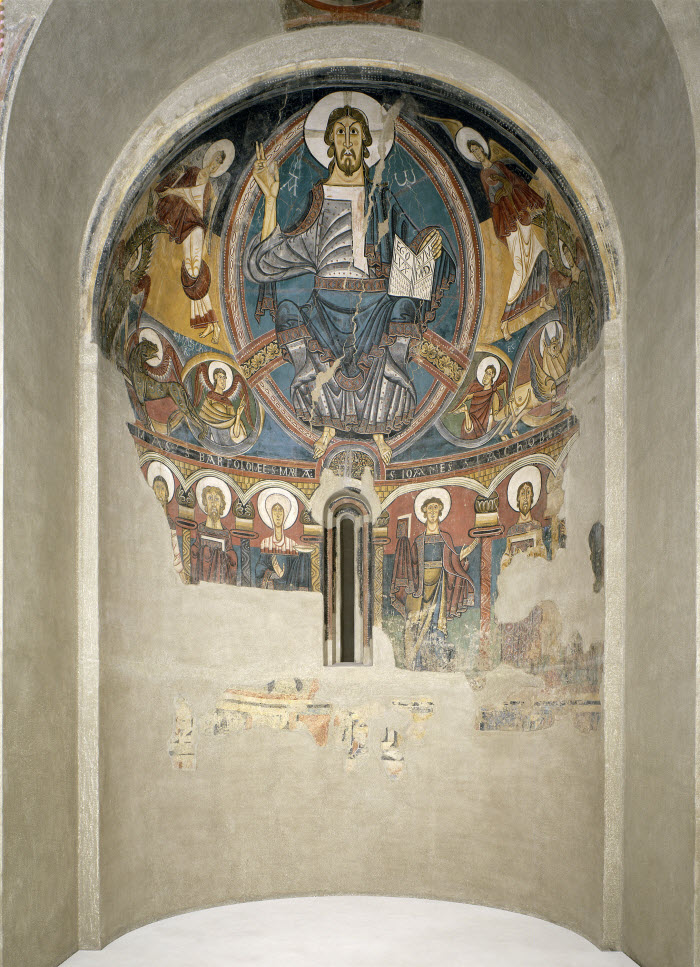
A Romanesque Mural at Museu Nacional d’Art de Catalunya

The Museu Nacional d’Art de Catalunya documents the history of Catalonia

Luckily for me, this museum has art from as far back as the 10th century and recent as the 21st century. Their collection of art comes from five different periods. The oldest art is Romanesque art from the 10th and 11th centuries. Next is Gothic art from as far back as the 12th century and as recent as the 15th century. The Gothic art illustrates the splendor and the peak of Catalan territorial expansion in Europe at the time. There is also Renaissance art from the time frame of the 13th to the 16th century. There is also Baroque art from the 17th and 18th centuries. The Baroque art feature works by major painters such as El Greco, Zurbarán, Velázquez and Rubens. Finally, there is Modern art from the 19th, 20th, and 21st centuries. The Modern art covers all of the Catalan artistic genres, including the Catalan Modernist style (Art Nouveau) and the avant-garde. This museum is also very important to the Catalan people. This is because of the centuries of history that is documented here, which gives reason to why it is named Museu Nacional d’Art de Catalunya. If Catalonia were to secede from Spain, this museum would be one of the most important places in that nation, as it is the main holder of Catalan history.

This is the Google map showing the trip from our hotel to the museum, which takes about 30 – 32 minutes

The Museu Nacional d’Art de Catalunya can be visited by using the metro

The museum is southwest of Hotel HCC Montblanc (our hotel in Barcelona) and can be reached by walking and using the metro. The trip to the museum begins with a seven minute walk to the Pl. Catalunya – FNAC metro station. From there, we travel for eight minutes to the Pl. Espanya metro station. Upon arriving there, we walk thirteen minutes to the museum.

The Museu Nacional d’Art de Catalunya has free admission and is closed on Mondays

  • Summer (May – September) Opening Times:
    • Mondays: Closed
    • Tuesdays – Saturdays: 10am to 8pm
    • Sundays and Public Holidays: 10am to 3pm
  • Winter (October – April) Opening Times:
    • Mondays: Closed
    • Tuesdays – Saturdays: 10am to 6pm
    • Sundays and Public Holidays: 10am to 3pm
  • General Admission:  €12
  • Combined ticket: general admission + audio guide: €14 (buy online only)
  • To the Rooftop Viewpoint: €2
  • Basic friend of the museum (annual fee): €18 (unlimited access to the art and the temporary exhibitions)
  • Audio guide: €4
  • Must Be:
    • Saturdays, from 3pm on-wards
    • The first Sunday of each month

Links for Additional Information

Madrid’s oldest street market sells almost anything you can imagine

El Rastro is a market in Madrid occurring on Sundays and public holidays from 9 AM – 3 PM. This market mainly sells goods such as clothes, antiques, home goods, appliances, and souvenirs. Food is available in tapas bars lining the streets and in the nearby La Latina neighborhood. This market is free to visit, and could be an interesting place to watch street musicians and people watch, even if you don’t plan to buy anything.

Crowds at El Rastro, image from www.itinari.com

El Rastro began as a cattle market.

El Rastro began in the year 1740, as a place people would gather to butcher and sell their cattle. The name “Rastro” means trail, referring to the trail of blood created by bringing the animals from the slaughterhouse to the market. Craftsmen eventually joined El Rastro, making useful items from the hides. The market grew and people came from all around to sell their items. The trail does not exist today, as there are no longer cattle brought to this market, but there are plenty of other things to look at and buy! For additional information on the history of El Rastro go to this site.

Expect the unexpected at El Rastro.

El Rastro is as much an experience as it is a market. There is no real organization, though similar vendors tend to cluster together. Touristy items tend to be sold near the center of the market and antiques and other unique items near the outskirts. You can find almost anything you can dream of at El Rastro: furniture, collector’s items, antiques, accessories, electrical appliances, and clothes are a few examples (click here for more). Food is available in tapas bars lining the streets, and in the nearby La Latina neighborhood. Timing a visit to El Rastro may change your experience. Earlier in the day vendors may not be completely set up, but since the market will be less crowded you will have first selection over the goods. Throughout the day the market becomes very busy with price haggling common near closing time. Remember to bring cash to El Rastro, since vendors may not accept credit cards.

The route to El Rastro from our hotel in Madrid, link to Google Maps here

El Rastro is 36 minutes from our hotel by metro.

Traveling by car, it is possible to make the journey in 12 minutes, but as it is more likely we will be taking the metro, I have included this route above. This journey would require a seven-minute walk to the Goya metro station, a train ride from Goya to Opera on the red train, a transfer to the green train, a train ride to La Latina, and a one-minute walk to El Rastro. El Rastro is located on Calle de la Ribera de Curtidores and
Calle de Embajadores near the Plaza de Cascorro.

The Greatest Work of Spain’s Greatest Architect: La Sagrada Família – Jacob Kenyon

La Sagrada Familia is one of the most recognizable landmarks not only in Barcelona, but in all of Spain as well. Construction on the basilica began in 1882, and in the 100+ years of its construction it has become the largest tourist attraction in Barcelona and attracts over 3 million visitor each year. Visits to the basilica, along with donations, are what fund the continuing construction of La Sagrada Familia.

The Beginnings of La Sagrada Família

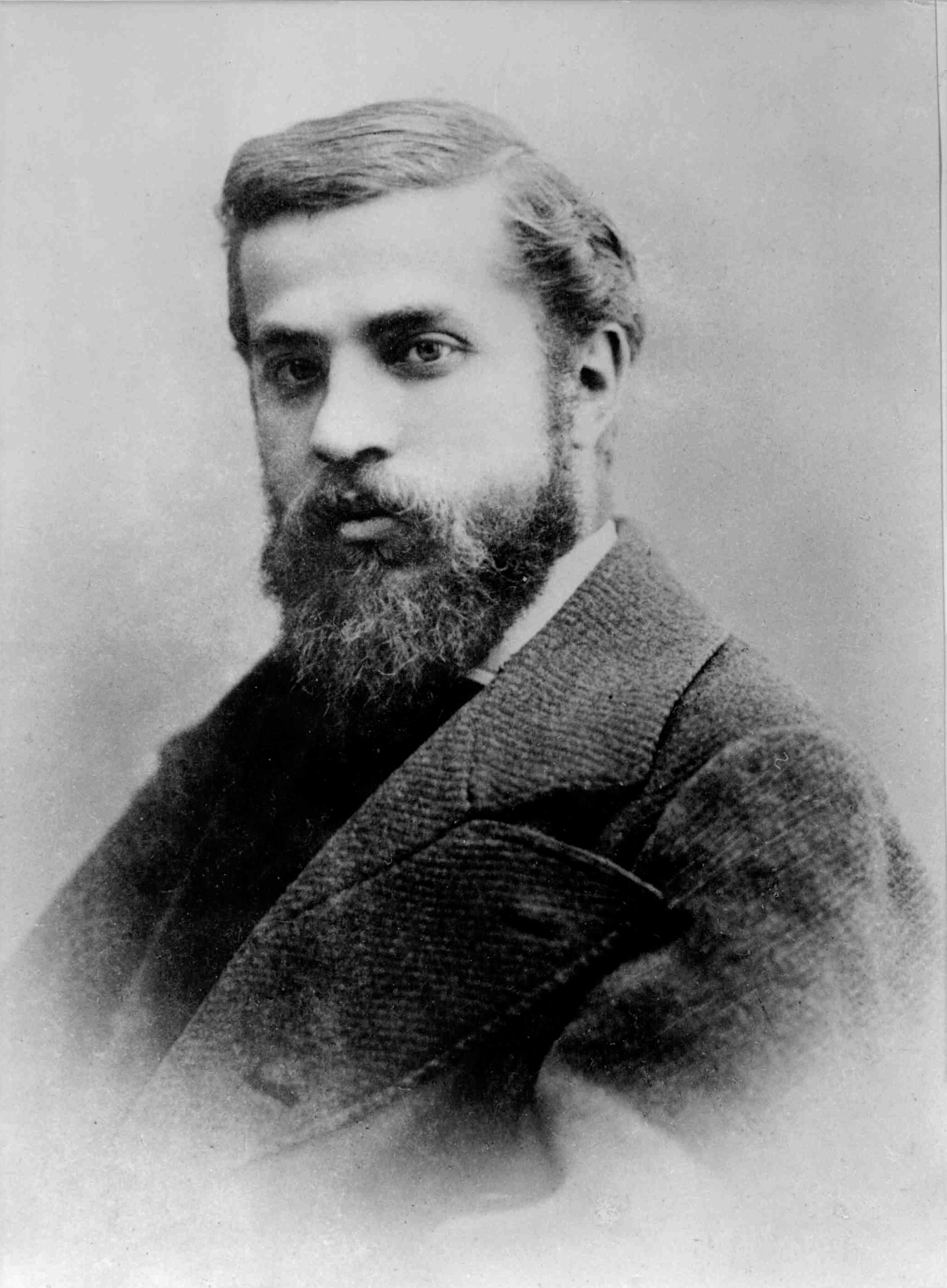
Antoni Gaudí, the mastermind behind La Sagrada Família, is one of the most well known architects in the world, with numerous works throughout Barcelona and Spain. He started to work on La Sagrada Família in 1883, one year after the start of the project, and quickly became the director and lead architect in 1884.

After building the crypt for the cathedral, Gaudí scrapped the orginal design and began working on the much larger design that we now see today. He continued to work on Sagrada Família and other projects until 1914, when he began to focus solely on La Sagrada Família.

Gaudí tragically passed away after being hit by a tram in 1926, and only lived to see one of the eighteen spires be built. He did expect construction to continue on long after he passed away, and completed the architectural plans before he passed so that his work could continue. Gaudí was buried in the crypts that he designed below Sagrada Família.

Construction continued after Gaudí’s death despite setbacks along the way, and it is expected to be completed in 2026 on the 100th anniversary of his death.

The Meaning Behind the Architecture

La Sagrada Familia is dedicated to Christianity’s Holy Family, which include Jesus, his twelve Apostles, the four Evangelists, and the Virgin Mary. Each of these 18 individuals have a spire on the basilica dedicated to them, with Jesus Christ’s spire reaching 172 meters once it is complete. There are three facades on the basilica which show three events within Jesus’ life: Facade of Birth, Facade of Passion, and the Facade of Bliss.

The Facade of Birth is dedicated to the birth of Jesus and is themed around nature and its constant change. The Facade of Passion shows the death and resurrection of Jesus. There are many biblical figures featured on this facade, and much of the architecture looks like bones to symbolize Jesus’ death. Finally, the Facade of Bliss represents the “eternal glory of Christ”. It contains seven doors and depicts Eternal Hell, the Last Judgement, and bliss in Heaven.

Questions

  1. How much did Gaudí change the original design of La Sagrada Família, and how long did it take him to create the final design?
  2. What was the largest donation that La Sagrada Familia has ever seen?
  3. Did the Pope consecrating the church have any effect on the visitors and donations that you received?
  4. What have been the biggest setbacks to construction throughout the years?
  5. How much has it cost to build La Sagrada Familia so far?

It Would be a ‘Pour’ Decision to Miss Out on Alta Alella – Brianna Ammerman

Alta Alella employees packaging bottles of wine. Source: Alta Alella

Spain has a longstanding history of wine, making a vineyard one of the top places I want to visit on this trip. Alta Alella is the closest winery to Barcelona and offers tours of its cavas and vineyards. My initial expectations include a lovely tour of a smaller, family-owned vineyard as well as several samples of the company’s wine. Some concerns I have include transit to the vineyard, ensuring that the hosts are aware of our arrival, and potential for poor weather. However, I have done some in-depth research that should help mitigate some of these concerns.

Alta Alella has a strong family tradition

Pujol-Busquets Guillen family. Source: Alta Alella

Josep Maria Pujol Busquets and Cristina Guillen purchased their estate, Can Genis, over two decades ago in 1991. After ten years of revitalizing the land, Josep Maria made his first bottles of wine in 2001. Daughters Mireia and Georgina also live and work at the vineyard, receiving their parents’ passion and knowledge of wine culture.

All wine is organic due to the vineyard’s location

Alta Alella is located inside the Serralada Marina National Park. Its location makes the vineyard subject to strict government regulations. The vineyard is not allowed to use pesticides because of the area’s wildlife. While the regulations can create minor complications for the business, Alta Alella has been able to uniquely define itself as an award-winning natural wine.

Photo of the vineyard. Source: Alta Alella

Alta Alella is a brief bus ride from Barcelona

From Hotel HCC Montblanc, you can take the E19 express bus line from the center of Barcelona to Alella. You board the Ronda de Sant Pere stop (a less than 5 minute walk from our hotel, on the corner of Plaça d’Urquinaona and Ronda de Sant Pere) and ride the line until the Riera Principal stop in Alella (about a 30 minute bus ride). From here, you take a short walk (about 20 minutes) to the gate of the vineyard. The E19 line runs between 7:30AM and 6:15PM on weekends and tickets can be purchased at one of two offices in Barcelona (I could not find an estimated price online). If the public transit does not work out, it is possible to take a taxi to Alta Alella.

Bus ride from Barcelona to Alella. Source: Google Maps
Walk from bus stop in Alella to Alta Alella winery. Source: Google Maps

The winery has a flexible tour schedule

Alta Alella is open Monday through Sunday from 9:30AM until 6:30PM. An hour and a half wine tour and tasting is available at 20 euros per person. This includes a walk through the vineyards, winery, and cellar and ends with a tasting of four wines at the visitor center. Bookings can be made through email (visita@altaalella.wine) or by calling +34 628 624 182.

A wine cellar at Alta Alella. Source: Alta Alella

This unique winery is sure to be a memorable experience while in Barcelona and I look forward to spending a relaxing, educational afternoon at this beautiful place.

Els Encants Vells: The Oldest Flea Market in Barcelona with Modern Architecture- Anna Stepp

Els Encants Vells open-concept flea market
Source: Barcelona Connect

Els Encants Vells is the largest flea market in Barcelona and has been open since the 14th century. Even if you don’t want to buy anything, the stunning architecture is enough to make this an important stop on your trip. The 500 vendors sell everything from antiques to mattresses, so you are bound to find something.

The long history of the market

Els Encants Vells dates back to medieval times in the 14thcentury making it one of the oldest markets in Europe. It maintains many traditional values of second-hand markets such as still offering auctions. It resided at a previous location in Encants for 80 years before moving to its current location. The old market was always very crowded and had no roof overhead making the weather very impactful on sales. 

Els Encants Vells has built a modern structure at a new location

The new location was built in 2013 next to La Placa de les Glories. Although it is unusual to see a multi-level market, this one was built as a 3-story structure. A metal canopy covers the market so that shoppers can enjoy the open environment without having to worry about the weather. The modern structure was designed by Fermin Vazquez. The canopy is mirrored which offers a very interesting visual that I would love to see.

The canopy structure at Els Encants Vells
Source: Barcelona Lowdown

The flea market sells everything you could imagine on a budget

Els Encants Vells is known for carrying second-hand goods, but also has a lot of new products. You can find vintage clothing, jewelry, records, bikes, and pretty much anything else you could imagine. I would be interested in Spanish items that I can bring back as souveniors. Often these items will be displayed in a big pile with sellers yelling for your attention. This can be overwhelming, but I plan on getting away by enjoying a bite to eat at one of the 8 eateries.

Products piled in boxes at Els Encants Vells
Source: Latitude 41

The metro line makes this a very easy attraction to visit

You can take the Metro red line 1 to station Glories. Once you arrive, the market is at the intersection of Av. Meridiana and C/Castillejos. There is the Urquinaona metro stop right next to our Barcelona hotel making this an easy commute.The market is open to the public for free.

The trip is a 6 minute drive or 3 metro bus stops
Source: Google Maps

Els Encants Vells is open several times a week 

The market is openMondays, Wednesdays, Fridays, and Saturdays from 9am to 8 pm. If you would like to experience the auctions you can visit from 7:15am until 8:30am on Mondays, Wednesdays, or Fridays. It is best to go at the end of the day since this is when you are most likely to get the best deals. 

Watch out for pick pocketers since crowds are common

Over 100,000 people visit Els Encants Vells each week making it a very busy attraction. This means pickpocketing is common, but they have improved security to deter this. Saturdays are the busiest so I would expect more pickpocketing activity.

El Corte Ingles is Still Dominating Spain and Europe

Image result for el corte ingles
Image Courtesy of Cincodias

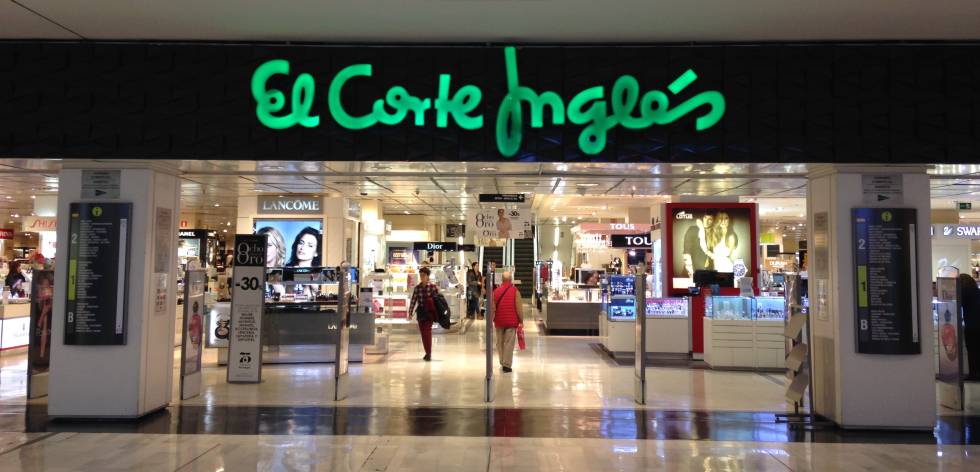
Mall of America is one of the top tourist destinations in the country and is known around the world. Each year, 40 million people from around the world visit the mall. However, if you are someone who loves shopping and are in Madrid, Spain, El Corte Ingles is the place to be. El Corte Ingles, Spanish for “the English cut”, headquartered in Madrid, is the biggest department store in Europe and ranks third worldwide. El Corte Ingles is Spain’s only remaining department store chain.

El Corte Ingles History

El Corte Ingles took its name form a small tailor shop founded in 1890, located between Calle Preciados, Calle Carmen, and Calle Rompelanzas in Madrid. Inn 1935, Ramon Areces Rodriguez, backed by his uncle, Cesar Rodriguez, bought the tailor shop and started his business venture. In 1939, they acquired premises at Calle Preciados 3, Madrid, earmarking the ground floor, first floor, and part of the second floor for sales. In June 1940, when the business had seven employees, Ramon Areces constituted the company El Corte Ingles, with his uncle Cesar Rodriguez as partner and chairman of the company.

Between 1945 and 1946, the first compete refurbishment of the building took place, resulting in total sales area of 2,000 meters squared distributed over five floors. The adjacent building, Preciado 5, was incorporated between 1953 and 1955. Over time, successive expansions and modifications were made in order to offer a more modern image in accordance with the demands of society.

Tailor Shop Ramon Rodriguez bought. Image courtesy of company website

Company Information

According to their company website, as of 2017, the company has 92,078 employees . Customer traffic is really high as they have received 700 hundred million plus visits. Similar to American retail stores, El Corte Ingles has their own credit card and as of 2017, there were 11,518 million people that had one. El Corte Ingles has ninety-four locations worldwide.

El Corte Ingles Products

People that have never been to El Corte Ingles do not have to worry about the store being low on product as they have a lot to offer. The company offers clothing, shoes, and accessories for men, women, kids, and babies; sports products and accessories; fabrics; watches; lingerie and swim wear; and beach accessories. It also provides home and decoration products including canned food, oil and sauces, hams and cold meats, sweets, appetizers and snacks, ready meals, drinks, wines and spirits. The company sells its products through departmental stores and online.

Questions for El Corte Ingles Site Visit

  1. What does El Corte Ingles feel it currently needs to improve?
  2. What do they think is so unique about their store that allows them to dominate Europe?
  3. What time of the year is El Corte Ingles most busy?
  4. What is the working environment like at El Corte Ingles?
  5. What item(s) does El Corte Ingles make the most money off of?

Sultana Zannah: Codorníu Raventós employs sustainable practices and has remained a leader in the Cava industry for years

A collection of Codorníu Raventós Cava

Codorníu Raventós is the oldest family company is Spain and number 17 in the world. Codorníu Raventós is known for producing Cava, which is fermented sparkling wine made using the traditional method. It is the largest vineyard owner in Europe because it owns over3,000 hectares of vineyards. 

Two of the Cavas from Cordonui Raventos’s collection were chosen as the best Cavas in the world.

The Ars Collecta 457 

The Ars Collecta 457 and the Ars Collecta El Tros Nou won first and second place among 980 Cavas reviewed by the magazine, Wine Spectators. This isn’t the only award Codorníu Raventós has won for its unique cava collection.

Codorníu Raventós cares about sustainability in its supply chain

Codorníu Raventós employs multiple sustainable techniques, like decreasing water wastage, maintaining the natural ecosystem of the vineyard, and uses sustainable agricultural practices. Codorníu Raventós maintains sustainability not only at the vineyards, but also at all levels of the supply chain. Additionally, Codorníu Raventós encourages the development of local producers because it values the local communities.

Codorníu Raventós selling majority of its shares might decrease its sustainable practices.

The Carlyle Group is an American company that bought a huge stake of Codorníu Raventós

Last year Codorníu Raventós sold 68% stake of its company to Carlyle Group, a private equity and asset management corporation. This will help the company expand overseas, but might affect the company’s brand. Codorníu Raventósis known for having sustainable practices, so selling a huge stake of the company might lead to the adoption of lesser sustainable practices. This can be avoided if sustainability is discussed during the transfer of shares.

Questions

  1. How do you plan to maintain sustainability during expansion?
  2. What is the next market/country that you plan to enter?
  3. How hard/easy is it to explain some of your values and culture to international partners?
  4. What other sustainability methods to you practice?
  5. How have you maintained your values for over 500 years?

Barcelona is where Hewlett-Packard’s Most Valuable Printing Technologies are Designed

Related image

Ramon Pastor, the Vice-President and General Manager of 3D Printing at HP claims that the Barcelona Headquarters is, “basically HP’s most important laboratory outside the US“. HP Barcelona is the world headquarters for 3D and large format printing and is considered to be the benchmark for excellence. HP Barcelona didn’t start this way, but over the past three decades have become an integral part of HP’s business through the innovation of printing technologies.

From Humble Beginnings to a Multinational Giant

HP Barcelona was started in 1985 as a production plant for pen plotters, which are printers that use a pen instead of ink or toner to create graphics. The branch initially started with 15 employees, and began to expand in the 1990s with the addition of R&D engineers and new technological innovations in the printing sector. With these new innovations came opportunities to develop and grow their printing expertise. They were able to transform from a small manufacturing facility to a global center for graphic-arts that employs over 3,000 workers.

Large Format Printing

Large format printing is the process of printing graphics on a large scale. A few recognizable examples include car wraps, billboard posters, bus station posters, and pretty much any other large scale print document.

examples of large format printing

3D Printing

3D Printing is the process of creating tangible objects developed using computer programs. This is not a new technology, but rather the innovations that have created advancements in this area is what has given HP Barcelona a competitive advantage.

3D printers developed by HP

Diversity Brings Innovation

One of HP’s goals is to bring people from different backgrounds together as a way to generate new ideas. Ramon Pastor said the following statement in regards to the value of diversity.

“As part of our innovation process, we look for professionals from a wide range of cultures, with a good gender balance, from different universities, with very different ways of thinking… This diversity is essential if we want to continue innovating and succeeding as a company. Diversity is what helps create that spark that you sometimes need to find the winning idea.”

Ramon Pastor

Barcelona is a great place to create these diverse teams due to the vast amounts of cultural backgrounds in the surrounding area. There are currently more than 60 different nationalities working at HP Barcelona.

Questions for Hewlett Packard Barcelona

  • In terms of talent acquisition, does your company find it difficult to find applicants with the required skills and abilities, or are there an abundance of qualified individuals?
  • What role does “Big Data” play at your company?
  • What are some of the biggest challenges that you face when working with global teams?
  • How do you decide what new technologies are worth investing in compared to those which are not worth the investment?
  • As new markets appear across the globe due to the expansion of technology, what steps, if any, is HP taking to capitalize on these emerging markets?

HP Barcelona: HP’s Largest Office Outside the US – Abdi Ismail

HP Barcelona Campus: all3dp.com

Hewlett-Packard Co. or HP the American technology company relocated its printing division from San Diego to Barcelona in 1985. The division started out as the large format printing business but has really expanded over the years. Now they include R&D, Marketing, 3D printing, Graphics Business, Customer Support and much more. HP’s campus in Barcelona has become the largest and most important location outside the United States. The workforce is Barcelona is also large. HP has more than 1600 employees from 61 different countries. The fields of study are even diverse, they have scientists, engineers, and even economists which HP believes is critical for the company to keep developing new technologies in order to stay ahead.

Center of Innovation for HP


HP Jet Fusion 3D Printer: 3dprint.com

The Barcelona campus prides itself as an innovative center, trying to always be ahead of the market needs and trends. Unlike any other the field, the technology field requires constant innovation. That’s why HP Barcelona has more than 500 research and development engineers continuously evolving products. This campus alone produces more than 150 patents every single year. That’s truly perpetual innovation. One innovative product the Barcelona campus has produced is the HP Jet Fusion 3D Printer. This was considered a game changer in the 3D printer market. A market worth over 7 billion in 2018. The HP Jet Fusion 3D Printer was launched in 2016. HP claimed the printer was 10 times faster than existing 3D printers and would cut manufacturing costs in half.

Challenges of Changing Consumer Expectations

Some of the challenges that HP faces are similar to most technology companies. Consumers standards constantly change and a company like HP has to keep up or else a competitor will take advantage. Consumers are always looking for low prices and high quality. Unfortunately, HP’s products suffer from Moore’s Law so things like speed have to double and cost must keep going down. So, HP must find ways to satisfy their customers with newer and better products.

Questions for Visit

  • Why did HP choose Barcelona over the other Spanish Cities?
  • When do you see 3D printing becoming a common consumer product?
  • What do you think is the best product you ever worked on?
  • As the world becomes more digital do you think printing will be as important in the future?
  • How often do you collaborate with HP workers in the US?

Abertis: A Worldwide Leader in Managing Sustainable Toll Roads- Jonathan Carman

This is the headquarters for Abertis in Madrid, Spain.

Introduction: A Market Leader in Toll Roads

When driving on roads in certain parts of the United States (especially in the south), you have likely come across certain areas where you must pay to continue driving along them. These toll roads annoy many drivers since they interrupt their driving. However, despite this annoyance, toll roads are useful for funding road construction and sustainable infrastructure that helps drivers to remain safe while driving. Abertis, the worldwide leader in sustainable toll road management, is responsible for the development and operation of toll roads in countries such as Spain, Chile, Brazil, France, Italy, and Puerto Rico.  The company states that they are committed to increasing the safety of drivers through innovative technology when constructing the toll roads.

History: International Strategy Based on Growth and Profitability

In 2003, Abertis was founded in Madrid, Spain and it seeks to grow its internationalization efforts and profitability.  Over the years, the company has signed contracts to construct toll roads in foreign countries like France, Chile, Puerto Rico, Brazil, Italy, and most recently, India.  Many of these countries have allowed Abertis to be the sole national operator of toll roads.  Today, Abertis manages over 8,600 kilometers (approximately 5343 miles) of toll roads throughout the world and it has exactly 14,119 employees.  In 2018, it made around 1.6 billion euros in net profit.

Abertis’ Main Service: Toll Road Sustainability

Abertis does not have a tangible product; instead, it provides a service.  Their main service involves improving the infrastructure of the roads that people drive on and finding ways to make them safer and more environmentally sustainable.  One way they plan to accomplish this goal is the implementation of big data technology that gives drivers information about road closings, detours, hazardous conditions (like flooding or storm damage), and areas in which there is heavy traffic congestion.  Additionally, they want to use smart engineering and maintenance to provide smooth, safe, fast, and convenient roads for drivers.

This is an example of what an Abertis Toll Road looks like.

Key Challenges/ Recent Developments: Sustainability Amongst a Growing World Population

The key challenge for Abertis is continually maintaining high-quality road safety and infrastructure sustainability in the future while at the same time, dealing with an increasing world population.  With this population change comes a need to ensure road sustainability due to the rising amounts of cars on the road that create traffic congestion.  To address these major challenges, Abertis has started using innovative technology, like big data, that allows them to analyze common driving patterns and behaviors to determine how to change the road infrastructure to best fit these patterns.  They have also recently implemented electronic technology at toll booths to help speed up the payment process.

The new technology used by Abertis hopes to reduce traffic congestion on their toll roads.

Key Questions to Ask Abertis

  • What specific technology are you using to help make safer roads for drivers?
  • What key competitive advantage does Abertis have in comparison to other toll road competitors?
  • What other sustainability projects are Abertis engaging in?
  • What does Abertis look for in potential job candidates during the hiring process?
  • In the future, what other countries do you hope to expand into and what benefits do they provide the company?