A World-Class Experience: Visit Theatre Flamenco Barcelona City Hall – Kaitlyn Schammel

The Theatre Flamenco Barcelona City Hall is located in the city center near Plaça de Catalunya and Las Ramblas in Barcelona. Theatre City Hall is a 19th century remodeled theater that offers amazing performances from dancers, guitar players, percussionists, and singers. According to TripAdvisor, Theatre City Hall offers one of the best flamenco shows in Barcelona. Flamenco is one of Spain’s traditional dances that originated in southern Spain in Andalucia.

Seating in Theatre Flamenco Barcelona City Hall – Theatre Flamenco Barcelona City Hall

How to experience flamenco at Theatre City Hall

There are many ticket options varying in price based on your desired experience for the hour-long show. The Theatre City Hall offers VIP areas, dinner, and drinks with different levels of tickets. The most student-friendly option for tickets is Ticket C, which costs €18 for seating near the back of the theatre and includes a free drink. Buying tickets online is most convenient and guarantees the show of your choice. You can attend a show Tuesday, May 28 through Friday, May 31 at 6:00 pm, 7:30 pm, and 9:30 pm. Shows are selling out due to the popularity of them, so make sure to book your flamenco show at the Theatre City Hall soon!

Courtesy of Google Maps

How to visit Theatre City Hall

The Theatre Flamenco Barcelona City Hall (Rambla de Catalunya, 2, 08007 Barcelona, Spain) is a short walk from our hotel, HCC Montblanc (Hotel HCC Montblanc, Via Laietana, 61, 08003 Barcelona, Spain). The approximately seven minute walk from the HCC Montblanc makes going to a flamenco show at the Theatre City Hall more affordable and a great evening activity in Barcelona.

During a performance at the Theatre Flamenco Barcelona City Hall in Barcelona showing the musicians and dancer – Theatre Flamenco Barcelona City Hall

A must-see performance and venue

Visiting the Theatre City Hall to attend a flamenco show is a must-do while in Barcelona! From its impressive over 100-year old theater to the dazzling flamenco show with music and dance, I highly recommend that you look into heading to the Theatre City Hall during our time in Barcelona!

Come Visit an Unforgettable National Museum to Experience Spain’s History and Culture -Manika Karnick

Entrance of the famous El Museo de Prado in Madrid.

So you’ve made it to Spain! You’re excited, maybe a little nervous, and ready to experience this new country. But where do you start? You don’t want to miss out on anything, but how to you choose what to do or what to see? I suggest you look no further than El Museo del Prado in Madrid. It has history, timeless art, and is the most famous museum in all of Spain. With so much to see and learn at the Prado Museum, you will not be disappointed.

An inside corridor of the Prado Museum

King Charles III Commissioneed El Museo del Prado To Showcase Progress

In the early 1800s, King Charles III originally commissioned the museum because he wanted the country to show off its scientific breakthroughs and progress it had made during that era. However, when later kings held power, they simply turned the Prado Museum into a showhouse to display all of their wealth and riches.

El Museo del Prado Currently Boasts of Beautiful Art and Historical Exhibits

Now, the Prado Museum holds collections of timeless classical art and historical exhibits. Many famous paintings, like Death of the Virgin by Mantegna, The Garden of Earthly Delights by Bosch, The Noble man with his hand on his chest by El Greco, The Holy Family by Raphael, The Three Graces by Rubens, and so many more are on display for visitors to see. There are special exhibits and things to see this year also because the Prado Museum is celebrating its 200th anniversary.

A dim gallery of art in the Prado Museum.

You Don’t Need to Worry About Admission Prices

One major perk college students find in Spain are the opportunities to get into lots of interesting places and sites for free. Any college student within the age of 18-25 can receive free admission to the Prado Museum if they provide a valid student ID. Opening hours on Mondays-Saturdays are 10am to 8pm and on Sundays or holidays 10am to 7pm.

A classical art exhibit in the museum.

So You Want to Visit the Prado Museum. How Do You Get There?

The most efficient way to reach the Prado Museum is by car. Walking takes about an hour, and public transporation is not much faster. M-30 Lateral is the fastest way to get there, but two other quieter streets also offer easy ways to arrive at the Prado. Don’t forget CGI requires us to refrain from operating motor vehicles on our trip, so be prepared to pay for a taxi or a ridesharing service.

Google Maps directions to the museum from our hotel in Madrid.

More Helpful Links to Learn About the Prado Museum:

https://www.museodelprado.es/en/museum/history-of-the-museum.

https://www.eurocheapo.com/blog/madrid-free-and-reduced-times-to-visit-the-prado-reina-sofia-and-thyssen-borne misza-museums.html.

https://www.nytimes.com/2019/01/28/arts/design/prado-museum-madrid-200-anniversary.html.

https://www.independent.co.uk/life-style/design/prado-museum-spain-bicentennial-exhibition-a-place-of-memory-madrid-a8766386.html.

https://www.google.com/maps/dir/Hotel+NH+Madrid+Ventas,+Calle+Biarritz,+Madrid,+Spain/prado+museum/@40.4214809,-3.6943736,14z/data=!4m15!4m14!1m5!1m1!1s0xd4228ca91968d8f:0x8310a8852e41d47f!2m2!1d-3.663792!2d40.4356351!1m5!1m1!1s0xd42289d66d8a2ed:0x1094f07d93ad885a!2m2!1d-3.6921271!2d40.4137818!3e0!5i1.

Harlem Jazz Club: A Club You Can Bring Your Grandma to – Jack Williams

When I travel I have a bad habit of assuming everything is a tourist trap. I have even avoided famous landmarks purely because I convinced myself that it will be overhyped and full of gift shops.  This is why I was excited to research a site visit that is a bit more under the radar. Despite being the oldest concert hall in Barcelona,  the Harlem Jazz Club has been able to keep their cozy and welcoming aesthetic while flying under the mainstream radar.

Image result for harlem jazz club barcelona
An exterior photograph of the Harlem Jazz Club

A typical day in Harlem

Harlem Jazz Club is offering five shows while we are in Barcelona.

At the Harlem Jazz Club you can expect music ranging from blues to traditional Spanish flamenco.  Harlem offers live music Tuesday through Saturday every week. You should expect to stay late because Harlem is open from 8:00 pm to 4:30 am. Many of the concerts featured do not start until several hours after the doors open, so most reviews suggest that you arrive around 10:30 pm. This will give you enough time to grab a table and get comfortable before the show starts.

Harlem also offers a unique storytelling experience for people who are not interested in attending a concert. These storytelling sessions usually consist of one narrator on the stage telling a story about his or her professional or personal life. For example, in November the featured storyteller was Matilde Magdalena, who told stories of her time as an actress. I think attending one of these storytelling sessions would be a great way to learn about Spanish culture in an informal setting.

This is a very practical site visit

Before visiting the Harlem Jazz Club, there are a couple of things you should know:

  • Tickets can be purchased on their website several weeks in advance.
  • Typical ticket prices are between 8-15€
  • They are open from Tuesday through Saturday every week.
  • They are located in the Gothic Quarter, which is just a twelve minute walk from our hotel in Barcelona.
The suggested walking route from our hotel in Barcelona

Links to additional information

El Retiro Park: The “Green Oasis” in Madrid- Jonathan Carman

This is a picture of El Retiro Park (“the green oasis”) surrounded by the city of Madrid.

Introduction: The Greenest Place in Madrid

El Retiro is known as the “green oasis” within the city of Madrid.  This nickname is well-deserved considering all the 15,000 trees, serene lake, majestic gardens, and historical monuments and statues that lie within this iconic park.  It is even home to the largest tree in Madrid (from 1630) that survived many of the Spanish wars over the years; Napoleon’s soldiers even used the trees in El Retiro as cannon support during the Napoleonic wars.  Isabella I first oversaw the construction of this new park and in 1505, it became a monastery.  Over time, Retiro Park evolved into a popular retreat spot for the royal family in Madrid who created the modern gardens, statues, and monuments that we see there today.  In the 19th century, the Spanish monarchy turned this vibrant royal retreat area into a public park.

This is a picture of one of the many beautiful gardens that are within Retiro Park.

Retiro Park: Great Place to Relax or Workout

Retiro Park, with its lake and trees, is a fantastic place to relax and escape from the busy city.  Additionally, many people will come to the park to engage in physical activities such as rollerblading, walking, running, riding a bike, and rowing.  For tourists, Retiro Park offers various services, like guided tours, to help show them the beauty and history of the park; during tours, the guides will show the tourists the most relaxing spots in the park.

This is a picture of people enjoying the lake and all the historical monuments and statues in Retiro Park.

Transportation to El Retiro: 20-Minute Bus Ride from Novotel Madrid Center

From the hotel we are staying at in Madrid (Novotel Madrid Center), walk about 5 minutes to the O Donnell-Narváez bus station and get on the Circular 1 bus, which is run by Consorcio Transportes Madrid (owns the metro and other public forms of transit). You will only need the metro pass provided to us by CIEE in Spain. To get to El Retiro, ride the bus for around 8 minutes until you arrive at the Plaza Niño Jesús bus stop.  After arriving, walk north on Av. de Menéndez Pelayo and turn right towards Plaza Niño Jesús.  Then turn left at Av. de Menéndez Pelayo and turn right onto Plaza Niño Jesús.  Finally, turn left onto Calle de los Reyes Magos.  You will now arrive at Retiro Park.

One of the greatest features of Retiro Park is its accessibility due to the free admission it provides as well as the convenient park hours.  During the spring and summer, El Retiro is open 6 am- Midnight and in the fall and winter, it is open 6am-10pm.  

Personal Insights: I am Excited to See the Spanish History of El Retiro Park

As a Spanish studies minor here at the University of Minnesota, I am excited to see Retiro Park and its amazing gardens, lake, and the historical statues and monuments there.  All these features have a Spanish cultural significance that I am interested in learning about.  Overall, this is a beautiful, relaxing spot to come to after a long, busy day traveling around Madrid. 

The Royal Palace of Madrid: The Most Important Baroque Palace in Spain – Ellie Sundet

Aerial view of The Royal Palace of Madrid. Photo courtesy of justfunfacts.com.

El Palacio Royal, or the Royal Palace of Madrid, is known for much more than being the official residence of the Spanish Royal Family. The palace dates back to the 9th century, when it was built on an old Moorish fortress. The fortress was rarely used for the next six centuries, to when it became the main fortress and seat of the Royal Court in the 15th century, according to study.com. The original structure burnt down in 1734, to later be rebuilt over an 18-year span. In 1764, what is now known as the Royal Palace of Madrid today is one of the largest palaces in Europe with more than 1 million square feet and 3,400 rooms.

The royal dining room in the Royal Palace of Madrid. Photo courtesy of Alamy.

The official residence that is not lived in: what the Royal Palace is used for today

While the Royal Palace is still considered the official residence for the Spanish Royal Family, the family does not actually reside in the palace. Instead, according to Madrid Tourist, the palace is used mostly for state ceremonies and public functions. When not in use for an official event, the palace is open to the public as a museum of the country’s vast history. Inside the museum, you will find incredible art collections from classical Spanish artists such as Goya and Velazquez. Additionally, many of the historical living spaces are open for viewing such as the throne room, the hall of mirrors, and the royal dining room. These historic rooms are what I am most excited about viewing, as interior design has always interested me.

How to visit the Royal Palace of Madrid during our stay

GoogleMaps image of route to the Royal Palace.

Getting There

From our hotel, visiting the Royal Palace is accessible within 30 minutes by public transportation. Starting at the Hotel NH Madrid Ventas, walk nine minutes to the Ventas bus stop and get on line 2. You will ride for approximately 11 minutes, stopping at eight stops, before exiting the bus at Opera. Once you have gotten off the bus at Opera stop, walk 5 minutes to arrive at the Royal Palace of Madrid.

Public entrance via the Plaza de la Armería. Photo courtesy of justfunfacts.com.

Getting In – Hours, Entrance, and Tours

Summer Hours:

  • Every Day, 10:00am-7:00pm
    • Exception of 10:00am-4:00pm on 5/26

Entrance:

  • 13€ for public entrance
  • Enter at the Plaza de la Armería

Professionally Guided Tour:

For a professionally guided tour, which also allows you to skip the line, you can find options around 30€ through websites such as getyourguide. While I personally will not be taking a guided tour, I am a bit nervous about guiding myself and ensuring I see all there is to see in a reasonable amount of time. Additionally, as we are planning to go on a weekend, I plan to get there as early as possible to try to beat the line.

For more information, please visit the official website of the Royal Palace at the Patrimonio Nacional.

Plaza de Toros Las Ventas – Visiting the World’s Most Significant Bullring

Andy Eichten – Blog 3

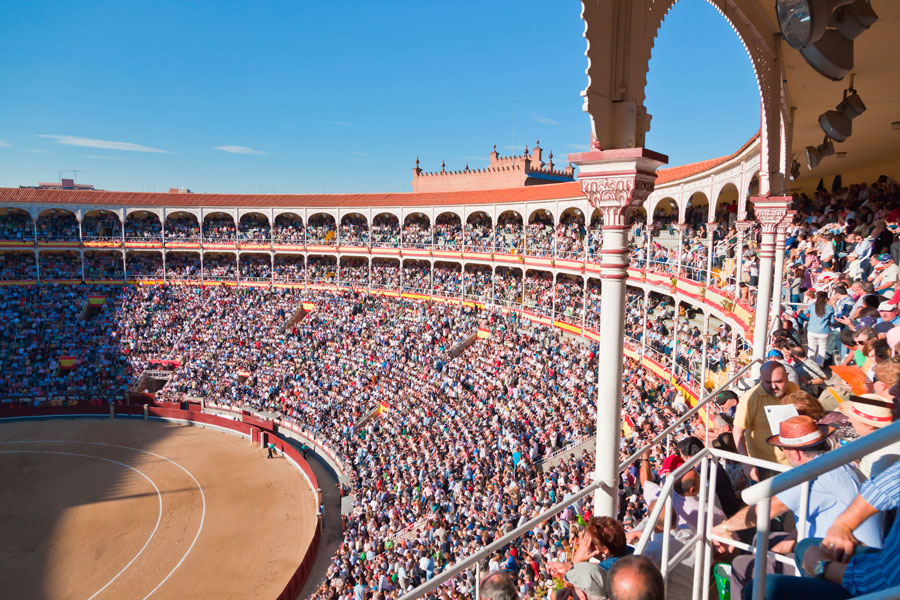
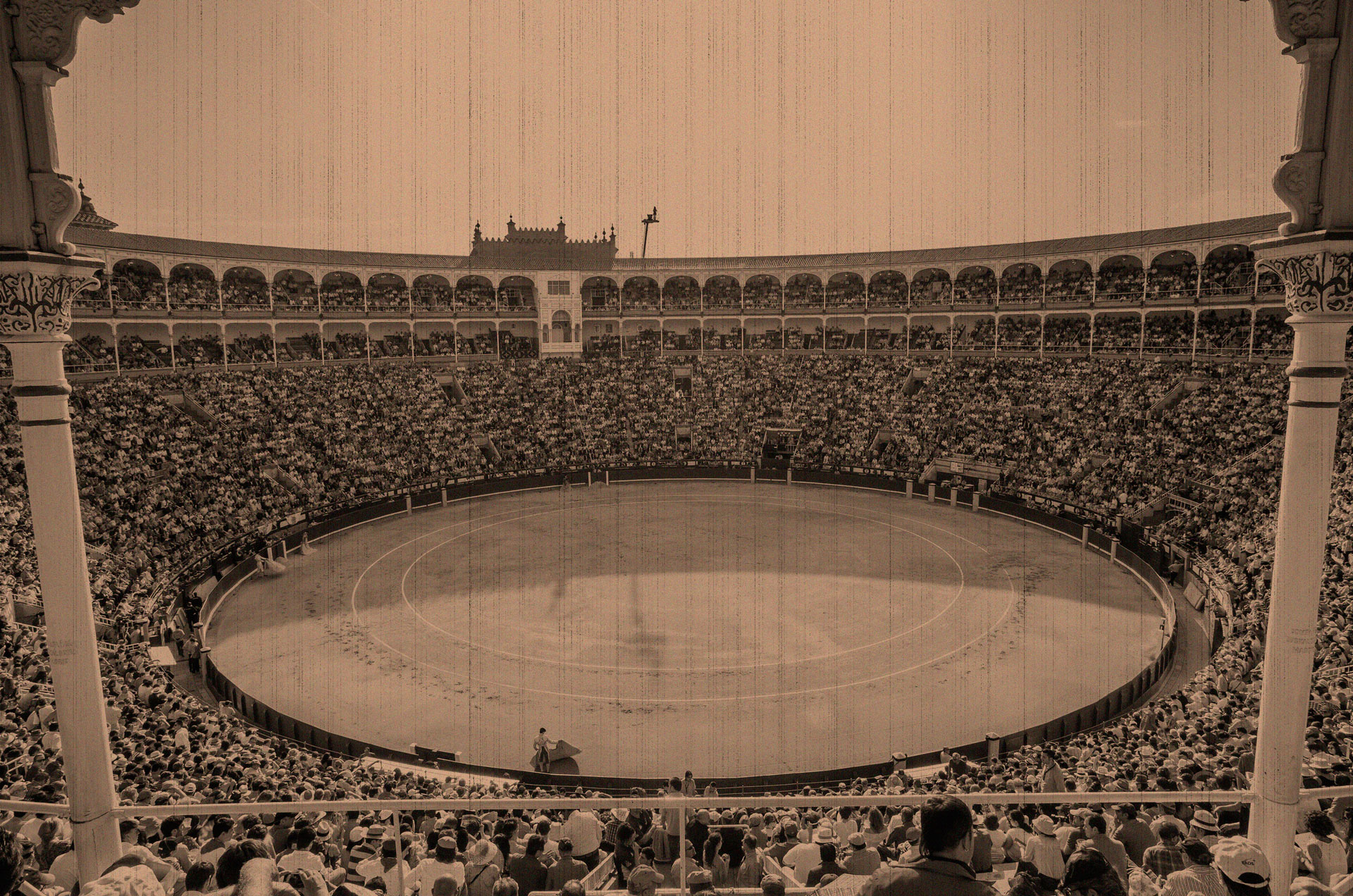
View from the shaded section of Plaza de Toros Las Ventas

I am interested in visiting Plaza de Toros Las Ventas because I would like to see a real live bullfight during our trip to Spain.  Plaza de Toros Las Ventas is considered the home of bullfighting for the entire world, so this is the place to be for witnessing a bullfight.

History of one of Spain’s Most Historic Venues

Plaza de Toros Las Ventas was built in 1929 and the first bullfight took place on June 17, 1931.  It is the third largest bullring in the world behind only Mexico City’s Plaza de Toros and Venezuela’s Plaza de Toros Monumental de Valencia.  As the largest bullring in the country, this building holds 25,000 people and is over 60 meters in diameter. 

Inauguration Day June 17, 1931

Explanation of a Tradition Dating Back Thousands of Years

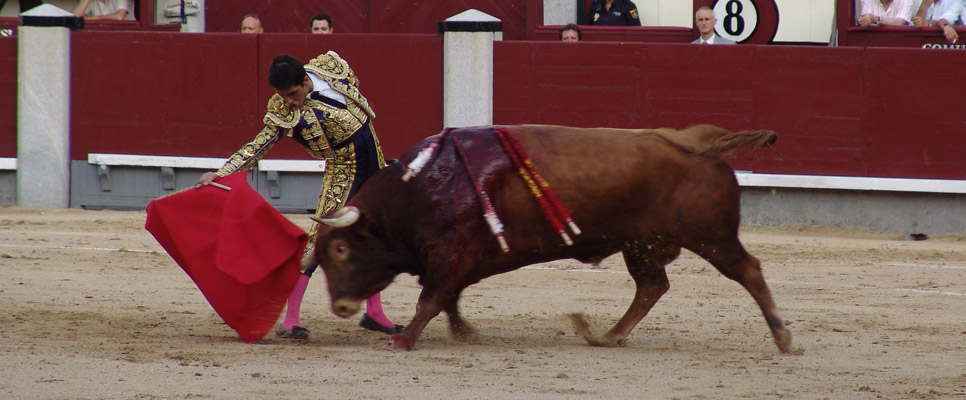
In a standard bullfight (called a corrida) there are six bulls and three matadors.  Each bull encounter typically lasts fifteen minutes which makes an average corrida time of two hours.  The matadors are the stars of the show as they use distinctive maneuvers to avoid the bulls.  The matadors receive higher levels of applause when they allow the bulls close to them while maintaining tranquility.  There are three parts to a bullfight: varas, banderilla, and muerte.  In the first stage called varas (pikes), the matadors greet bulls by allowing them to pass by several times.  Then the picadors, mounted on horses with armor, perform several lancings on the bulls.  In the second stage, the banderilleros work on foot to place banderillas (barbed sticks) into the shoulders of the bulls.  The last stage muerte (death) is the stage that is most exciting for the fans.  Matadors call the faena (“The last act of bullfighting”) where they use their most impressive maneuvers to get as close to the bulls as they can while making it look easy. 

Matador performing a maneuver on a bull

Interesting Facts

  • The bullring was closed during the Spanish Civil War in years 1936-1939
  • Bulls instinctively go for the matador’s cloth because it is a large moving target not because of the red color.  Bulls are actually colorblind.
  • Ivan Fandino, a famous bullfighter, died in 2017 after being gored to death

Attending a Bullfight During our Trip is Easy

While we are in Spain in late May is a great time to see a bullfight because it will be following the San Isidro Fiesta which occurs on May 15.  After this day, there are bullfights almost everyday for three weeks.  Tickets to these events are competitive, but there are still tickets available at multiple price ranges.  The cheapest tickets are usually around 15-20 euros which is very affordable.  These tickets are located in the “sol” section which means it is directly in the sun.  Our hotel is only a seven minute walk from our Madrid hotel!  Simply walk south down Calle Francisco Altimiras and then follow Av. de los Toreros east around the Plaza de Toros complex.  Links to buying tickets or touring the venue are located below along with a map for directions. 

Directions to Plaza de Toros using google maps

Links for more information

Purchasing tickets – https://ticketstoros.com/

Touring information – https://www.las-ventas.com/tour.html

Carter Erdman: Plaza Mayor Offers a Coin and Stamp Market and Has Been Restored Three Times

Plaza Mayor and the King Phillip III statue provided by Lonely Planet

Plaza Mayor Replaced a Previous Plaza

Plaza Mayor’s design was started back during the reign of Phillip II. Phillip II initially started the planning in 1560; however, construction did not actually begin until 1617 when King Phillip III had an architect by the name of Juan Gómez de Mora start the project. King Phillip III’s statue is shown in the photo above. I was surprised to discover that Plaza Mayor was constructed on a previous Plaza by the name of Plaza del Arrabal. There have been multiple fires throughout time that led to renovation projects of the parks by Juan de Villanueva. The photo below highlights the modern look of Plaza Mayor. 

Plaza Mayor photo highlighting modern look provided by Spain Attractions

Plaza Mayor Offers a Coin and Stamp Market

I am quite interested in visiting Plaza Mayor for the historical significance of the site. One interesting fact I discovered was that Plaza Mayor was completely reconstructed three times 1631, 1672, and 1790 all due to fires from the wooden structure. I am also interested in visiting Plaza Mayor for the coin and stamp market that takes place every Sunday morning.

Coin and stamp market in Plaza Mayor provided by Rue de Varenne

The photo above shows people experiencing the coin and stamp market in Plaza Mayor. I am quite fascinated by how significant of an event this is in Plaza Mayor. I am expecting to see large crowds on Sunday mornings and am excited to take part. 

Plaza Mayor is 30 Minutes from Our Hotel

Plaza Mayor in Madrid is roughly 30 minutes from our hotel using the metro transit and additional walking. After you walk out of our hotel NH Madrid Ventas, head south on Calle de Biarritz until you reach Avenue de los Toreros. At this point, you will see the renowned Las Ventas bullring and should walk towards the south side of the stadium where the metro station will be. You should take the Green Line 5 west to the Ópera station where the cost is 1,50€ or $1.68 per trip. After arriving at the Ópera station, head east on Calle del Arenal and turn right onto Calle de las Fuentes. You should continue that direction until you can turn left onto Calle Mayor. Finally turn right onto Calle del Siete de Julio which leads directly to the destination of Plaza Mayor. More information on Madrid’s Metro system can be found on its website and a photo of the directions from Apple Maps is provided below.

Directions to Plaza Mayor provided by Apple Maps

Plaza Mayor Is Free to Visit and Offers Paid Tours

Plaza Mayor is free to access when you are not attending special events or live concerts. For more information on the concerts visit songkickPlaza Mayor is open to the general public Monday through Sunday 9:30am to 8:30pm Central European Summer Time. Plaza Mayor offers both walking tour options that also include experiencing other parts of Madrid. The prices vary but offer experiences as low as $20. Additional information on the paid walking tours can be found on Trip Advisor

Montjuïc Castle Boasts Magnificent Views of Barcelona – Holly Dickson

The view from Montuïc Castle. Photo courtesy of GuiBCN.

Montjuïc Castle is a defensive castle located in Barcelona, Spain. The castle is known for its panoramic views of Barcelona and the surrounding landscape. It also has a beautiful garden growing in what was once the moat surrounding the castle. I am most excited to visit Montjuïc Castle because of the extensive view it offers. I am also excited to learn more about the history of this city.

Montjuïc Castle Has Played Many Roles in History

A garden grows in the moat surrounding Montjuïc Castle. Photo courtesy of Teleferic de Montjuïc.

The castle is located at the peak of Montjuïc Mountain. It boasts 360 degree views of Barcelona and the surrounding area, which creates a perfect position for a defensive castle. The original structure was built in 1640 during the Reapers’ War, which is commonly referred to as the Revolt of Catalonia. The castle has endured many renovations over time mostly due to damage done during times of war.

Montjuïc Castle has had many roles in history. It has served to protect Barcelona from attacks, and it has also been the one attacking the city. It served as a prison in its later years and then became a military museum under the Franco regime. Montjuïc Castle is now owned by the Barcelona City Council and is open for tourists to visit.

Montjuïc is Easily Accessible by Public Transportation

Directions courtesy of Google Maps.

The easiest way to get from our hotel to Montjuïc Castle is to take public transportation. You will first need to walk about three minutes to the metro stop called Urquinaona. You will take the L1 train going towards Hospital de Bellvitge for five stops, which takes about seven minutes. You will get off at the stop called Pl. Espanya – Centre Comercial Las Arenas and transfer to the 150 bus towards Castell de Montjuïc. You will ride for thirteen stops, which takes about twenty-one minutes, and then get off at the stop called Castell. The castle is a short two minute was from this bus stop.

Student Tickets are Available and Affordable

A turret on Montjuic Castle. Photo courtesy of barcelonas.com.

The castle is open Monday-Sunday from 10AM-8PM. The last tickets of the day are sold at 7:30PM. I recommend that you buy your tickets online before you go in order to skip the line and make sure there are tickets available. A student ticket (ages 16-29) costs 3€. A student ticket that includes a guided tour in English costs 7€. You can buy your tickets online here. There is also free admission on Sundays after 3PM and all day on the first Sunday of the month. Unfortunately, online tickets are already sold out for the first Sunday in June.

Stepping Back in Time with a Glass of Sherry: Tapas and the Civil War at La Venencia- Taylor Leeson

La Venencia’s front door

If you’re looking for a place to travel back in time, La Venencia is the bar for you. A single step through the front door will show you what the Spanish Civil War looked like in the 1930s. Known for sherry and its old-timey feel, La Venencia displays both Spanish history and tapas bar culture in a way much different than any other place around.

La Venencia’s Civil War Roots are Still Prominent in the Business
70 years ago, La Venencia was a meeting ground for old Republican soldiers and anti-fascists. Additionally, it served as an old haunt of Ernest Hemmingway where he would get the latest information on the state of General Franco’s rule. Decorated with old pictures, posters, barrels, and bottles that have seemingly been collecting dust for decades, the rustic interior of the bar reflects its age.

La Venencia’s interior

The walls, wood, and metal fixtures display the toll that cigar and cigarette smoking have taken over time. They remain stained and peeling from the history of past customers. Luckily, smoking is no longer allowed; this is one of the four rules of La Venencia. The other three rules are displayed on a sign as you walk in and take their roots from the civil war. The first rule is don’t spit on the floor. This is for the sake of hygiene. The second rule is no taking photos. This rule was enforced to prevent anti-fascists from being incriminated by spies during the war. The third rule is absolutely no tipping. This rule stemmed from the pride customers and staff took in being equal workers. Knowing these four rules is key to not getting kicked out.


La Venencia is a Great Bar to Experience Spanish Sherry and Tapas
The drink menu at La Venencia is easy in the sense that you only have five choices, and all of them are sherry. With your drinks, you can also expect free tapas. The typically silent bartender will scribble your order down on the bar in chalk; this adds to the traditional experience.


La Venencia is Cheap and Only One Short Bus Ride Away
Planning your trip to La Venencia is easy and flexible as it is open every day of the week.

Operating Hours


From the Novotel Madrid Center, La Venencia is only about a 10-minute drive or a 20-minute bus ride.

Directions to La Venencia from the hotel


The buses usually run every 4 to 15 minutes, although buses after 11:30 pm run every 15 to 35 minutes depending on the day of the week.
Once you arrive, drinks at La Venencia are not too expensive. Customers usually spend less than 10 euros.


An Amazing Cultural Experience Awaits You
I expect to travel back in time at this astonishing landmark during my visit. My only concern is the lack of sweet sherry. Every sherry at La Venencia is dry.
La Venencia is an exciting way to see the history of Spain and experience its wine and tapas culture.

The Palau de la Música Catalana: Architectural Jewel in Downtown Barcelona – Paola Mita

Related image
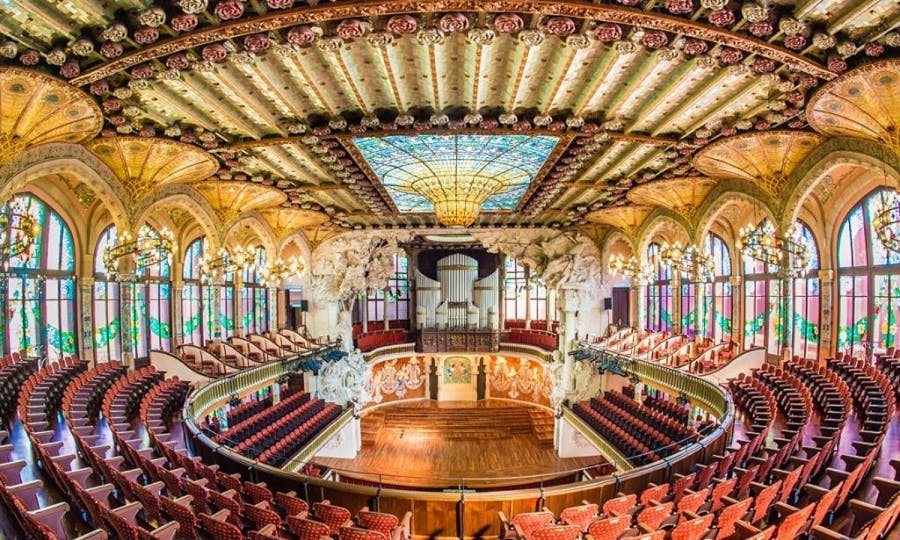
Concert Hall, Palau de la Música Catlana. Source: Palau de la Música

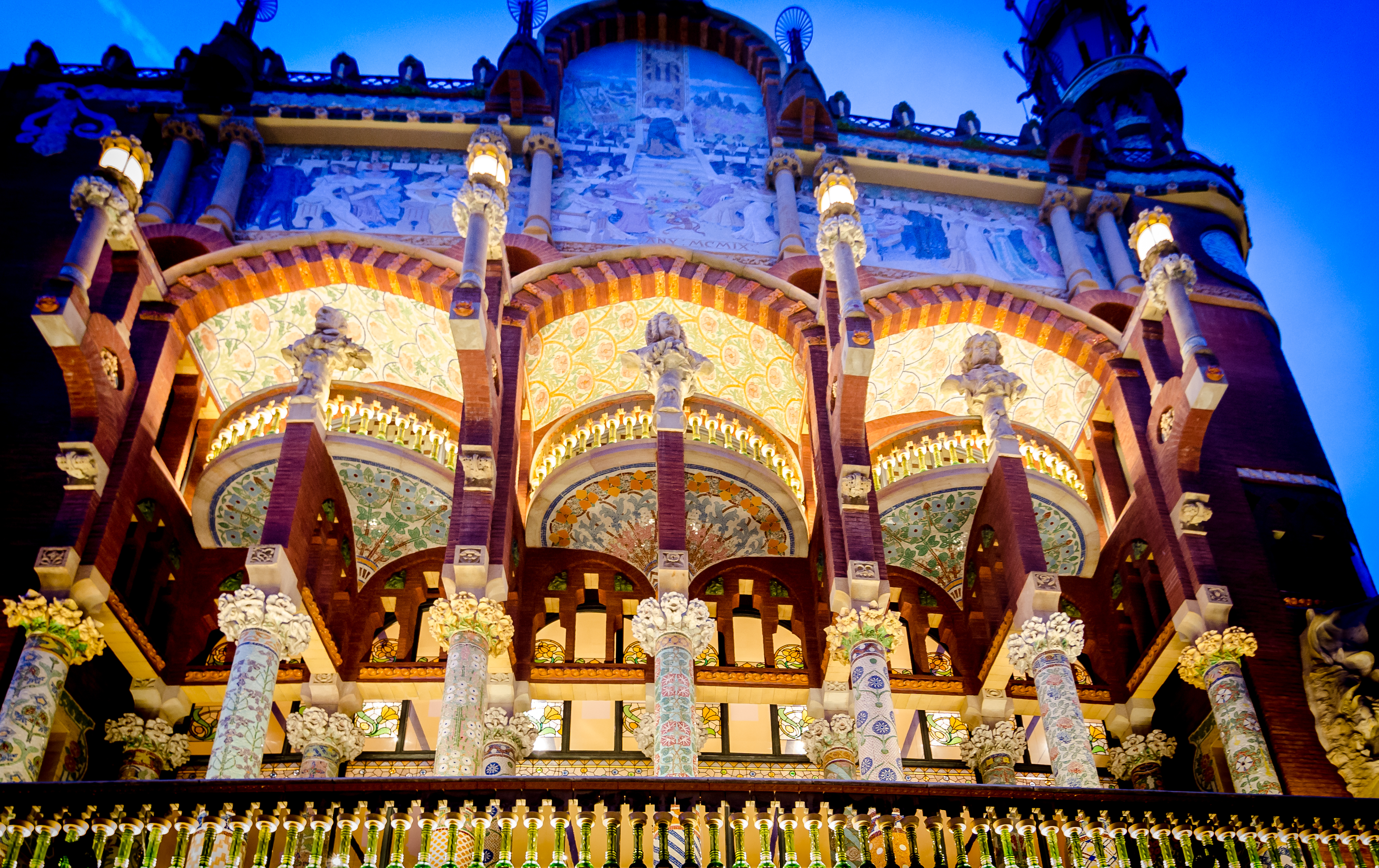
The Palau de la Música Catalana is a concert hall located in Barcelona, only four minutes away from our hotel. This concert hall is the only auditorium in Europe illuminated entirely by natural light and can sit 2,200 people. The Palau de la Música is very popular for its unique architecture that represents Catalan modernism. The pictures of the place are stunning, and I have high expectations of my visit. I am planning to do a tour while we are in Barcelona, and hopefully enjoy a Flamenco performance in the Palau de la Música Catalana.

The Palau de la Música is an architectural jewel of Catalonia and a must visit!

When the Palau de la Música was being designed, between 1905 – 1908, Catalan was going through a period of revived cultural pride known as “rebirth”, it captures the creativity and imagination of the time. For many Catalans, it is a symbol of national identity and declared World Heritage Site by UNESCO in 1977.

The Palau de la Música Catalana concert hall has been opened for over 100 years and is one of Barcelona’s most famous landmarks. The Palau started as an auditorium for concerts of orchestra and instrumental music but now it also hosts tours, cultural and political ceremonies, theater plays, etc. Its acoustic and recognition around the world has attracted international artists to perform such as Frederic Mompou, Daniel Bareinboim, Arthur Rubeinstein, Richard Strauss, and many more.

Image result for the palau de la musica catalana barcelona
Palau de la Música Catlana. Source: BarcelonaHome

Do not forget to bring your UCard for student discounts

The Palau de la Música Catalana offers 55-minute tours every 30 minutes Monday through Friday and from eater to July, it opens at 10:00am and closes at 6:00pm. The tours are offered in the following languages: Catalan, Spanish, French, Italian, and English. Below you will find the prices for different tours:

  • Standard tour: €20 and for students €11
  • Self-guided tour: €15
  • Tour + Palau live piano: €25
  • Visit & choral miniconcert: €25
  • Guided Tour + Concert: €30

You can get the tickets online here, at the box office of the Palau de la Música, by phone, by email, and tiquet rambles. For more information visit this webpage

The Palau de la Música is only a four-minute walk from our hotel

Walk from Hotel HCC Montblanc to the Palau de la Música Catlana. Source: Google Maps

Here are the directions to get to the Palau de la Música. It is not too far away from the hotel (only a four minute walk), so you will not spend money on transportation. From the hotel, walk down Via Laietana towards Carrer de Ramon Mas and take a left turn onto Carrer de Sant Pere Mes Alt. Finally, take a slight left turn onto Carrer d’Amdeu Vives and you will see the Palau de la Música on the left.

If you decide to visit the Palau de la Música keep the following in mind:

  • After the tour starts, no new guests will be allowed to join
  • Remember to bring a camera!
  • Bring your ID to present at the box office to confirm your tour
  • No food or drinks allowed during the tour
  • Buy tickets online and avoid the line