The Experiences Abroad That Have Shaped My Global Perspective – Connor Reardon Blog 6

Reflecting Atop Montserrat

Coming into this study abroad program, I had every intention that this was going to be a two-week vacation and less of a learning experience. That could not have been any further from the truth. I doubted that two weeks would give me enough time to gain a “global perspective” that the Carlson School requires all students to have, but I can honestly say I have learned so much from my time in Spain. Two aspects of Global Intelligence that I have a deeper understanding of are Empathy and Self-Awareness.

Understanding What it Means to Stand in the Shoes of a Foreigner

Before this trip, I had never left the country, much less to a country where I barely speak the language. Language quickly became one of the hardest aspects for me throughout this trip, but I actually learned a lot because of my lack of knowledge. Almost every time that I had to communicate with someone who didn’t speak English or didn’t speak it well, I thought of what it would be like if the roles were reversed? Would I be as understanding or patient? In all honesty, I can’t say that before this trip I would have been. I now know what it feels like to be the foreigner where I don’t understand what is going on, and I am grateful for that. It has given me a much better perspective as well as empathy for those people who go through these same situations here in the United States.

Fitting the American Stereotype

One thing that I never really thought about before this trip was what an American looks like, and in all honesty, I didn’t really think Americans looked a certain way. Again, this assumption couldn’t be further from the truth. Without saying a word, waiters, store clerks, and strangers would know to speak English to us. There’s a number of obvious things that I can think of, as displayed in the picture below, like cowboy hats, matching floral T-shirts, and khaki shorts. But there were other behaviors that I became self-aware of that set us apart from others. At the dinners, both in small groups and large, we were the loudest people there whereas others were having quiet and intimate conversations. This aspect of culture relates to collectivism. Spanish people value time with each other, so having real conversations at dinner without distractions from cell phones or even waiters is important. Americans are usually talking over one another to be herd which is much more of an individualistic behavior.

Two Tacky Tourists Traveling Back From Toledo

The biggest surprise of all that I had this trip was learning so much in so little time. It really doesn’t matter the amount of time you spend in a new place, it’s the experiences that you have there that help mold your perspective.

Alta Alella and Codorniu: A Story of David and Goliath – Connor Reardon Blog 5

A View Over the Vineyard at Alta Alella

Wine is a staple of Spanish culture from its prominence in daily dining to the vineyards where they come from. I was lucky enough to experience this piece of Spanish culture in addition to taking a deeper look at where these amazing wines come from. Every one of my senses from touch to taste was able to experience one of the largest producers of Spanish wine, Codorniu, to one of the Smallest, Alta Alella.

Codorniu is a Wine Producing Giant with Growing Challenges

Codorniu is one of the oldest family run businesses in the world with over 450 years of history. In 1872, Josep Raventós created the first bottle of cava, sparkling wine. Thirteen years later, with the help of Manuel Raventós, Codorniu became a big-time producer of Spanish cava. Since then, Codorniu has become the biggest producer of Spanish cava with its staple brand Anna de Codorniu.

Picture of the Old Pressing Room at Codorniu

Although being the largest producer of cava sounds like a good thing, Codorniu faces quite a few challenges, some of which are exemplified by industry in which they operate. One such challenge is that because of Codorniu’s large size, it has difficulty branding. Since Codorniu is so large, their cavas can be seen as generic or basic. What came to my mind was the problems that big breweries have here in the United States. Brands like Budweiser are losing customers to small craft breweries that offer something different and unique that a big brewery never could. Bigger isn’t always better, and it was evident by the presentation that was given during our site visit. The best thing that Codorniu can do, like Budweiser has done, is accept that they are not a unique small vineyard, but rather one of quality that is made for everyone, not wine connoisseurs.

Wine Tasting at Codorniu

Alta Alella: A little Vineyard with a Big Attention to Detail

Alta Alella is a small vineyard outside of Barcelona that focuses on creating handcrafted wines for consumers. Visiting Alta Alella was one of my favorite moments from this trip because of the personal feel the vineyard had.

View from the Wine Tasting Patio at Alta Alella

After visiting Alta Alella, it was easy to see why Codorniu is being challenged from small vineyards like these. The unique and personable aspects of these vineyards give them a competitive advantage over the big-time producers. For example, the names of each of Alta Alella’s basic wines are named after birds that are found in the Serralada de Marina Natural Park where they are located. Additionally, their higher end wine names also have meanings like the Mirgin Opus, which contains both of the family’s daughters’ names. Another thing that made Alta Alella special was that everything is done by hand, from the harvesting of the grapes to the truing of the bottles in the wine cellar. Everything at Alta Alella seemed to be connected which also made me felt connected to the wines as well. Overall, I had a wonderful experience at both vineyards and was able to have a deeper understanding of the Spanish wine industry and culture.

Wine Tasting at Alta Alella

Taking Risks in a Conservative Culture – Connor Reardon Blog 4

Image result for tetuan valley

Comparing the US to Spain using Hofstede’s Cultural Dimensions, one of the most notable differences between these two cultures is uncertainty avoidance. This aspect of Spanish culture was clearly evident in some of our site visits, most notably Tetuan Valley Startup School and Pau Virgili. During both of these site visits, it became clear that these individuals were outliers on the scale of Spanish uncertainty avoidance.

Tetuan Valley Provides Individuals with the Tools to Take Risks

Looking back at all of the site visits that we attended, Tetuan Valley was easily one of my favorites and gave me a deeper understanding of a variety of different things. One such insight was learning how to take risks effectively by creating a business model canvas. This simple but engaging exercise taught me that business models should be fluid, adaptable, and never set in stone. It taught that a business model will likely fail, but when it does, to fail fast and with little cost. All of these lessons that I learned are exactly what Tetuan Valley aims to do, develop their students to take risks.

Picture of me Creating a Business Model Canvas at Tetuan Valley https://instagram.com/p/Bx2hIGhi379/

Taking risks is uncomfortable for many people, and according to Hofstede’s dimensions, even more so in Spain. Tetuan Valley is teaching new entrepreneurs how to take risks effectively in a culture that doesn’t necessarily foster that type of behavior. This site visit was a great example how culture can influence the way a company operates. Since Spain is overall more uncertain to risk than other countries, Tetuan Valley acknowledges this dimension of Spanish culture and provides the tools to entrepreneurs to take those risks in an effective manner.

Understanding Your Risk Profile Determines the Path You Take

Loopy Communication – One of Pau’s Investment Projects

Pau Virgili gave us a lecture on risk taking and some of the most important lessons that he has learned over the years from being an entrepreneur. The first thing that he talked about was how it is important to understand your risk profile. He gave us three scenarios and asked us which one we most related to. Almost the entire class, including myself, chose the option where we are able to handle risk when it presents itself but do not seek it out. Although I do not know the answer, it would be interesting to see what a class of Spanish students would respond like. At the end of the presentation, I asked Pau about some of the challenges that he faced being an entrepreneur in Spain rather than one in the United States. He explained that it is much harder being an entrepreneur in Spain, and that one of the reasons is that the laws in Spain make it more difficult to create a startup than in the United States. This answer exemplifies the difference in cultures, specifically risk avoidance, between the US and Spain. It really is interesting to see how culture not only influences the people, but also the way that they do business.

Sobrino de Botín, the Worlds Oldest Restaurant – Connor Reardon

Image result for botin

Restaurante Sobrino de Botin is recognized by the Guinness Book of World Records as the oldest Restaurant in the entire world. Botin first opened in 1725, making it 294 years old, and still to this day, uses the same exact oven as it first did when it opened. Icons such as “Spanish painter Francisco Goya, American writer Ernest Hemingway, various European royalty and Spanish politicians all have made the visit to the world’s oldest restaurant”. If you are looking for rich history and great food, then Botin is the place to go while visiting Madrid.

300 Years Strong, the History of Botin

Sobrino de Botin, meaning “Botin’s Nephew”, first opened in 1725 and is located near Plaza Mayor in the La Latina district, one of Madrid’s most historical quarters. The restaurant was founded by Jean Botin and was initially named “Casa Botin”. However, the name was changed shortly after opening when Jean passed the family restaurant down to his nephew Candido Remis, hence the name change to “Botin’s Nephew”. The restaurant was first considered to be an inn, then a tavern, and then finally becoming a restaurant in the 19th century. The title of “restaurant” was reserved for higher end eateries during this time.

In the 20th century, the restaurant was bought by the Gonzalez family where they faced both successes and hardships. During the Spanish Civil War, Botin was operated solely by Emilio Gonzalez while the rest of the family fled the city. During this hard time, Botin primarily served military soldiers, but after the war, Emilio and his family renovated the restaurant, expanding it from one to four floors

Botin’s Famous Dish, Cochinillo 

Cochinillo, or suckling pig, is Botin’s signature dish that is a must eat if you decide to visit this amazing restaurant. Besides the deep history, one of the main reasons that I want to visit this site is because of this mouthwatering dish. I’ll let Thomas Rees of Culture Trip explain why I can’t wait to try it.


It’s from this carefully controlled inferno that Botín’s signature dish of cochinillo (suckling pig) arrives, its skin a rich shade of caramel, brittle under the weight of a knife. Breathtaking in its succulence, it’s accompanied by nothing but a brace of roast potatoes to mop up the juices.

Thomas Rees
The specialty, roast suckling pig at Botin, the world's oldest restaurant.
Botin’s Famous Cochinillo

Visiting Botin

Directions from Novotel Madrid Center to Botin via Public Transportation

Botin is open between the hours of 1:oo p.m. -4:00 p.m. and 8:00 p.m. – 12:00 p.m. daily. If you wish, you are able to make reservations online. Botin is located at Calle de Cuchilleros, 17, 28005 Madrid, Spain, and is only a 5-minute walk from Plaza Mayor, or a 25-minute commute via the metro from our hotel. If you plan on taking the Metro from our hotel, depart from the Goya station and exit on the Opera station. Expect a fee of about €1,70 for the train, which arrives every 4 min or so.

Barcelona is where Hewlett-Packard’s Most Valuable Printing Technologies are Designed

Related image

Ramon Pastor, the Vice-President and General Manager of 3D Printing at HP claims that the Barcelona Headquarters is, “basically HP’s most important laboratory outside the US“. HP Barcelona is the world headquarters for 3D and large format printing and is considered to be the benchmark for excellence. HP Barcelona didn’t start this way, but over the past three decades have become an integral part of HP’s business through the innovation of printing technologies.

From Humble Beginnings to a Multinational Giant

HP Barcelona was started in 1985 as a production plant for pen plotters, which are printers that use a pen instead of ink or toner to create graphics. The branch initially started with 15 employees, and began to expand in the 1990s with the addition of R&D engineers and new technological innovations in the printing sector. With these new innovations came opportunities to develop and grow their printing expertise. They were able to transform from a small manufacturing facility to a global center for graphic-arts that employs over 3,000 workers.

Large Format Printing

Large format printing is the process of printing graphics on a large scale. A few recognizable examples include car wraps, billboard posters, bus station posters, and pretty much any other large scale print document.

examples of large format printing

3D Printing

3D Printing is the process of creating tangible objects developed using computer programs. This is not a new technology, but rather the innovations that have created advancements in this area is what has given HP Barcelona a competitive advantage.

3D printers developed by HP

Diversity Brings Innovation

One of HP’s goals is to bring people from different backgrounds together as a way to generate new ideas. Ramon Pastor said the following statement in regards to the value of diversity.

“As part of our innovation process, we look for professionals from a wide range of cultures, with a good gender balance, from different universities, with very different ways of thinking… This diversity is essential if we want to continue innovating and succeeding as a company. Diversity is what helps create that spark that you sometimes need to find the winning idea.”

Ramon Pastor

Barcelona is a great place to create these diverse teams due to the vast amounts of cultural backgrounds in the surrounding area. There are currently more than 60 different nationalities working at HP Barcelona.

Questions for Hewlett Packard Barcelona

  • In terms of talent acquisition, does your company find it difficult to find applicants with the required skills and abilities, or are there an abundance of qualified individuals?
  • What role does “Big Data” play at your company?
  • What are some of the biggest challenges that you face when working with global teams?
  • How do you decide what new technologies are worth investing in compared to those which are not worth the investment?
  • As new markets appear across the globe due to the expansion of technology, what steps, if any, is HP taking to capitalize on these emerging markets?

Connor Reardon – Strikes at Madrid Airport Cause Major Problems for Easter Travelers

huelga aerea semana santa 2019

The Madrid-Barajas Adolfo Suárez Airport (MAD) is starting to spiral into chaos amidst the union strikes that are taking place over the next two weeks. Travelers flying out of MAD for the Easter weekend will certainly be met with headaches, long lines and even some cancellations. Currently, Air Nostrum pilots are on strike forcing the airline to cancel some of its flights. Along with these pilots, security workers employed by
Ilunion have also gone on strike this week creating long bottlenecks in checkpoints. In addition to these strikes, the ground handling staff is set to go on strike early next week as travelers return from their Easter Holiday. On the surface, this looks like chaos, especially by those traveling for Easter, but let’s break it down and take a closer look at the issues at hand.

Pilots want job security amidst increasing competition

Air Nostrum pilots have planned to be on strike from April 16-17 and April 22-24. The strike is due to the parent company, the Iberia group, moving routes from Air Nostrum to other airlines within its control. Pilots of Air Nostrum feel threatened by this trend as it, “jeopardizes the future of the company and the working conditions” as stated by Selpa, the union representing the pilots. Because of this strike, Air Nostrum has canceled 148 flights which will affect about 10,000 passengers in just the first half of the strike. Air Nostrum will announce additional cancellations as the second half of the strike approaches.

Security personal join in on strike to create bigger headaches for already dazed travelers

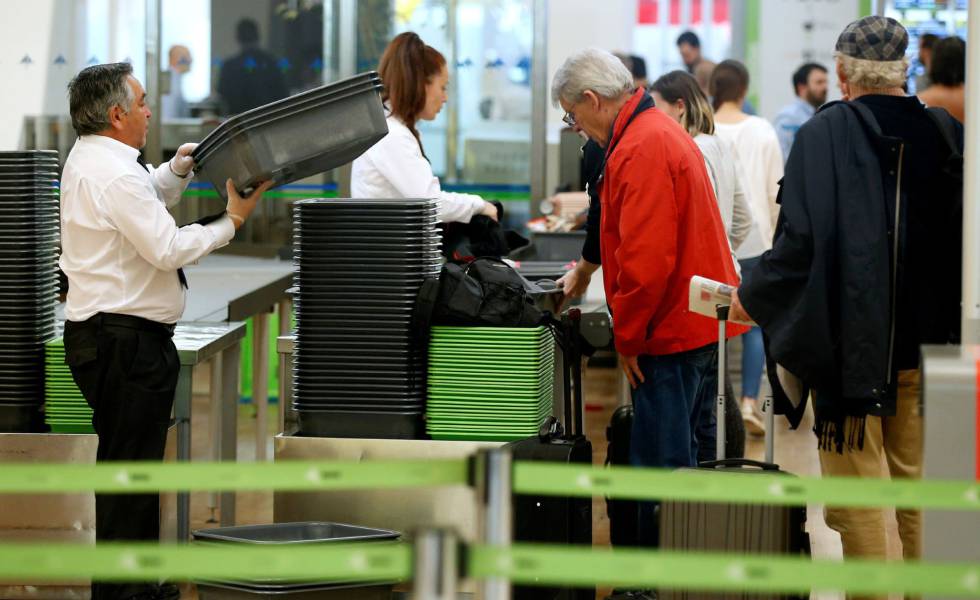
In addition to cancelled or delayed flights for those flying with Air Nostrum, all travelers at the Adolfo Suárez Madrid-Barajas airport will experience delays at security checkpoints. Ilunion, a private security contractor, went on strike on Friday, April 12 demanding better pay. This strike has caused major delays over the weekend and created seeming endless lines were full of anxious passengers hoping to catch their flight on time.

Image of security lines at MAD on April 11, 2019

Spanish culture shows how confrontation can foster strikes

In terms of confrontational cultures, Spain lands quite high on Erin Meyers scale for disagreeing. This is rather unsurprising as workers who are disagree with their employers have no issue going on strike to make their point clear. Confrontational cultures see debate as a healthy part of relationships, hence the use of strikes to allow for debate. Another example of this is France, a highly confrontational society, who had the highest number of days not worked due to strikes.

I have begun to think that Spain is quite dysfunctional, but rather, what may seem like chaos, may be natural to those in Spain. From politics and strikes, the Spanish people always seem to be arguing about something, and that isn’t necessarily a bad thing. If debating is seen as a healthy way to share ideas, than what may seem like dysfunction to us in the United States, may actually be beneficial to those in Spain.