My global intelligence has grown a lot despite minor challenges

Prior to our trip to Spain, I thought that my moderate memory of high school Spanish would be perfectly sufficient and that I was very culturally aware and understanding. I didn’t realize that I still had quite a bit to learn.

Principles-first persuading proved to be a challenge to my comprehension

These are my results from the culture map inventory on the persuading scale.

The only significant challenge that I encountered when it came to differences in cultural preferences were in Erin Meyer’s dimension of persuading. My placement on the applications-first vs principles-first scale was pretty unusual for an American as I scored very close to the middle; I was still very far from the Spanish prototype though. This cultural difference really made a difference in some of the site visits, mainly John Ryan and Recyclia as their presentation style was just so much different than what I’m used to. It took quite a large portion of their presentation until I knew their main point or what their company did, which made it more difficult for me to actively engage and focus.

I had to quickly adapt my worldview to accommodate my experiences

The front entrance of the Tetuan Valley building

At first I viewed this disconnect between speaker and audience as a sign of a bad presentation or an under-prepared presenter, but I soon remembered that this was in fact a cultural difference. Once I realized this I was able to adapt and modify my worldview to be more accepting and understanding of these differences, especially going into the site visit to Tetuan Valley. Another large shift in worldview just occurred from seeing how different meals in Spain can be. As I detailed in Blog 4, “their appreciation for long and slow meals and the prevalence of shareable tapas” is a “distinct example of their more collectivist culture.” This altered mindset of mine was really pivotal during my trip and affected a lot of my subsequent experiences.

My bakery interaction led to thoughtful introspection

A cake from a bakery near our hotel, where I had a long conversation in Spanish.

This realization eventually led to me being very self-conscious and reflective of how I came across to Spaniards. Aside from wearing shorts and likely having an obvious American (or foreign) demeanor, I was curious as to how people were interpreting me and our group. Towards the end of our week in Madrid at a seemingly authentic bakery near our hotel, I had a pretty lengthy conversation in Spanish with one of the women that worked there. As I was talking with her, I was very conscious of how I came across but was content with the fact that I was trying to speak Spanish and respect and understand her culture.

My cultural curiosity has been heavily stimulated by our trip

Although I would definitely say that prior to going on this trip I had pretty high cultural curiosity towards many different regions of the world, my experiences in Spain definitely elevated it for me. As I talked about in Blog 5, some of the best experiences I had were when I just explored and got to experience and witness the rich culture in its true form. As such, my interest and curiosity in learning about other cultures has grown exponentially and has been one of many things to contribute to my Global Intelligence.

Everything necessary to optimize your experience in Spain

Spain is a fantastic country with amazing places and people, but without the proper research and knowledge, it can be an overwhelming experience for foreigners. From avoiding tourist areas to learning some Spanish, here is my best advice to future students.

Make sure to utilize your free time and plan accordingly

The Reina Sofia is a beautiful art museum that I wouldn’t have just stumbled upon if I hadn’t planned to visit it ahead of time.

Initially when I was looking at our program schedule and was trying to plan different excursions and activities, I completely neglected weekday free-time and only focused on the weekends. My impression was that our days would be filled to the brim with activities and that there wouldn’t be much opportunity for exploring until the weekends. However, most days we had several hours for a lunch break and almost the entire night to ourselves, starting around 6 most days. So even if it’s just finding a few restaurants or activities (Barcelona) that sound interesting, having some sort of plan may prove useful. For me, one rewarding example of this was going to the Reina Sofia Art Museum on the Thursday night that we were in Madrid. I had planned this activity earlier in the week and am very glad that I did, because I wouldn’t have ended up going there if I hadn’t.

Venture outside of the busy and crowded tourist areas and go explore

Puerta del Sol is the heart of Madrid and as such, is always very busy and crowded. Although a very cool area, I recommend venturing away from here, especially for food.

Despite my recommendation to plan some activities ahead of time, I also think it’s very rewarding to wander around and try to get away (Barcelona) from some of the more touristy areas. This will allow for more authentic and diverse experiences and in my case it led to many of my favorite moments on the trip. Whether it’s enjoying a very long meal to experience the relationship-based trust style that is prototypical in Spain, or experiencing the collectivism-influenced tapas, you should try to find more culturally-authentic activities. Especially since Spain’s cultural dimensions are so different from what we experience in the United States, it would be rewarding to try to witness them firsthand.

Don’t solely rely on everyone there to speak perfect English

Duolingo is a free language-learning service that teaches Spanish.

Although you may think that everyone will speak English because Spain is in Europe and Madrid and Barcelona are both pretty touristy areas, this isn’t the reality. Many of the students on the trip were expecting that knowing Spanish wouldn’t be a necessity or even that much of a luxury, but it turns out that we were wrong. Although English is the second-most spoken language in Spain, close to 60% of Spaniards say they don’t know any English at all. There were many times that I had to use my four years of high school Spanish to communicate with people and it really came in handy for me. Because of this linguistic disconnect, I highly recommend learning at least some basic Spanish, through a free site like Duolingo which is very helpful and easy to use.

Collectivism and Trusting heavily differentiate Spain’s culture

To some Americans, Spain may be a place full of dreadfully long meals, small portion sizes, and overly nosy strangers. To me it’s a learning experience and a clear reflection of the differences in culture between the U.S. and Spain.

The typical Spanish meal clearly demonstrates a collectivist culture

The welcome dinner in Madrid, which lasted over two hours and included several shareable tapas.

Geert Hofstede defines the cultural dimension of collectivism to be “a preference for a tightly-knit framework in society” and “whether people’s self-image is defined in terms of ‘I’ or ‘we’.” Although Spain is around the global average on the individualism vs. collectivism scale, it is much more collectivist than what we are used to in the United States. One distinct example of their more collectivist culture is through their appreciation for long and slow meals and the prevalence of shareable tapas. The reason that this demonstrates collectivism is because Spaniards use meals to emphasize group harmony and bonding with others. Traditionally the siesta allowed for workers to return home and enjoy a long lunch with family, which is another trait of collectivism.

Relationships have become a pivotal aspect of business models

Erin Meyer’s trusting dimension, comparing the U.S. (orange) to Spain (Culture Map)

On Erin Meyer’s trusting scale, Spain is much more relationship-based than the U.S., meaning that they build trust primarily through personal connections with people rather than simply by working with them. Our site visit at El Corte Inglés emphasized this characteristic as they strive to create very personal and custom interactions with each and every customer.

The Personal Shopper Service at El Corte Inglés

One way that they offer this experience at El Corte Inglés is through the Personal Shopper, a service that allows custom outfits and pieces to be chosen for a specific customer and their needs. This in turn creates a direct and personal relationship between the shopper and the worker, further showcasing the importance of relationship-based trusting in Spain.

Strangers may ask more questions than what is comfortable

During my group’s day trip to Segovia, we sat down next to a Spaniard named David on the bus. We made some initial introductions with him, but I thought that would be the extent of our interaction. However, we ended up talking with him for the entire duration of the hour-long trip and covered much more personal topics than what would be typical in the United States. After thinking more about this encounter though, I began to realize that it was a very clear reflection of the significance of relationship-building and the importance that the Spanish place on them.

Segovia Aqueduct: This Massive Water Transport Structure Has Stood as a Symbol of Roman History for Almost 2,000 Years – Jon Kuch

The impressive stone aqueduct in Segovia, spanning 9.3 miles and reaching 93 feet tall at its highest point.

This massive stone structure has existed for almost 8 times longer than the United States of America has been a country and is nearly as old as Christianity itself. Depending on whether you listen to folktale or to historians, the Segovia Aqueduct was built by either the Romans or by the devil.

The Segovia Aqueduct is an impressive feat of both architecture and history

Although the exact dates aren’t known by historians, they estimate that the Segovia Aqueduct was built close to the year 100 A.D. after its construction was ordered by Roman Emperor Domitian. There isn’t much information surrounding the construction process itself, but the aqueduct consists of 166 arches made from finely-worked stone blocks called ashlars. Impressively, the Romans used no cement or mortar and instead used a complicated architectural process of using balancing forces. The aqueduct itself transported water from the relatively nearby Frío River to the city of Segovia and was used for this purpose up until the mid-1800s.

Local legend points towards a different builder than the Romans

Interestingly, the aqueduct is nicknamed the Devil’s Bridge as legend has it that the structure was built by Lucifer himself in one night in order to win the soul of a young woman. The tale says that Lucifer ultimately failed in his goal but that the holes in the rocks are marks of his fingers.

Travel to Segovia for a quick, cheap, and simple experience

Informational travel graphic of trip between Madrid and Segovia (TripSavvy).

Travelling to Segovia won’t be that much of a hassle to us as the city is 60 miles outside of Madrid. Despite a bus ride to Segovia being cheaper than the train, my recommended mode of transportation is to take the train as it is quicker and more comfortable (if you would prefer the bus, check out this article).

  • The AVE high-speed train travels from Madrid at the Atocha Station to the Segovia Station and will take about 40 minutes.
  • The AVE trains run regularly from Madrid from 6:40 a.m. to 9:30 p.m. and for return trips out of Segovia between 7:00 a.m. and 10:16 p.m.
  • The Segovia Station is located about 4 miles outside of the city and so bus number 11 can be taken between the station and the aqueduct and takes about 10 minutes.

An AVE ticket costs $11.97 one-way or $23.93 round-trip and the urban bus fare in Segovia costs $2.33. Tickets for the AVE train can be purchased at the Atocha Station or online, and tickets for the bus can be purchased from the bus driver. Once you arrive at the site, there is no additional admission fee or payment required to view the aqueduct.

Aside from the crowds, I expect the site visit to be a great experience

I think the aqueduct not only is an amazing site to visit, but it’s also an astounding monument of Roman history and architectural accomplishment. My initial expectations are that the area surrounding the aqueduct will be fairly busy and crowded, especially as my group will be visiting on the weekend. Other than that though, I’m very excited to observe the structure and don’t have any additional concerns.

The Sagrada Familia has endured catastrophes and controversies throughout its rich and long history – Jon Kuch

The front view of the Sagrada Familia, covered with cranes and scaffolding due to the ongoing construction.

This massive basilica in Barcelona will take 7 times longer to complete than the Great Pyramid of Giza did. After being first conceptualized in 1866, the Sagrada Familia has been under construction for 137 years and will become the tallest church in the world upon its estimated completion in 2026.

The origin of the Sagrada Familia traces back to the late 1800s

Early Neo-Gothic plans for the Sagrada Familia under architect Francisco de Paula del Villar y Lozano (Blog Sagrada Familia)

Josep Maria Bocabella i Verdaguer founded the Spiritual Association of the Devotees of Saint Joseph in 1866, who in 1874 started campaigning for the creation of a temple in honor of the Holy Family. After several years of private funding, the association purchased a 138,000 square foot plot of land to house the temple. The cornerstone was laid in 1882, which started off the construction under the project’s first architect Francisco de Paula del Villar y Lozano.

Antoni Gaudí takes control of both design and direction

Antoni Gaudí on the site of the Sagrada Familia towards the end of his lifetime

Due to differences of opinion between the first architect and the project’s developers, the association passed control over to Antoni Gaudí as the new head architect. Gaudí envisioned a new direction for the basilica and abandoned the original Neo-Gothic design for a much more innovative plan. Remaining as the head architect for 4 decades, Gaudí was able to see the crypt, apse, and first bell tower through to completion before his death in 1926.

The Sagrada Familia has overcome many obstacles and controversies

A 1936 fire that partially burnt the Sagrada Familia’s crypt and Gaudí’s workshop.

Between 1936 and 1939 during the Spanish Civil War, groups of revolutionary anarchists set fire to the basilica and destroyed many of the original plans and drawings for the Sagrada Familia. However, a scarce few documents and designs survived the fire and allowed for construction to continue to follow Gaudí’s original concepts. In addition to the catastrophic fires, the companies who oversee the basilica’s construction have also faced mass controversy over the ability to stay true to Gaudí’s design. The most notable of protesters are a group of Spanish artists, architects, and art gallery directors who argue that the finished Sagrada Familia will not resemble Gaudí’s artistic vision and that the more recent architects are taking too much creative freedom in their work.

Questions to ask at the Sagrada Familia Site Visit

  • How has the Sagrada Familia become integrated into Barcelona’s culture and history?
  • Is it very likely that the construction will be completed in 2026 or was it more arbitrarily decided as the centennial of Gaudí’s death?
  • Were the extent of Gaudí’s designs recovered, or were some lost in the fires that had to be re-imagined?
  • Has each architect interpreted Gaudí’s designs differently and uniquely, or have they all stayed relatively consistent?
  • Is the Sagrada Familia currently intended more as a very impressive tourist attraction or as a normally-functional church?

Recent euthanasia case has caused mass controversy and debate leading up to the general elections – Jon Kuch

Spanish protesters arrive outside of a Madrid court in support of euthanasia, after a 70 year old man was arrested for helping his terminally-ill wife end her life (The Telegraph).

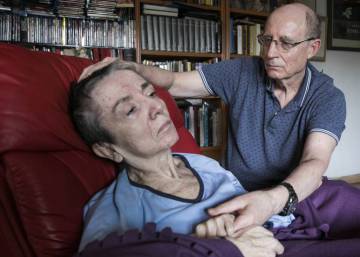
After giving a lethal drug dose to his terminally-ill wife, Ángel Hernández confessed and spent the following night in police custody. It was no act of murder however, as his wife
María José Carrasco suffered from multiple sclerosis and voluntarily took the dosage to end her own life.

Ángel Hernández welcomed the uproar that he knew this would cause

Moments before a lethal dose of sodium pentobarbital was taken by Carrasco, the married couple recorded a video to demonstrate that it was her own wish to end her life. Immediately after, Hernández turned himself over to the police, hoping to “shine a light on this issue.” Despite his openness to and respect for the law, Hernández believes that the law regarding euthanasia “should have been resolved a long time ago.”

Ángel Hernández and María Carrasco record a video of Carrasco’s last moments to prove that euthanasia was her own decision.

This act of euthanasia has stirred up mass debate among Spanish citizens

Controversy has arose on the Spanish streets of Madrid as protesters take to the street in support of Hernández. With various signs and banners, it’s clear what the message is: legalize euthanasia. If Spain were to do so, it would become the fourth country to fully legalize euthanasia, behind Luxembourg, Belgium, and the Netherlands.

With elections quickly approaching, a euthanasia debate takes the stage

Spanish general elections are going to be held on April 28, and with many spots up for grabs, candidates are doing everything they can for their voices to be heard. Current Prime Minister and Socialist Party (PSOE) leader Pedro Sánchez promised to legalize euthanasia if he wins a parliamentary majority. However, the current majority party Ciudadanos (Citizens) and the right-wing People’s Party (PP) seem to oppose its legalization, and have been blamed for blocking a bill aimed at this debate. The fate of this legislation may in turn be decided by the outcome of the upcoming election.