Thinking from Different Perspectives Shapes Global Intelligence-Jonathan Carman

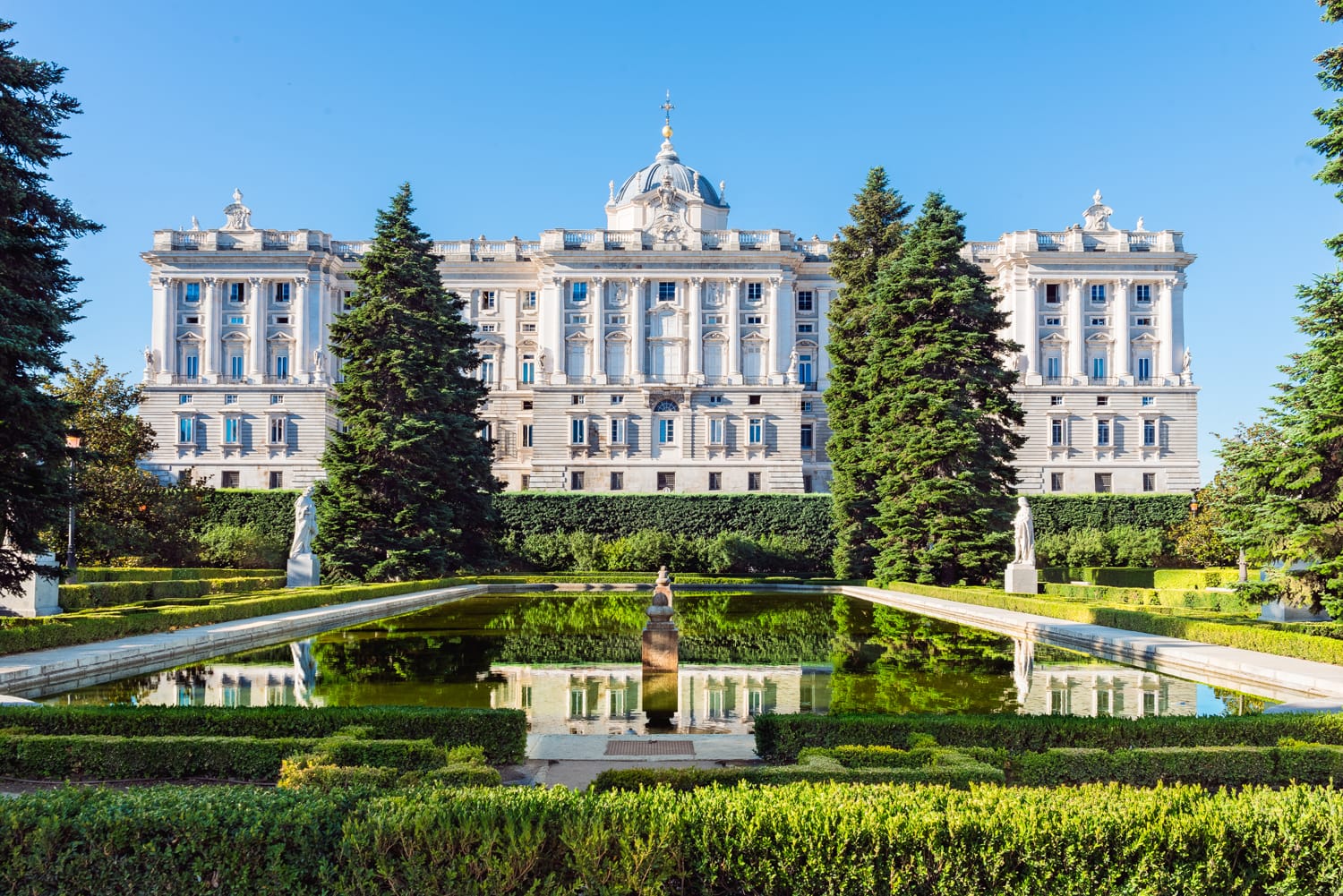
This is a picture of people relaxing in Retiro Park outside of the Crystal Palace

Introduction: The Trip to Spain Challenged Me to Consider Different Cultural Perspectives

Traveling to any country is an enriching experience for anyone because it allows you to see the world from different perspectives by witnessing a new way of life firsthand.  You must immerse yourself in the local language, norms, customs, food, music, and daily life to truly understand the culture and how it impacts your cultural intelligence.  I believe the worldview, cultural curiosity, and collaboration components of my global intelligence increased from my exposure to Spanish culture.

Worldview: Not all Cultures Communicate and Think in the Same Context

Spanish communication is vastly different since it is predominately a high-context culture in comparison with the low-context culture in the United States. As discussed by Erin Meyer in Culture Map, a high-context culture communicates messages in a “sophisticated and layered” manner where the meaning is implied by members of that culture.  On the other hand, low-context cultures communicate messages “explicitly” so that the meaning is clearly spelled out by the speaker.  Spanish conversations are often complex, formal, and passionate.  As an American, it was sometimes difficult to pick out the main messages of Spanish conversations because there is so much context around the messages that they convey to others.  This challenge helped develop my global intelligence by teaching me that you must adapt the context and meaning of messages to the surrounding culture.

This is a picture of the communication dimension from Erin Meyer’s Culture Map

Cultural Curiosity: Step Out of Your Comfort Zone and Embrace the Places of a Different Culture

To immerse yourself in a culture and truly understand it, you must take part in daily activities that are central to that culture. In Spain, I always went to non-tourist restaurants in both Madrid and Barcelona because I wanted to eat the same foods as local Spaniards. One such restaurant is El Ruedo in Madrid where little English is spoken by the employees. Due to this language barrier, I challenged myself to use only my Spanish to order food which allowed me to communicate as a local Spaniard would.  I also traveled to Retiro Park in Madrid to observe Spanish leisure activities.  Later, I attended a bullfight at Las Ventas to experience this iconic tradition. I increased my global intelligence since I stepped out of my comfort zone to participate in all these activities that are central to the Spanish lifestyle.

This is the introductory ceremony to a bullfight at Las Ventas

Collaboration: Cooperation Builds a Sense of Community

Cross-cultural collaboration is important in building a global sense of community especially in the business world. For instance, during the HP Barcelona site visit, it emphasized how collaboration between employees from both the United States and Barcelona helped to create new ways of thinking that ultimately led to the development of revolutionary 3-D printing technology.  Likewise, the Tetuan Valley speakers placed students from my class into small groups to collaborate on creating a business model, which we would later present to the large group.  This taught us the valuable skill of taking different perspectives about an abstract idea and turning it into a concrete, sustainable model.  The skill of collaboration in combination with the worldview and cultural curiosity components has challenged me to consider the world from different perspectives and appreciate how valuable these are in increasing my global intelligence.

This is a picture of the products that HP Barcelona’s employees have created through 3-D printing
This is a picture of the Tetuan Valley building where we collaborated together to create business models

Spanish Parks Function as Places of Leisure-Jonathan Carman

This is a picture that I took of Retiro Park’s lake where you can see Spaniards using rowboats

Introduction: Spanish Parks are Used Differently

From my time traveling to Spain something that surprised me was the way in which local Spaniards use parks. Normally, in the United States we expect parks to be a place where people can pass through and occasionally enjoy the nature that the park has to offer. Also, tourists that visit American parks go to iconic points of interest, such as monuments and statues. However, in Spain, the locals often use parks for leisure activities, which is a unique aspect of their high-context, community-based culture.

This is a picture of tourists that came to Retiro Park to see famous statues
This is a picture of tourists that came to Templo de Debod to see the ancient monument/temple

Local Spaniards Use Parks as Places of Leisure

Locals often go to popular Spanish parks, like Retiro Park and Templo de Debod, to not only enjoy the nature of these parks but to engage in leisure activities.  For example, I observed the locals having picnics with others, playing sports or games in grassy areas, reading books, running or walking on park paths, renting boats to use in lakes and ponds, and playing music in front of others.  Parks also function as meeting spots for Spaniards.

This is a picture of a local Spaniard playing music in the park around Templo de Debod

Spanish Parks are Examples of Spain’s High-Context Culture

In our low-context culture, we often think people only go to parks to visit iconic landmarks or to use as walking paths.  This is the explicit aspect of parks since these two activities are more obvious uses of parks.  However, Spanish parks are used in a high-context manner that is not as obvious until you carefully observe the locals.  As defined by Erin Meyer in Culture Map, a high-context culture on the communication dimension is one where “messages are often implied but not clearly expressed” and you must “read between the lines” to gain a complete interpretation of these messages.  Spanish parks possess these implied characteristics of high-context cultures because they are not used as we would expect since sophisticated Spaniards do not simply go to parks to visit popular landmarks.  Rather, they go to parks to spend time with others in the community and enjoy all the relaxing, beautiful spots that these parks offer.  If you carefully look around and observe the locals in the parks, you will notice the high-context culture. 

This is a picture of local Spaniards using Retiro Park as a place of leisure for their families

Spanish Parks Emphasize the Importance of Community

As a collective culture, community and family are important parts of everyday life. Thus, having conversations with others and setting aside time for family is integral in maintaining connections with people in their culture.  Spanish parks are ideal meeting spots for these types of activities. For example, when we visited Tetuan Valley as a class, the speakers told us that family and community are essential in doing business and making a difference in the world.  To demonstrate the importance of community, they told us that we are welcome anytime at their building if we return to Madrid because we are family to them. Ultimately, parks are the centers of Spanish community since they are areas where people can meet up with each other and take part in leisure activities that are central to the culture.

Spanish Restaurants: Do Not Expect Employees to Speak English- Jonathan Carman

This is a picture that I took of the El Ruedo patio which is where we ate our meals

Introduction: Be Aware of Cultural Differences When Eating at Spanish Restaurants

When traveling to Spain, you might believe that the Spanish people, especially those working at restaurants, will speak both English and Spanish.  While this assumption is true at certain places, like tourist areas for example, this was not my experience at most restaurants during my trip to Spain.  El Ruedo is a small, local tapas bar in Madrid and while there, my friends and I experienced a language barrier since the menu was completely written in Spanish and the employees were unable to explain the menu in English.  However, to help us understand the menu, the employees used low-context hand gestures and told us in simple Spanish words that the tapas are meant to be shared collectively rather than individually.

Spain’s High-Context Culture: Difficult for Americans to Understand

On Erin Meyer’s communication cultural dimension, Spain is a high-context culture which means that “good communication is sophisticated, nuanced, layered” and “messages are often implied but not plainly expressed.” When reading the menu at El Ruedo, there were many food dishes listed in their traditional Spanish names and explained in detailed Spanish, without any English translations.  Also, we were not familiar with most of these Spanish dishes which made us more confused.  Despite Spain’s traditionally high-context culture, the employees at this restaurant recognized that we were Americans and that we did not understand the menu; to help us, the employees used explicit, low-context hand gestures to show us visually what the Spanish dish looks like.  This was helpful due to our unfamiliarity with Spanish cuisine. 

The communicating culture dimension from Erin Meyer’s Culture Map

Tapas are a Collective Part of Spanish Culture

Based on Geert Hofstede’s individualism versus collectivism dimension, Spain is a collective society where emphasis is placed on family and community.  This is different from the United States where individualism is heavily valued by the people.  When visiting the tapas bars/restaurants in Spain, the meals are often shared between everyone at your table.  Common examples of these meals include calamari, croquettes, and sandwiches.  At El Ruedo, my friends and I bought its signature Iberian meat sandwiches and shared them with each other. We also paid a single bill for our food which is another aspect of this collective culture.

This is a picture of what an Iberian meat sandwich looks like at El Ruedo

Collectivism Strengthens the Social Bond in the Spanish Community

While Spain’s collective culture is different and confusing to us, we can come to appreciate it more after experiencing it firsthand.  Sharing meals and conversations with others deepens the community bond and makes Spanish society lively every day.  It also allows those from diverse backgrounds to build trusting and understanding relationships. Spanish people truly appreciate making conversations with those in the community since it gives them perspectives from various aspects of life, regardless of the language you speak.

El Retiro Park: The “Green Oasis” in Madrid- Jonathan Carman

This is a picture of El Retiro Park (“the green oasis”) surrounded by the city of Madrid.

Introduction: The Greenest Place in Madrid

El Retiro is known as the “green oasis” within the city of Madrid.  This nickname is well-deserved considering all the 15,000 trees, serene lake, majestic gardens, and historical monuments and statues that lie within this iconic park.  It is even home to the largest tree in Madrid (from 1630) that survived many of the Spanish wars over the years; Napoleon’s soldiers even used the trees in El Retiro as cannon support during the Napoleonic wars.  Isabella I first oversaw the construction of this new park and in 1505, it became a monastery.  Over time, Retiro Park evolved into a popular retreat spot for the royal family in Madrid who created the modern gardens, statues, and monuments that we see there today.  In the 19th century, the Spanish monarchy turned this vibrant royal retreat area into a public park.

This is a picture of one of the many beautiful gardens that are within Retiro Park.

Retiro Park: Great Place to Relax or Workout

Retiro Park, with its lake and trees, is a fantastic place to relax and escape from the busy city.  Additionally, many people will come to the park to engage in physical activities such as rollerblading, walking, running, riding a bike, and rowing.  For tourists, Retiro Park offers various services, like guided tours, to help show them the beauty and history of the park; during tours, the guides will show the tourists the most relaxing spots in the park.

This is a picture of people enjoying the lake and all the historical monuments and statues in Retiro Park.

Transportation to El Retiro: 20-Minute Bus Ride from Novotel Madrid Center

From the hotel we are staying at in Madrid (Novotel Madrid Center), walk about 5 minutes to the O Donnell-Narváez bus station and get on the Circular 1 bus, which is run by Consorcio Transportes Madrid (owns the metro and other public forms of transit). You will only need the metro pass provided to us by CIEE in Spain. To get to El Retiro, ride the bus for around 8 minutes until you arrive at the Plaza Niño Jesús bus stop.  After arriving, walk north on Av. de Menéndez Pelayo and turn right towards Plaza Niño Jesús.  Then turn left at Av. de Menéndez Pelayo and turn right onto Plaza Niño Jesús.  Finally, turn left onto Calle de los Reyes Magos.  You will now arrive at Retiro Park.

One of the greatest features of Retiro Park is its accessibility due to the free admission it provides as well as the convenient park hours.  During the spring and summer, El Retiro is open 6 am- Midnight and in the fall and winter, it is open 6am-10pm.  

Personal Insights: I am Excited to See the Spanish History of El Retiro Park

As a Spanish studies minor here at the University of Minnesota, I am excited to see Retiro Park and its amazing gardens, lake, and the historical statues and monuments there.  All these features have a Spanish cultural significance that I am interested in learning about.  Overall, this is a beautiful, relaxing spot to come to after a long, busy day traveling around Madrid. 

Abertis: A Worldwide Leader in Managing Sustainable Toll Roads- Jonathan Carman

This is the headquarters for Abertis in Madrid, Spain.

Introduction: A Market Leader in Toll Roads

When driving on roads in certain parts of the United States (especially in the south), you have likely come across certain areas where you must pay to continue driving along them. These toll roads annoy many drivers since they interrupt their driving. However, despite this annoyance, toll roads are useful for funding road construction and sustainable infrastructure that helps drivers to remain safe while driving. Abertis, the worldwide leader in sustainable toll road management, is responsible for the development and operation of toll roads in countries such as Spain, Chile, Brazil, France, Italy, and Puerto Rico.  The company states that they are committed to increasing the safety of drivers through innovative technology when constructing the toll roads.

History: International Strategy Based on Growth and Profitability

In 2003, Abertis was founded in Madrid, Spain and it seeks to grow its internationalization efforts and profitability.  Over the years, the company has signed contracts to construct toll roads in foreign countries like France, Chile, Puerto Rico, Brazil, Italy, and most recently, India.  Many of these countries have allowed Abertis to be the sole national operator of toll roads.  Today, Abertis manages over 8,600 kilometers (approximately 5343 miles) of toll roads throughout the world and it has exactly 14,119 employees.  In 2018, it made around 1.6 billion euros in net profit.

Abertis’ Main Service: Toll Road Sustainability

Abertis does not have a tangible product; instead, it provides a service.  Their main service involves improving the infrastructure of the roads that people drive on and finding ways to make them safer and more environmentally sustainable.  One way they plan to accomplish this goal is the implementation of big data technology that gives drivers information about road closings, detours, hazardous conditions (like flooding or storm damage), and areas in which there is heavy traffic congestion.  Additionally, they want to use smart engineering and maintenance to provide smooth, safe, fast, and convenient roads for drivers.

This is an example of what an Abertis Toll Road looks like.

Key Challenges/ Recent Developments: Sustainability Amongst a Growing World Population

The key challenge for Abertis is continually maintaining high-quality road safety and infrastructure sustainability in the future while at the same time, dealing with an increasing world population.  With this population change comes a need to ensure road sustainability due to the rising amounts of cars on the road that create traffic congestion.  To address these major challenges, Abertis has started using innovative technology, like big data, that allows them to analyze common driving patterns and behaviors to determine how to change the road infrastructure to best fit these patterns.  They have also recently implemented electronic technology at toll booths to help speed up the payment process.

The new technology used by Abertis hopes to reduce traffic congestion on their toll roads.

Key Questions to Ask Abertis

  • What specific technology are you using to help make safer roads for drivers?
  • What key competitive advantage does Abertis have in comparison to other toll road competitors?
  • What other sustainability projects are Abertis engaging in?
  • What does Abertis look for in potential job candidates during the hiring process?
  • In the future, what other countries do you hope to expand into and what benefits do they provide the company?

Jonathan Carman- The Chaos and Intrigue in the 2019 Spanish General Election

See the source image
Break-down of the various political parties competing against each other the 2019 General Election

Imagine five political parties grappling for control in a country, especially in comparison to our political situation here in the United States where two political parties competing is already overwhelming.  This is the intense situation that Spain faces prior to its general election on April 28.   The political parties competing against each other include the Socialist Party (PSOE), Popular Party (PP), Podemos, Ciudadanos, and Vox.  The PSOE and the PP are both left-wing political parties while Podemos, Ciudadanos, and Vox are right-wing parties.  One of the most interesting aspects of this election is that no individual political party will obtain a majority in the election. Consequently, parties with similar platforms (left-wing or right wing) will have to likely form an alliance to try to appeal to voters about the critical issues in Spain: Catalonian independence, taxes, and illegal immigration.

Catalonians protesting against the Spanish Monarchy

Catalonian Independence: Will it Actually Happen?

Catalonia, the northeastern region of Spain, has a passionate, patriotic culture complete with unique norms, ideas, language, and values compared to the rest of Spain.  For that reason, there was a 2017 referendum in Catalonia where the people voted to make a “unilateral independence declaration” to secede from Spain to form its own country.  However, Spain will not allow its independence.  In fact, three political parties (PP, Ciudadanos, and Vox) pledge that they will ensure that Madrid maintains direct control of the region.  Podemos states that while it will not allow Catalonian independence, it will work with the Catalonians to create “a new fit” for the region within Spain.  The violent confrontations between locals and the Spanish police in Catalonia are also disruptive to the local businesses in the area.

Taxes: Possible Changes for Spanish Corporations

The tax situation in Spain, especially for corporations, will change dramatically depending on which party wins the election.  If the PSOE wins, corporations and wealthy individuals will pay an unspecified higher amount in taxes.  If PP wins, corporations will pay overall less in taxes.  The PP proposes bringing the corporate tax rate down below 20%.  The other parties (Ciudadanos, Podemos, and Vox) will lower taxes in general for individuals but will not do so for corporations.  As a result, Spanish corporations will likely struggle in the future if corporate taxes increase because they will place an extra cost on their operations.

Migrants crowded on a boat that is riding to the southern border of Spain

Immigration: 130% Increase in Illegal Migrants Entering Spain

Like here in the United States, illegal immigration is a major problem for Spain.  Since last year, nearly 60,000 people (a 130% increase) have illegally entered the country due to the increased economic prosperity there.  The Popular Party supports the reinforcement of security measures at the southern border where most of the illegal migrants enter Spain.  PSOE and Podemos advocates for “maximum respect for human rights” while organizing orderly migration.  Vox takes an extreme stance on immigration by threating to deport illegal immigrants who cross the border.  Ultimately, this illegal migration will affect corporations by taking away jobs from the Spanish people.