Blog 6: This trip was an Enriching Adventure that has forever changed Me – Erik Carrasquillo

A Photo I took of the magnificent Museu Nacional d’Art de Catalunya in Barcelona

Introduction

Before I left for Spain, I was apprehensive and anxious about what it would be like to travel, essentially by myself, to a foreign country. The thoughts I had about it before the trip were thoughts of anxiety and nervousness. Fast forward to now though, and I have become way more adept and capable at handling situations like this one, and I have gained important knowledge for future trips and future business endeavors.

A Photo I took in an attempt to encapsulate the wondrous city of Toledo, Spain

My Worldview has broadened from this trip

This trip has helped me become better as a person, and has specifically helped improve my global intelligence. One quality of global intelligence that I improved is my worldview. Before leaving on this trip, one blog post I did was on a Spanish current event, which for me was about a man helping his ill wife commit suicide (aka euthanasia). In that post, I said, “this story provides us with an interesting view of Spain’s confrontational society” which I said was described in The Culture Map. Until the trip, that article and the book were the only things I could go off of to assume that Spain is confrontational. Upon visiting this country, and more specifically Barcelona, I have seen protests done by many citizens of Barcelona. While we do have protests here in the USA, protests occur every other day in Barcelona, according to our guides in the city. Therefore, this is proof of open disagreement in Spain which proves the existence of their confrontational society.

A Photo I took of the Codorniu winery, one of our many site visits and one of the most beautiful areas we visited

I now have an enhanced understanding of integration and alignment of a business

This trip, and more specifically the site visits, has helped me understand how companies integrate and align their business across the globe. While this is not a quote, some Barcelona site visits, which were at least HP and Abertis, from what I remember, mentioned that English is the main language of the company. Before this trip, it never crossed my mind that a company that is even only slightly global could find a use in unifying the language they speak in the workplace. I have come to understand now that doing such a thing can be incredibly useful, as English is probably the most commonly taught language in the world, from I can assume. Also, this language is very useful for communicating with people from other countries, as they are probably use to different business and cultural norms, like structure, which in Spain is, “‘top down’ with all key decisions being made by the boss”. Communicating throughout the business in one language is helpful in this case because not every employee is use to a top down format, but that can be communicated easily through the shared language of English. This goes to prove the importance of the site visits on this trip.

Overall, this trip has helped to greatly improve myself in a business sense, a personal sense, and as a whole.

Blog 5: For Future Students: Explore more than just Madrid and Barcelona – Erik Carrasquillo

A Beautiful view of Spanish Countryside I photographed in Segovia, Spain

Introduction

Spain is a beautiful country with so much to appreciate. However, on this trip, most of the time is spent in Madrid and Barcelona. These cities are very interesting in their own right, but these cities are so busy with tourists and locals that you could feel cramped and overwhelmed whilst being in them for a week each. Therefore, exploring more of Spain will help enrich and improve your experience.

Segovia is a beautiful city near Madrid with much to enjoy

One place that is a fantastic travel spot in Spain is the city of Segovia. The city, which is about thirty minutes northwest of Madrid, is a much smaller and more quaint town that anyone can enjoy. The city has multiple unique and interesting structures from centuries of years ago.

A photo I took of the astounding Ancient Roman Aqueduct in Segovia

Segovia is home to an incredible and ancient Roman Aqueduct

One such structure is the ancient roman aqueduct. As you enter Segovia, the aqueduct is basically the first thing you see. It is unmistakable and quite marvelous with its impressive size. The more you look at, the more you wonder how it could have been made, as you can see all the intricacies of it.

A photo I took of the magnificent Alcázar of Segovia

The Alcázar of Segovia is a marvelous structure that inspired Disney

Another historic and intricate marvel in architecture in Segovia is the Alcázar of Segovia, which is a marvel in architecture that dates back to around the 1200s. As opposed to Madrid and Barcelona, ancient castles like this one are not located in those larger cities. Also, the massiveness of the cities makes traveling to historic structures more annoying and lengthy. The smallness of Segovia makes traversing it much easier, and it is much easier to visit and enjoy the castle. Also the castle was a major inspiration to Disney when they designed their hallmark castle that appears before every film they’ve made.

This is a photo of the Gothic marvel that is the cathedral in Segovia

Segovia is also home to a beautiful Gothic cathedral that is easy to explore

One final wonder is Segovia’s ancient cathedral. This cathedral was built in the mid 1500s and is one of the final Gothic cathedrals built in Spain. The cathedral itself is an architectural spectacle that is also incredibly intricate and considered to be the Lady of Cathedrals. While there is a cathedral in Madrid and the Sagrada Familia cathedral in Barcelona, it can much easier and potentially more enjoyable to explore the Segovia cathedral. This is because it is easier to get into the cathedral, as it is also in the middle area of the town, and you can even explore its tower.

Overall, Segovia is a beautiful and quaint little town in Spain that is steeped in history. So, if you want to get away from the bustling and crowded streets of Madrid and Barcelona, I would recommend taking a trip to Segovia.

Blog 4: Spain Actually Is What The Culture Map Described It To Be – Erik Carrasquillo

A Photo I took of the Madrid Royal Palace that the royal family actually lives in

Introduction

In Spain, my experiences have proven what was stated in The Culture Map by Erin Meyer. Two of the dimensions I have seen proof of are Spain’s positions on the communication context and scheduling diagrams.

Madrid and Barcelona prove why Spain is the middle of the context graph

In Madrid, it was clear to me that, in that area at least, Spain’s communication style is much more nuanced and layered than the USA. This observation became clear from interactions with the locals. Whether it be at a restaurant or a museum, Madrid Spaniards did not attempt to communicate as directly as an American like myself. As a result, handling transactions at these places was a little more confusing. However, Barcelona provides a different angle.

The Context Diagram from The Culture Map by Erin Meyer

In Barcelona, there are many more tourists. As we were informed in our CIEE orientation, Barcelona is a much more touristy city. Therefore, the locals, especially the locals employed at restaurants and other places frequented by tourists, have to be more direct to get through to the foreigners who likely do not understand Spanish or Catalan. Also, several of the companies we visited in Barcelona mentioned how they have adopted English as the company’s main language, since numerous employees come from all around the world. In contrast, the companies we visited or had presentations at CIEE from in Madrid did not mention the heavy use of English in communicating within their company. It also seemed like more American companies expanded to Barcelona than Madrid, which further emphasizes the importance of mainly speaking in English within them.

Our Site Visits Help Prove the Difference in Scheduling between the USA and Spain

The other dimension I saw proof of on this trip is scheduling. With some of our site visits in Barcelona, we arrived to them at about the time expected according to Ray’s itinerary. However, a good few of the companies were not immediately ready to start their presentation. This, to me, is proof that Spaniards run on flexible time, which is basically that they are not bound by time constraints and do not set up meetings or anything else with the intent being to start right at the time they picked.

The Scheduling Diagram from The Culture Map by Erin Meyer

Another instance of this that I picked up on was Paco, our guide in Madrid. While he did a good job arriving relatively on time to our meetings at the Bear and Tree Statue, we all arrived early or right at the provided time, and he arrived a couple minutes most of the time. Even though this was not a major time difference, it was still clear that Spaniards run on flexible time and Americans are much more linear.

In the case of Spain, while some cases might not be obvious, it is clear to see that at least some of the dimensions in the The Culture Map are actually accurate to this country.

The History of Catalonia all in One Place: Museu Nacional d’Art de Catalunya

Museu Nacional d’Art de Catalunya – By Marc Tenés

In 1929, the Palau Nacional of Montjuïc, constructed for the International Exposition of 1929. Five years later, the Museu Nacional d’Art de Catalunya was opened to the public in the Palau Nacional of Montjuïc with a medieval collection of art. In 1995, Romanesque art was introduced in the museum. In 2004, Modern art started being introduced into the museum.

I hope to gain a visual understanding of the history of Catalonia at this museum

With this museum being the national museum of Catalonia, I figure that I can learn about Catalan history through the beautiful works of art there. I also hope to see art from a wide variety of artists, as my experience could be a lot more enriching if I see many different artists’ works that cover many centuries. Also, the building itself is a beautiful work of art, which gets me excited for the trip.

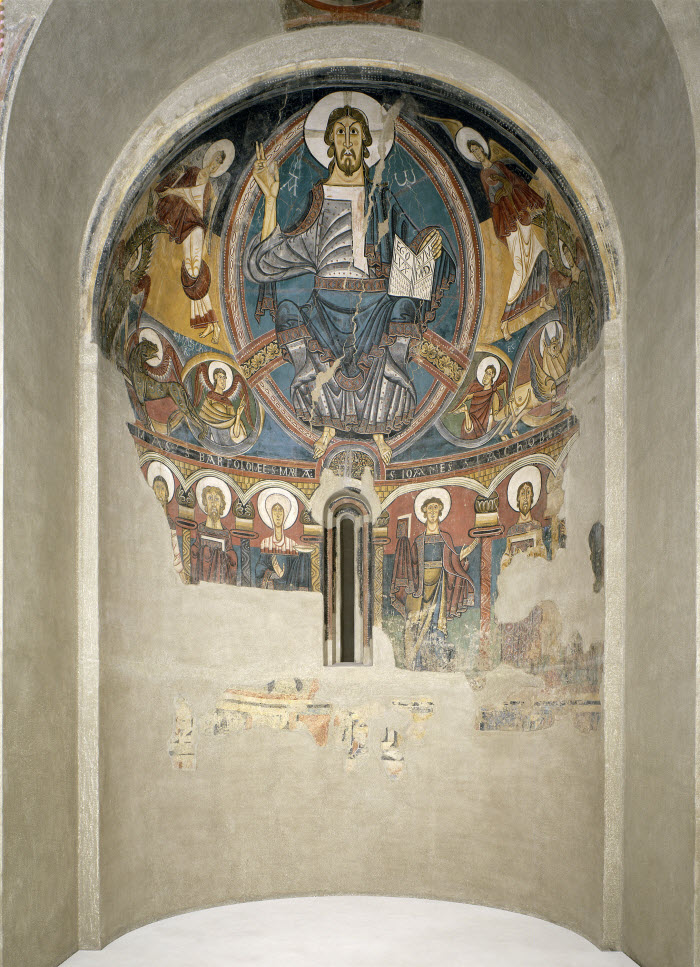
A Romanesque Mural at Museu Nacional d’Art de Catalunya

The Museu Nacional d’Art de Catalunya documents the history of Catalonia

Luckily for me, this museum has art from as far back as the 10th century and recent as the 21st century. Their collection of art comes from five different periods. The oldest art is Romanesque art from the 10th and 11th centuries. Next is Gothic art from as far back as the 12th century and as recent as the 15th century. The Gothic art illustrates the splendor and the peak of Catalan territorial expansion in Europe at the time. There is also Renaissance art from the time frame of the 13th to the 16th century. There is also Baroque art from the 17th and 18th centuries. The Baroque art feature works by major painters such as El Greco, Zurbarán, Velázquez and Rubens. Finally, there is Modern art from the 19th, 20th, and 21st centuries. The Modern art covers all of the Catalan artistic genres, including the Catalan Modernist style (Art Nouveau) and the avant-garde. This museum is also very important to the Catalan people. This is because of the centuries of history that is documented here, which gives reason to why it is named Museu Nacional d’Art de Catalunya. If Catalonia were to secede from Spain, this museum would be one of the most important places in that nation, as it is the main holder of Catalan history.

This is the Google map showing the trip from our hotel to the museum, which takes about 30 – 32 minutes

The Museu Nacional d’Art de Catalunya can be visited by using the metro

The museum is southwest of Hotel HCC Montblanc (our hotel in Barcelona) and can be reached by walking and using the metro. The trip to the museum begins with a seven minute walk to the Pl. Catalunya – FNAC metro station. From there, we travel for eight minutes to the Pl. Espanya metro station. Upon arriving there, we walk thirteen minutes to the museum.

The Museu Nacional d’Art de Catalunya has free admission and is closed on Mondays

  • Summer (May – September) Opening Times:
    • Mondays: Closed
    • Tuesdays – Saturdays: 10am to 8pm
    • Sundays and Public Holidays: 10am to 3pm
  • Winter (October – April) Opening Times:
    • Mondays: Closed
    • Tuesdays – Saturdays: 10am to 6pm
    • Sundays and Public Holidays: 10am to 3pm
  • General Admission:  €12
  • Combined ticket: general admission + audio guide: €14 (buy online only)
  • To the Rooftop Viewpoint: €2
  • Basic friend of the museum (annual fee): €18 (unlimited access to the art and the temporary exhibitions)
  • Audio guide: €4
  • Must Be:
    • Saturdays, from 3pm on-wards
    • The first Sunday of each month

Links for Additional Information

Seemingly Small, But Widespread: John Ryan Company – Erik Carrasquillo

When you think of the name “John Ryan”, what do you think of? I’m sure I’m not the only person who doesn’t think of John Ryan Company, but maybe sometime in the future, I, and many others will think of them.

John Ryan’s History

John Ryan Company was founded in Minnesota in 1983. Their line of work is providing numerous products and services that help with banking and other services. They also have expanded to Madrid, Spain, London, England, and Silicon Valley in California.

John Ryan’s Messaging and Banking Based Products

John Ryan has several products and services. Their main product is the Quick Messenger CMS. This product is a content management platform that is bank-ready and able to effortlessly target messaging to single screens with their Smart Slots system. Quick Messenger also allows users to customize experiences at many different levels, easily monitor and manage workflows, and integrate with data feeds and branch systems seamlessly and securely. Another product they have is Automated Content Execution (ACE). It is a program that safely moves content and instructions around a platform. This program also integrates well with existing bank file delivery software, and conserves bandwidth through download-throttling and transfers based on the time of day.

John Ryan’s Various Services

John Ryan also has various services they provide. One big service they provide is Customer Visit Management. This service utilizes a combination of observations and analysis to classify branches by opportunities and challenges. They also provide Digital Communications Programming, which includes setting priorities and establishing a calendar, developing a branded look, tone and feel for messaging, and then setting down the structured processes, workflow, resource requirements and internal and vendor responsibilities. John Ryan also has Content Variety, which is numerous services they provide. One such service within the “content variety” title is the brand river. This multimedia service uses a rich and continuous branding backdrop and repurposed, pre-existing video content assets to make a unified video context for various content. They also have Network Operations, which is support for the field, help desk, equipment, and software.

Alternative logo with John Ryan’s motto

John Ryan’s Key Challenges

To me, one challenge John Ryan seems to have is that it appears to be a small and somewhat unknown company. This is definitely a challenge because it could be difficult to get their name out there, especially because John Ryan is a very common name and it gets many different results. Another challenge is that there are probably a lot of companies that provide similar products and services as John Ryan. Also, two different John Ryan’s from Minnesota come up on a Google search. One of them is John Ryan Inc. which specializes in graphic design services and the other one is John Ryan Company, which is the John Ryan discussed in this article.

Conclusion

John Ryan Company is a small, private company that has branches across the world. Hopefully in our visit we can obtain a more high level understanding of them.

Five Questions For John Ryan’s Representatives

  1. Why, of all countries, aside from the UK, did you decide to expand to Spain?
  2. How are you, or how will you separate yourself from and overtake your competition?
  3. How will separate yourself from other John Ryan’s?
  4. Are there any major companies that use your products or services? If not, how will you get some companies to use your products or services?
  5. Where do you plan on expanding to next?

Arrest for Assistance in ill wife’s Suicide has Revitalized Spain’s Euthanasia Debate (Erik Carrasquillo)

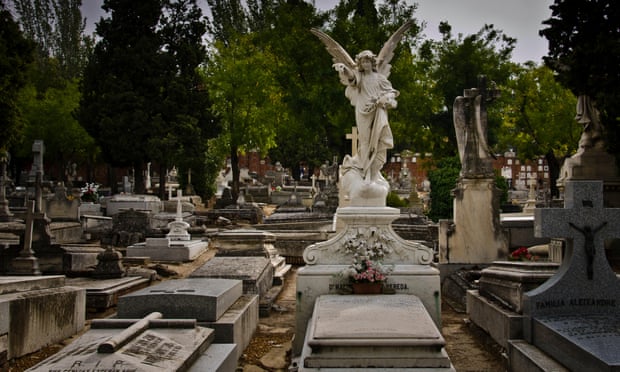
Almudena cemetery in Madrid. This photograph is the feature photograph of the article. Photograph by: Alamy

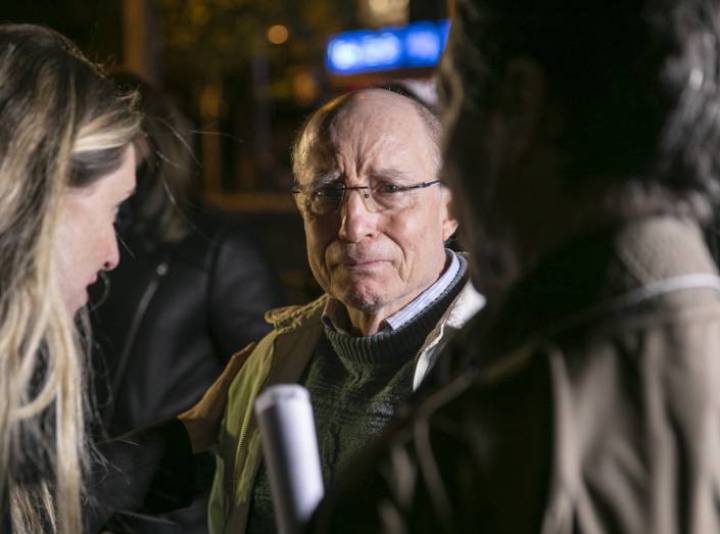
Recently, a man named Ángel Fernández was arrested for helping his terminally ill wife end her own life. It’s not every day you hear a story like that. As a result of this becoming public, Spain has renewed their euthanasia debate.

The Backstory and Reason for why a Man was Arrested for Assisted Suicide

On April 2, 2019, 70-year-old Ángel Fernández asked his wife, 61-year-old María José Carrasco if she would like to die today. 30 years prior, Carrasco was diagnosed with multiple sclerosis. As the years passed, Fernández was asked by his wife numerous times if he’d like to help her die. On the day of his wife’s death, Fernández filmed him asking his wife if she’d still wants to die, and she replied saying that she could not wait any longer and that he was the only one who could help her. He was hoping that Spain could pass its euthanasia law before he finally helped her die. However, Spain’s conservative People’s Party (PP) opposed the law that was formed last June, and, as a result, it has not yet passed. Therefore, Fernández’s decision to assist his wife in committing suicide got him arrested. Luckily, he was released after only a day, pending further inquiries.

Spain’s Euthanasia Debate Has Been Renewed

On Thursday, April 4, 2019, a day after Fernández’s arrest, Spain’s prime minister Pedro Sánchez basically blamed the PP and the center-right Citizen’s Party for this arrest. According to Sánchez, they recently prevented the passing of the euthanasia law, and the PP prevented it no less than 19 times in total. He also said that, if he is reelected at the end of this month, he will continue to press on in passing this law. After that, the Citizens Party responded. Their secretary, José Manuel Villegas, said that his party is for this law, but would prefer if a law they proposed for palliative care was passed first.


Ángel Fernández speaks to reporters after being released on Thursday, April 4, 2019. Taken by Carlos Rosillo.

Another group proceeded to chip in on this debate. The Spanish Bishops’ Conference entered the debate when their secretary, Luis Argüello, said, “I don’t think that people should go to prison, but I do believe in the radical defense of life” and “death shouldn’t be a way of solving problems”, which shows that this group is anti-euthanasia. Spain’s Right to Die with Dignity group went to describe the current situation in Spain on euthanasia. They said, “More than 80% of the population are in favor of decriminalizing euthanasia and assisted suicide. Yet article 143 of the penal code still punishes them with prison sentences”. This goes to show how much impact the 19 preventions by the PP and Citizen’s Party have, as only a small minority agree with that decision.

This Shows How Spain is a Confrontational Society

Overall, this story provides us with an interesting view of Spain’s confrontational society, as described in the Culture Map, and of the groups that impact the Spanish government and, in turn, impact the Spanish people.